

Benedict’s Test: Principle, Reagent Preparation, Procedure, and Clinical Interpretation
A Comprehensive, High-Fidelity Technical Resource and Practical Guide for Laboratory Professionals, Path-Biochemists, and Medical Educators.
Method Type
Chemical Redox Analysis (Semi-Quantitative / Quantitative Options)
Primary Target
Reducing Sugars (Free Aldehyde or Ketone Groups)
Stability Profile
Highly Stable, Single-Solution Reagent (Superior to Fehling’s)
Sensitivity Floor
Detects Minimum Sugar Concentrations Down to 0.1% (100 mg/dL)
Table of Contents
- 1. Introduction
- 2. Chemical Principle
- 3. Reagent Composition
- 4. Preparation Protocol
- 5. Equipment & Samples
- 6. Step-by-Step Procedure
- 7. Result Interpretation
- 8. Interactive Titer Calculator
- 9. Diagnostic Applications
- 10. Methodological Advantages
- 11. Limitations & Interferences
- 12. Troubleshooting Common Issues
- 13. Cross-Method Comparisons
- 14. Frequently Asked Questions
- 15. Bibliographic References

1. Introduction: What is Benedict’s Test?
1.1. Definition and Historical Background
The Benedict’s test is a classic chemical analytical protocol optimized to reveal the presence of reducing sugars within a wide range of fluid matrices. Serving as a foundational semi-quantitative diagnostic tool, it enables laboratory clinicians to easily differentiate active reducing carbohydrates from non-reducing types.
Historical Synthesis: Developed in 1907 by the renowned American biochemist Stanley Rossiter Benedict (1884-1936), this testing modality was engineered to fundamentally replace the inherently unstable Fehling’s solution used during the early 20th century to track glucose clearance levels in human urine. Benedict’s original formulation combined copper sulfate, sodium citrate, and sodium carbonate—a precise blueprint that remains the undisputed standard in current biochemical and academic structures.
1.2. Importance in Clinical and Educational Labs
1.3. Overview: Reducing Sugars vs. Non-Reducing Sugars
To successfully interpret assay responses, carbohydrates must be explicitly classified by their active structural state:
- Reducing Sugars: Monosaccharides or disaccharides containing a totally unbonded, open anomeric carbon that possesses an active, electron-donating free aldehyde or ketone group. Examples include Glucose, Fructose, Lactose, and Maltose.
- Non-Reducing Sugars: Complex carbohydrate networks where structural anomeric centers are fully locked inside rigid glycosidic bonds, preventing free electron transfer. Examples include Sucrose and Starch (unless actively cleaved via acid or enzymatic hydrolysis).
2. Principle of Benedict’s Test (How it Works)
The operational framework of the test centers entirely around an alkaline-driven single-step reduction-oxidation event across clear ion phase transformations.
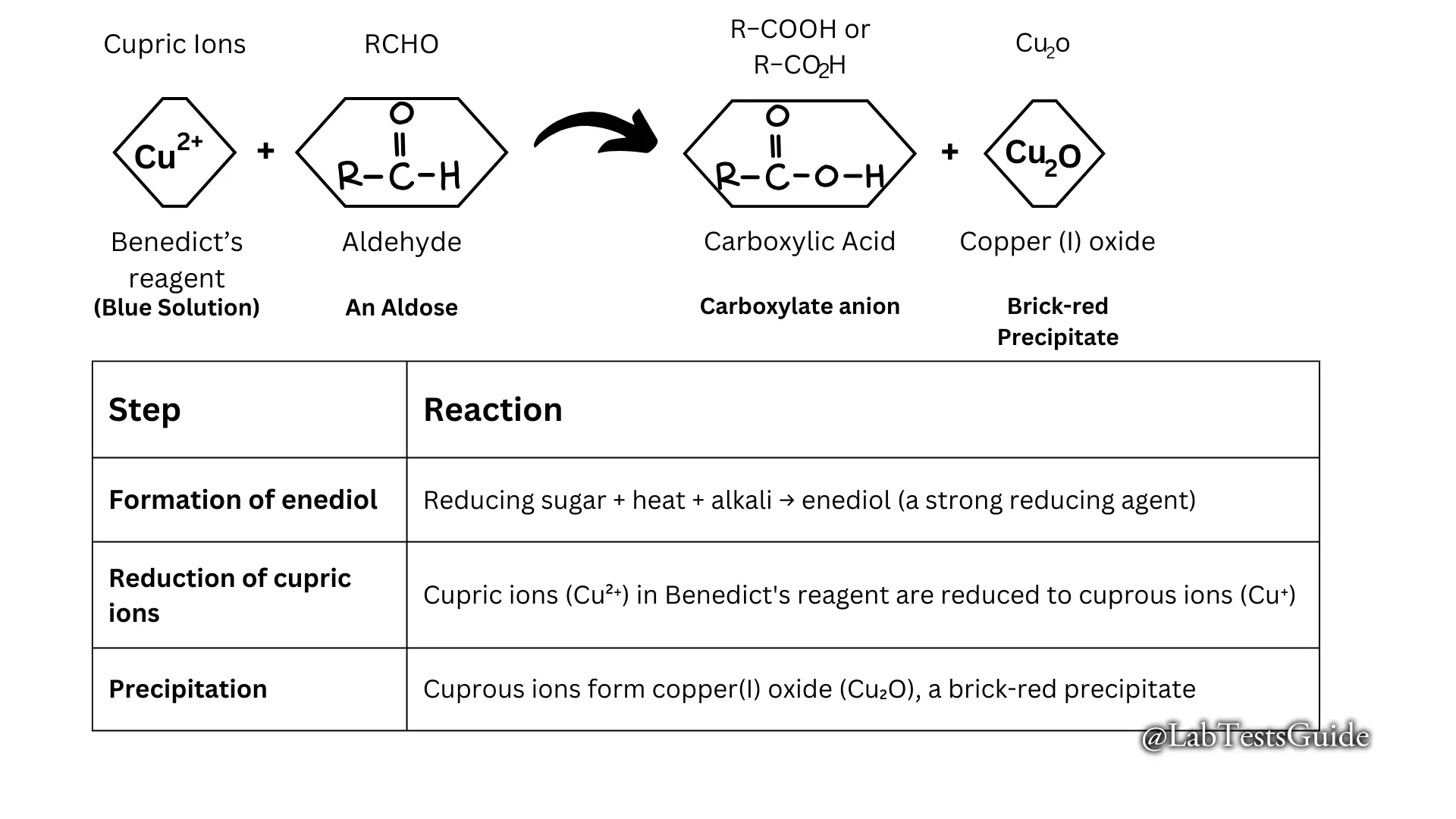
2.1. The Chemistry of Reduction: Cupric to Cuprous Ions
At its biochemical foundation, the reagent facilitates the reduction of fully soluble blue-phase cupric ions (Cu²⁺) down into dense, insoluble cuprous ions (Cu⁺) mediated by the oxidation of free carbohydrate aldehyde/ketone chains.
2.2. Role of Alkaline Medium (Sodium Carbonate)
Anhydrous sodium carbonate (Na₂CO₃) establishes a structural buffer zone between pH 10 and 11. When subjected to thermal energy, this highly alkaline setting forces the reactive target sugars to undergo a rapid structural rearrangement known as tautomerization, changing into highly reactive enediol intermediates. These enediols serve as highly potent electron donors within the fluid matrix.
2.3. Role of Sodium Citrate as a Complexing Agent
Without stabilization, soluble cupric ions (Cu²⁺) in an alkaline environment would immediately fall out of solution as an unreactive precipitate of copper hydroxide (Cu(OH)₂). Sodium citrate acts as a highly effective chelating agent. By weakly complexing with Cu²⁺ ions, it prevents premature precipitation, ensuring the unheated liquid reagent remains stable, uniform, and clear deep-blue on the laboratory shelf.
2.4. Formation of the Brick-Red Precipitate (Copper(I) Oxide)
As the enediol sugar units transfer electrons, liberated Cu²⁺ ions transition to Cu⁺ states. These highly reactive cuprous ions immediately interact with hydroxyl radicals in the heated medium to form insoluble copper(I) oxide (Cu₂O), a characteristic brick-red solid mass that precipitates out of the fluid phase.
2.5. Reaction Mechanism: Tautomerization to Enediols
In a strongly alkaline solution, the reducing sugar (whether an aldose or a ketose) undergoes tautomerization to form an unstable enediol configuration. This enediol serves as an electron donor, reducing the chelated Cu²⁺ complex while the sugar chain itself oxidizes into its corresponding carboxylic acid counter-structure (e.g., glucose converts directly into gluconic acid derivatives).
R-CHO (Reducing Sugar) + 2Cu²⁺ + 5OH⁻ ———(Heat)———> R-COO⁻ + Cu₂O(s)↓ + 3H₂O
* Visual Marker: Blue Soluble Cu²⁺ Ions —-> Brick-Red Solid Insoluble Cu₂O Precipitate
3. Composition of Benedict’s Reagent
Understanding the exact biochemical components of Benedict’s solution highlights why it remains uniquely stable over extended periods.
3.1. Detailed List of Components & Their Functions
Supplies the necessary Cu²⁺ ions required for electron capture. This component gives the unreacted mixture its characteristic clear blue aesthetic.
Maintains the high-level alkaline environment necessary to drive carbohydrates into their highly reactive enediol states.
Functions as a stable structural chelator. It continuously traps cupric elements to prevent premature reagent autolysis or degradation.
3.2. Types of Benedict’s Reagent
- Qualitative Reagent (Benedict’s Qualitative Solution): The most common form used in general diagnostics. It relies on a distinct series of color changes to estimate sugar levels based on precipitate density.
- Quantitative Reagent (Benedict’s Quantitative Reagent): A specialized variant used when exact sugar percentages must be determined. It incorporates potassium thiocyanate (KSCN) and potassium ferrocyanide. The thiocyanate ions react with newly formed cuprous elements to yield a crisp, white precipitate of copper thiocyanate (CuSCN), allowing for highly precise volumetric titrations.
4. Preparation of Benedict’s Reagent (Step-by-Step Protocol)
To ensure high reagent stability, lab professionals must strictly use analytical-grade (AR) compounds and follow the exact mixing sequence below.
4.1. Required Chemicals & Purity
All compounds must meet standard American Chemical Society (ACS) Analytical Reagent specs: Copper(II) sulfate pentahydrate (AR), Sodium carbonate anhydrous (AR), Trisodium citrate (AR), and ultra-pure Distilled Water.
4.2. Base Formulations for 1-Liter Batches
• Anhydrous Sodium Carbonate: 100.0 g
• Trisodium Citrate: 173.0 g
• Distilled Water: q.s. to 1000 mL
• Add Potassium Thiocyanate (KSCN): 18.0 g
• Add Potassium Ferrocyanide: 5.0 g
• Container: Dark Amber Glass Only
• Avoid: Refrigeration (causes precipitation)
4.3. Step-by-Step Mixing Instructions (Critical Order)
- Dissolve Sodium Salts: Measure approximately 700 mL of distilled water into a heavy-duty beaker, heat gently, and completely dissolve 173.0 g of sodium citrate alongside 100.0 g of anhydrous sodium carbonate. Stir continuously until the solution is completely clear.
- Dissolve Copper Scaffold: In a separate glass vessel, completely dissolve 17.3 g of copper(II) sulfate pentahydrate into exactly 100 mL of ambient distilled water.
- Slow Combination Step (CRITICAL ORDER): Slowly pour the copper sulfate solution into the alkaline carbonate-citrate mixture in a thin, continuous stream while stirring constantly.CRITICAL PROTOCOL: You must always add the copper solution to the alkaline mixture, never the reverse. Reversing this sequence will cause permanent localized precipitation of unreactive copper hydroxide, ruining the batch.
- Final Volume Adjustment: Allow the mixed solution to cool to 20°C. Transfer the mixture into a 1-Liter volumetric flask, rinse the mixing vessels with distilled water, add the washings to the flask, and bring to volume exactly at the 1000 mL mark. Mix thoroughly.
4.4. Storage, Stability, and Shelf Life Indicators
When stored correctly in tightly sealed amber glass bottles at room temperature, the reagent remains stable for 12 to 18 months. Discard the solution immediately if you observe a greenish-brown discoloration, heavy turbidity, or a black sediment layer of copper oxide at the bottom of the bottle.
5. Materials and Equipment Required
Before beginning the assay, ensure all necessary analytical components and controls are organized on the laboratory bench.
5.1. List of Apparatus
- Heavy-walled, borosilicate glass test tubes (Pyrex style, 16x150mm).
- Ergonomic test tube rack and insulated mechanical tube holder claws.
- Calibrated serological air-displacement pipettes (1.0 mL, 2.0 mL, and 5.0 mL variants).
- Thermostatically controlled boiling water bath or dry-block incubator set to 100°C.
- Analytical balance (0.001 g precision metric) and 1L Class-A volumetric flasks.
5.2. Sample Matrix Management
The assay works well with several types of test samples: fresh, clean urine samples; diluted blood serum/plasma matrices; filtered food or beverage homogenates; and clear liquid microbial culture supernatants.
5.3. Control Solutions (Essential Quality Control)
To ensure assay accuracy, you must process standard controls alongside every batch: a Positive Control consisting of a freshly prepared 1% aqueous glucose solution (1.0 g pure D-glucose brought to 100 mL with distilled water), and a Negative Control using pure distilled water or a 1% non-reducing sucrose solution.
6. Detailed Procedure for Benedict’s Test
Careful measurement and precise incubation timing are essential to ensure reproducible semi-quantitative results.
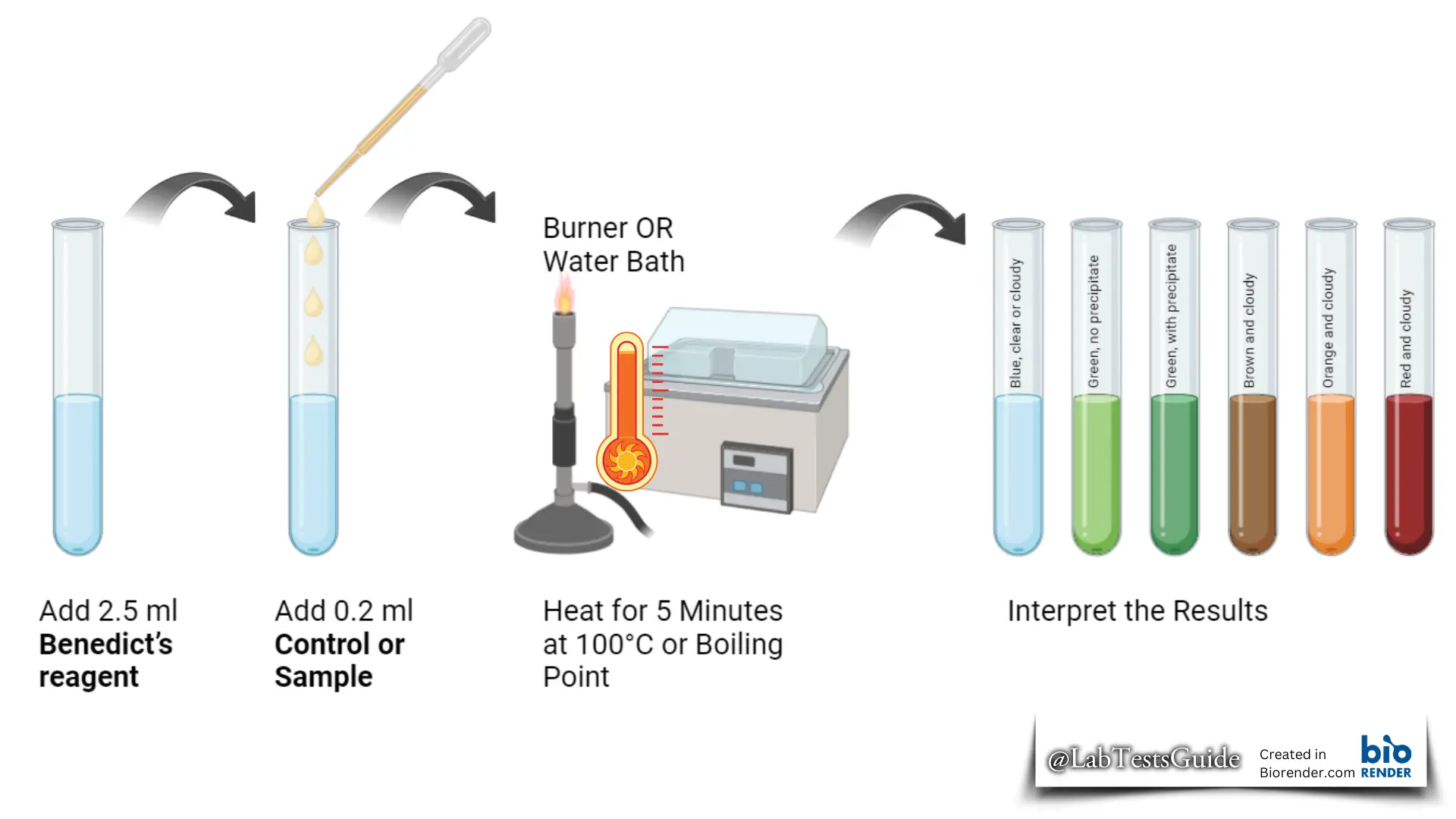
6.1. Sample Preparation Requirements
Highly concentrated urine samples should be diluted 1:1 with distilled water to prevent excessive matrix interference. Highly turbid samples must be centrifuged at 3,000 RPM for 5 minutes or passed through a 0.45-micron filter. For solid food items, homogenize 5.0 g of the sample in 50 mL of warm distilled water, then filter to obtain a clear liquid analyte.
6.2. Qualitative Procedure (Water Bath Method)
- Arrange three clean borosilicate test tubes in a rack and clearly label them as Positive Control (PC), Negative Control (NC), and Test Sample (T).
- Pipette exactly 2.5 mL of Benedict’s Qualitative Reagent into each labeled tube.
- Add exactly 0.2 mL (approximately 4 drops) of the respective sample to its designated tube: 1% glucose to PC, distilled water to NC, and the prepared analyte to T. Mix well by swirling gently.
- Place all tubes simultaneously into a vigorously boiling water bath (100°C) for exactly 5 minutes.
- Carefully remove the tubes using insulated holder claws and allow them to cool undisturbed at room temperature for 2 minutes.
- Examine the tubes against a clean white background to accurately assess color changes and precipitate density.
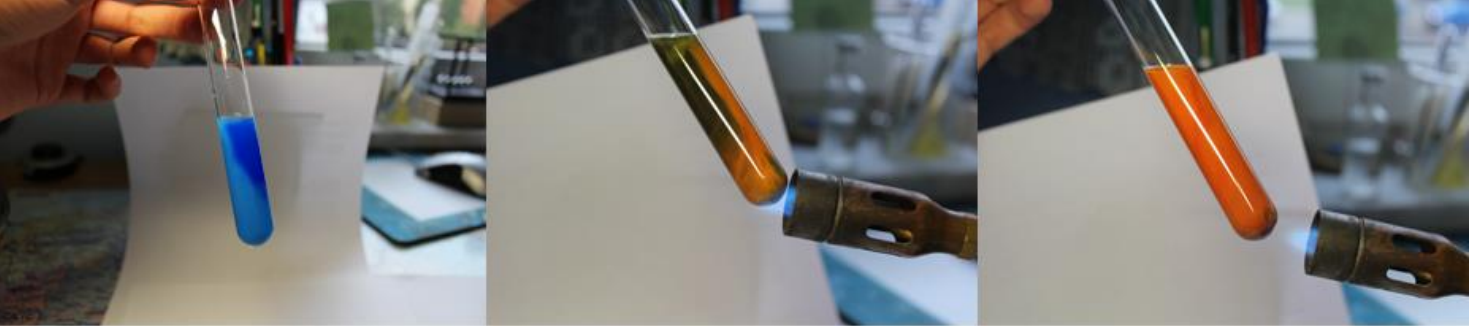
6.3. Quantitative Procedure (Burette Titration Method)
For research applications or food quality testing where exact sugar concentrations are required, use this volumetric titration method:
- Pipette exactly 5.0 mL of Benedict’s quantitative reagent into a 100 mL conical flask and add approximately 2.0 g of anhydrous sodium carbonate to maintain high alkalinity.
- Fill a calibrated Class-A glass burette with the standard 1% glucose solution.
- Heat the flask until the reagent boils vigorously over an insulated heating pad.
- Carefully titrate the boiling reagent with the glucose solution drop by drop. Continue until the bright blue color completely fades and is replaced by a chalky white precipitate of copper thiocyanate (CuSCN). Log the exact volume used (Standard Titer, V₁).
- Refill the burette with the filtered unknown sample fluid and repeat the boiling titration process. Log the final volume required to reach the white endpoint (Sample Titer, V₂).
7. Result Interpretation & Reporting
The color spectrum of the cooled mixture corresponds directly to the concentration of reducing sugars in the sample matrix.
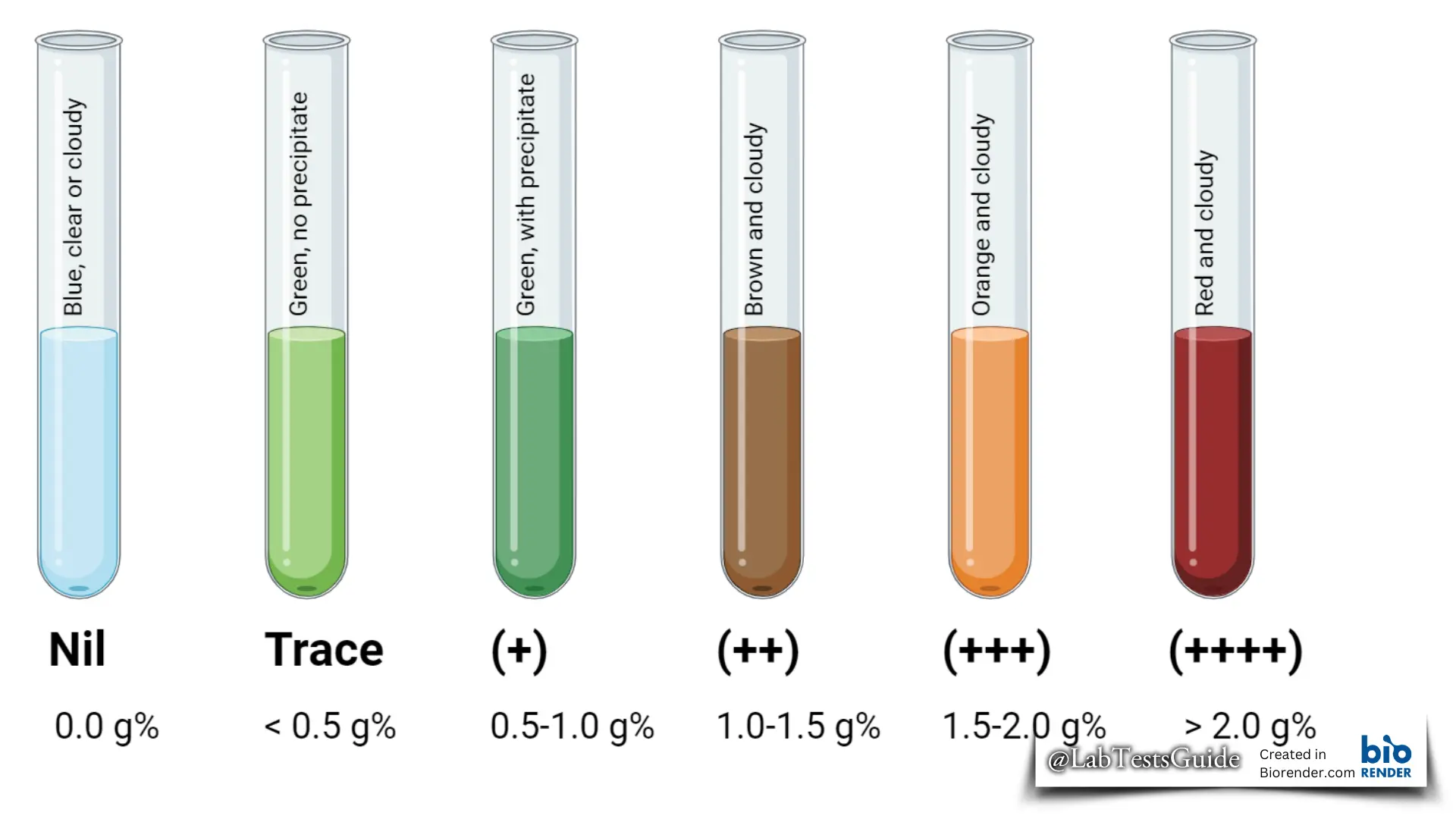
7.2. Precipitate Dynamics
A clear, unclouded liquid indicates the complete absence of reducing carbohydrates. A fine, cloudy suspension indicates low-to-moderate sugar levels, while a thick, dense mass that settles quickly to the bottom confirms a very high concentration of reducing sugars.
7.3. Clinical Reporting Standards
When reporting results for diagnostic medical screening, log data using this formal format: "Urinary Reducing Sugars: Positive (+++), indicating an estimated range of 1.5–2.0 g%. Note: This test is non-specific; confirm glucose levels using a specific glucose oxidase method."
8. Interactive Benedict’s Quantitative Calculator
Input your laboratory titration volumes below to instantly compute the exact concentration of reducing sugars present within your unknown sample matrix.
9. Applications of Benedict’s Test
9.1. Clinical Screening for Diabetes Mellitus
The human renal threshold for glucose normally hovers around 180 mg/dL (1.8 g/L). When blood glucose concentrations exceed this physiological clearance ceiling, the kidneys begin excreting the excess sugar into urine (glucosuria). Benedict’s test serves as a highly reliable, cost-effective screening tool to detect this condition in resource-limited settings.
9.2. Pediatric Screening for Galactosemia
Galactosemia is a serious congenital metabolic disorder where infants cannot correctly process galactose. Because galactose is an active reducing sugar, checking a newborn’s urine with Benedict’s solution yields a positive result. When paired with a negative result from a glucose-specific test strip, this strongly confirms a presumptive diagnosis of galactosemia, allowing for immediate life-saving dietary changes.
9.3. Food Quality Control and Processing
Industrial food production lines use the assay to measure total reducing sugar content in honey, natural fruit preserves, column syrups, and carbonated beverages. It is also widely used to track sugar inversion stages during commercial refining processes.
10. Advantages of Benedict’s Test
- Exceptional Cost-Effectiveness: Uses basic, widely available chemical compounds, completely eliminating the need for expensive automated analytical equipment or specialized training.
- Superior Reagent Stability: Unlike Fehling’s solution—which requires storing two separate solutions (Fehling’s A and B) that must be mixed immediately before use to avoid breakdown—Benedict’s reagent is a single, highly stable solution that can be stored safely for months.
- Intuitive Semi-Quantitative Assessment: The clear, progressive color changes (ranging from blue to green, yellow, orange, and brick-red) allow technicians to quickly estimate sugar concentrations at a glance without needing a spectrophotometer.
11. Limitations & Critical Precautions
12. Troubleshooting Common Issues
- Expected Sugar But No Color Change: This issue is typically caused by an expired reagent where the copper complex has degraded, a water bath temperature falling below 90°C, or insufficient heating time. Always ensure the water bath is at a rolling boil (100°C) and incubate for the full 5 minutes.
- Appearance of a Dark Brown/Black Precipitate: This is caused by over-heating the solution past the 10-minute mark, or an extremely high sugar concentration (>3%) that exhausts the citrate buffer. Dilute the sample 1:5 or 1:10 with distilled water and retest.
- Persistent Cuprous Stains on Glassware: The brick-red Cu₂O precipitate adheres strongly to borosilicate glass. To clean the tubes safely, soak them overnight in a 20% v/v dilute nitric acid bath, or use a specialized commercial low-foaming detergent optimized for heavy metals.
13. Comparison with Other Chemical Tests
vs. Fehling’s Solution Assay
- Benedict’s features a single, highly stable, ready-to-use solution.
- Utilizes sodium citrate as a chelator rather than toxic Rochelle salt.
- Significantly less hazardous and corrosive because it uses mild sodium carbonate instead of concentrated sodium hydroxide (NaOH).
vs. Barfoed’s Special Testing
- Benedict’s operates strictly within an alkaline environment to detect all available reducing sugars.
- Barfoed’s runs under acidic conditions, optimizing reaction speeds to selectively differentiate monosaccharides from reducing disaccharides within a narrow 2-minute window.
14. Frequently Asked Questions
15. References & Further Reading
1. Benedict, S. R. (1909). “A Reagent for the Detection of Reducing Sugars.” Journal of Biological Chemistry, 5, 485–487.
2. Simoni, R. D., Hill, R. L., & Vaughan, M. (2002). “Benedict’s Solution, a Reagent for Measuring Reducing Sugars: The Clinical Chemistry of Stanley R. Benedict.” Journal of Biological Chemistry, 277(16), 10–11.
3. Kaplan, L. A., & Pesce, A. J. (2010). Clinical Chemistry: Theory, Analysis, Correlation (5th ed.). Mosby.
4. Burtis, C. A., Ashwood, E. R., & Bruns, D. E. (2012). Tietz Textbook of Clinical Chemistry and Molecular Diagnostics (5th ed.). Elsevier Saunders.
5. McPherson, R. A., & Pincus, M. R. (2017). Henry’s Clinical Diagnosis and Management by Laboratory Methods (23rd ed.). Elsevier.
6. Benedict’s Test – Principle, Procedure, Steps, Results, Uses (Microbe Notes) – Accessed June 2026.
7. Benedict’s Test – Principle, Composition, Preparation, Procedure and Result Interpretation (MicrobiologyInfo.com) – Accessed June 2026.
8. Benedict’s Test – Reagent Preparation, Principle, Procedure and Reaction (BYJU’S) – Accessed June 2026.
9. Benedict’s Test – Principle, Procedure, Result and Limitation (Vedantu) – Accessed June 2026.
10. Benedict’s Test: Definition, Principle, Uses, and Reagent (Chemistry Learner) – Accessed June 2026.
11. Carbohydrates and Reducing Sugars (BBC Bitesize) – Accessed June 2026.
12. The Molecules of Life: Carbohydrates (University of Manitoba) – Accessed June 2026.
13. Benedict’s Reagent: A Test for Reducing Sugars (Northern Kentucky University) – Accessed June 2026.
14. Benedict’s Test: Qualitative Analysis of Carbohydrates (KNUST Open Educational Resources) – Accessed June 2026.
15. Qualitative Analysis of Carbohydrates (Amrita Virtual Lab) – Accessed June 2026.
