
Why Medical History and Diagnostic Testing Matter Before Dental Implant Treatment
Dental implants are often described as replacement roots for missing teeth, but implant treatment is biological as well as mechanical.
The implant must be placed surgically, the surrounding tissues must heal, and the bone must develop a stable relationship with the implant surface.
That makes the patient’s general health relevant to treatment.
A responsible implant evaluation therefore includes more than looking at the missing tooth.
The clinician reviews medical history, medications, oral disease, previous dental treatment, lifestyle factors, and anatomical information before deciding how treatment should proceed.
Medical history comes first
Patients sometimes assume that medical history matters only when they are undergoing major hospital surgery.
Dental surgery can also be influenced by medical conditions.
Diabetes is a common example.
Someone with well-controlled diabetes may be able to undergo implant treatment successfully, while poorly controlled blood sugar can affect healing and infection risk.
Cardiovascular conditions, immune disorders, bleeding disorders, previous cancer therapy, and certain chronic diseases may also influence planning.
These conditions do not automatically prevent implant treatment.
Instead, they may require additional information or coordination with another healthcare professional.
Medication review
Patients should provide a complete list of prescription medications, over-the-counter medicines, and supplements.
Anticoagulants and antiplatelet medications can influence surgical bleeding.
Certain medications used to treat osteoporosis or cancer can affect bone metabolism and deserve careful consideration.
Immunosuppressive medications, steroids, and some cancer treatments can affect healing or infection risk.
Patients should never discontinue prescribed medication without appropriate medical guidance.
The role of the dental team is to understand the medication and communicate with the prescribing clinician when necessary.
Smoking and nicotine
Smoking can affect blood flow and tissue healing.
Nicotine exposure from cigarettes, vaping, or other sources may therefore influence implant risk.
Patients sometimes minimize nicotine use because they worry that treatment will be denied.
Honest disclosure is more helpful.
The clinician can explain the associated risk and discuss whether reducing or stopping nicotine may improve the treatment environment.
When laboratory testing is appropriate
- Blood testing is not automatically required before every dental implant procedure.
- A healthy patient undergoing straightforward treatment may not need additional laboratory investigation.
- Testing becomes more relevant when the medical history identifies a specific concern.
- For example, a physician may evaluate glycemic control in someone with diabetes.
- Patients with known blood disorders may require targeted testing.
- The key principle is that each test should answer a meaningful clinical question.
- Testing simply because surgery is planned does not necessarily improve care.
Oral health is equally important
The patient’s mouth also requires careful evaluation.
Periodontal disease, infection, decay, and unstable teeth can influence implant treatment.
Someone seeking dental implant care for Naperville-area patients may require treatment of active gum disease before an implant is placed.
This matters because implant restorations exist within the same oral environment as natural teeth.
If the disease that caused tooth loss remains uncontrolled, the new restoration may be exposed to unnecessary risk.
Periodontal measurements
A periodontal examination may include measuring the spaces between gums and teeth, evaluating bleeding, identifying recession, and checking tooth mobility.
These findings help clinicians determine whether the patient’s periodontal condition is stable.
People with a history of periodontal disease may also require closer professional maintenance after receiving implants.
Three-dimensional dental imaging
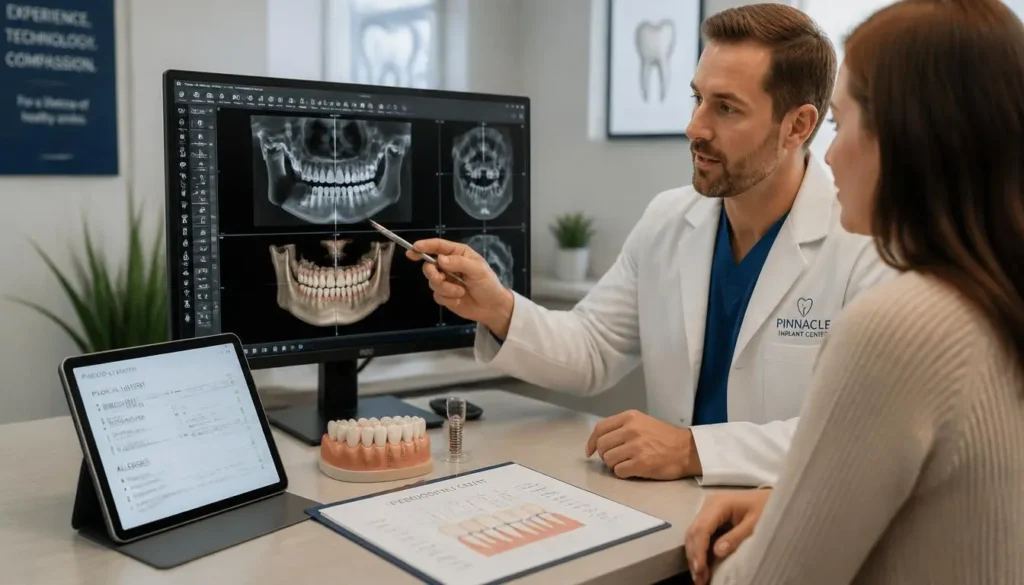
CBCT imaging provides anatomical information that blood testing cannot.
It allows clinicians to evaluate available bone and the relationship between the planned implant position and important structures such as nerves or the sinus.
The scan can also reveal areas of bone loss, previous grafting, retained root fragments, or pathology.
CBCT is therefore an important diagnostic tool in many implant cases.
Why health factors influence cost
Medical and diagnostic complexity can also affect treatment cost.
A straightforward implant placed in healthy bone is different from a case requiring extractions, grafting, physician coordination, sedation, or multiple restorative stages.
Patients researching understanding dental implant costs should compare complete treatment plans rather than the cost of the implant fixture alone.
The final fee may reflect diagnostics, surgery, restoration, laboratory procedures, and follow-up care.
Medical clearance should be specific
The phrase “medical clearance” is sometimes used loosely.
A dental clinician may need specific information from a physician, such as whether a condition is currently stable or whether a medication adjustment is appropriate.
Simply asking another doctor to declare someone “cleared for dental treatment” may provide less useful information.
Good communication focuses on the actual issue affecting treatment.
Previous implant failures
Patients who have experienced previous implant failure should tell the clinician.
The reason for failure may provide important information.
Possible contributing factors include infection, smoking, periodontal disease, poor bone quality, uncontrolled health conditions, excessive bite forces, or technical complications.
A previous failure does not necessarily mean another implant will fail, but the cause should be investigated when possible.
Teeth grinding
Grinding and clenching can place significant forces on teeth and implant restorations.
Patients may not know they grind unless a dentist identifies signs of wear.
The clinician may evaluate the bite and discuss protective measures when appropriate.
Preparing for consultation
Patients can make the evaluation more efficient by bringing:
- A complete medication list.
- Information about significant medical conditions.
- The contact details of relevant physicians.
- Previous dental X-rays or records when available.
- Information about previous implant or grafting procedures.
- Details about smoking or vaping.
An accurate history reduces the chance that important information will be discovered after treatment has already begun.
Asking why a test is needed
Patients should feel comfortable asking why a particular diagnostic test is being recommended.
Useful questions include:
- What information will this test provide?
- How could the result change my treatment?
- Do you need to speak with my physician?
- Does my medication affect implant surgery?
- What does my CBCT show about available bone?
- The purpose of testing should be understandable.
Diagnostic testing cannot guarantee success
No blood test, imaging study, or examination can guarantee an implant outcome.
Human biology remains variable.
Complications can occur even when planning is excellent.
The value of diagnostic information is that it can identify avoidable risks and allow the treatment plan to account for known conditions.
A coordinated approach
The strongest implant evaluation combines several types of information.
- Medical history provides systemic context.
- Medication review identifies therapies that may affect surgery.
- Clinical examination evaluates oral disease.
- Imaging evaluates anatomy.
- Laboratory testing is added when specific health concerns justify it.
- Each component answers a different question.
The importance of maintenance
Planning does not end after the implant is placed.
Professional maintenance allows clinicians to monitor gum tissue, bone, bite, and restorative components.
Patients with periodontal disease, diabetes, smoking history, or other risk factors may require particularly careful follow-up.
Final takeaway
Dental implant treatment should not begin with the assumption that every patient follows the same pathway.
- Medical history, medications, oral disease, anatomy, and lifestyle all influence planning.
- Appropriate diagnostic testing helps clinicians understand those variables.
- The goal is not to order more tests.
- The goal is to gather the information necessary to make treatment more individualized and informed.
