
Skin Anatomy, Functions, Common Conditions and Diagnosis
Skin: Anatomy, Functions & Common Conditions
The skin is the body’s largest organ and provides a protective barrier against physical, chemical, and microbial threats while helping regulate temperature, sensation, and fluid balance.
01 What Is the Skin?
The skin is the body’s largest organ and forms the outer protective covering of the body. It separates internal tissues from the external environment and helps protect against physical injury, chemicals, microorganisms, and excessive water loss.
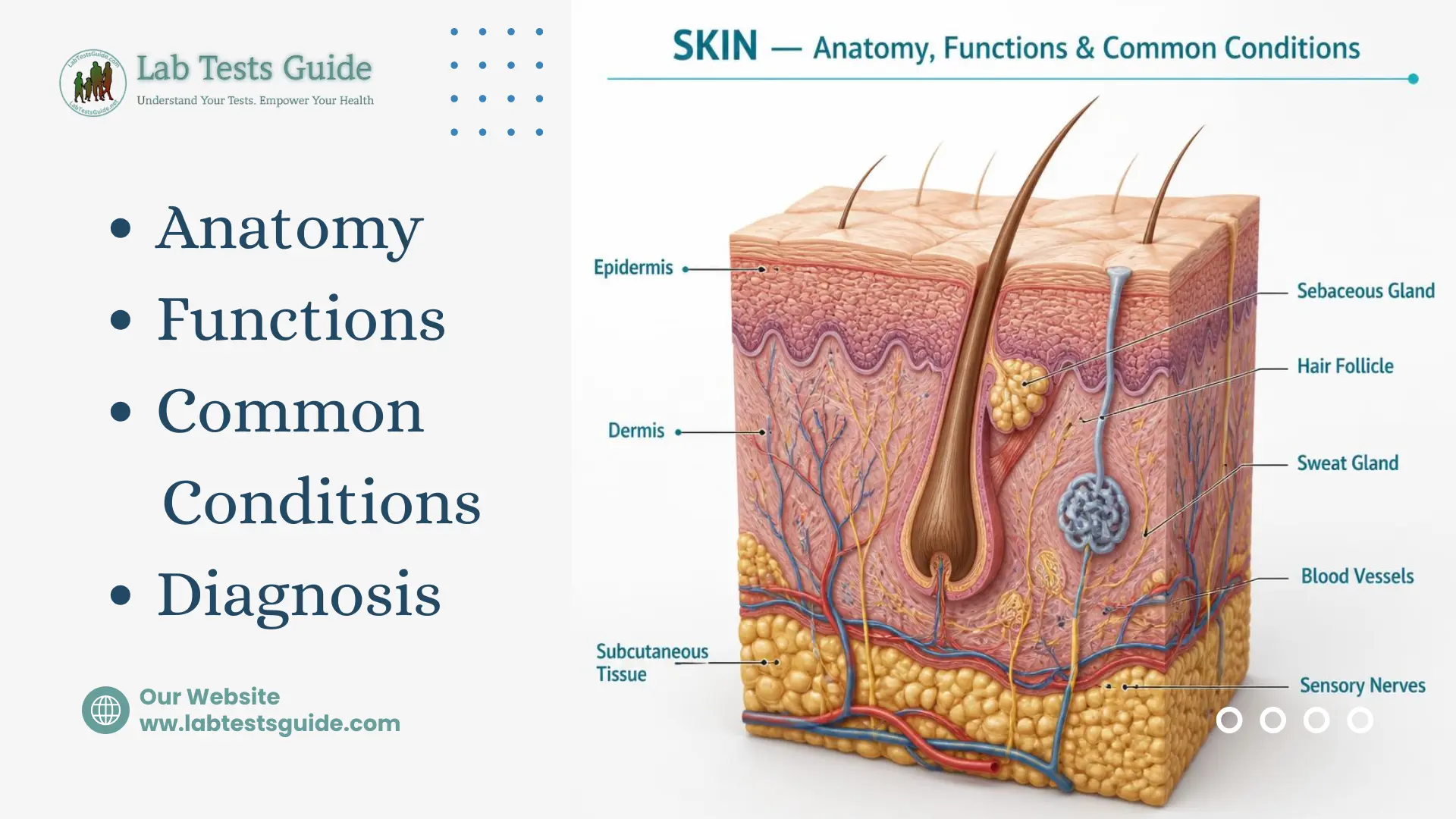
The skin consists mainly of the epidermis, dermis, and subcutaneous tissue. It also contains structures such as hair follicles, sweat glands, sebaceous glands, blood vessels, and sensory receptors that contribute to protection, temperature regulation, sensation, and other normal body functions.
02 Types and Functions of the Skin
The skin protects underlying tissues from injury and microorganisms, reduces water loss, helps regulate body temperature, provides sensations such as touch and pain, and contributes to vitamin D production. It also plays an important role in immune defense and wound healing.
03 Common Skin Problems
04 Laboratory Tests and Diagnosis
Many common skin problems are diagnosed from the patient’s symptoms, medical history, and physical examination. Laboratory testing is usually reserved for selected cases, particularly when an infection, inflammatory disorder, unusual skin lesion, or another underlying condition is suspected.
05 Skin Symptoms and When to Seek Care
Seek medical evaluation for rapidly spreading redness or swelling, severe pain, significant skin infection, persistent or worsening symptoms, non-healing wounds, unusual bleeding, or a new or changing skin lesion. Urgent assessment may be needed for severe allergic reactions, extensive blistering, or signs of serious infection. More medical advice
06 How Are Skin Problems Diagnosed?
Skin problems are usually diagnosed from the patient’s symptoms, medical history, and physical examination of the affected area. Laboratory tests are not routinely required for many common skin conditions, but they may be recommended when infection, inflammation, or another specific disorder is suspected.
07 Treatment and Prevention
- Treatment depends on the specific skin condition and may include topical medicines, moisturizers, or other prescribed therapies.
- Antimicrobial treatment may be recommended when a bacterial, fungal, viral, or parasitic infection is diagnosed or strongly suspected.
- Inflammatory skin conditions may require topical or systemic medicines under appropriate medical guidance.
- Persistent, severe, or recurrent skin problems may require specialist evaluation.
- Keep the skin clean and practice good hand hygiene to reduce the spread of infections.
- Use appropriate moisturizers and avoid known irritants or allergens when possible.
- Protect the skin from excessive sun exposure by using protective clothing and suitable sunscreen.
- Avoid scratching, picking, or unnecessarily damaging affected skin and follow professional advice for wound care.
08 Key Takeaways & Related Laboratory Tests
The skin is the body’s largest organ and provides protection, sensation, temperature regulation, and an important barrier against infection and fluid loss. Many skin conditions are diagnosed clinically, while laboratory testing may be useful when infection, inflammation, allergy, or another underlying disorder is suspected.
