

Certified Registered Nurse Anesthetist (CRNA): Role, Education, Certification & Clinical Guide
What Is a CRNA?
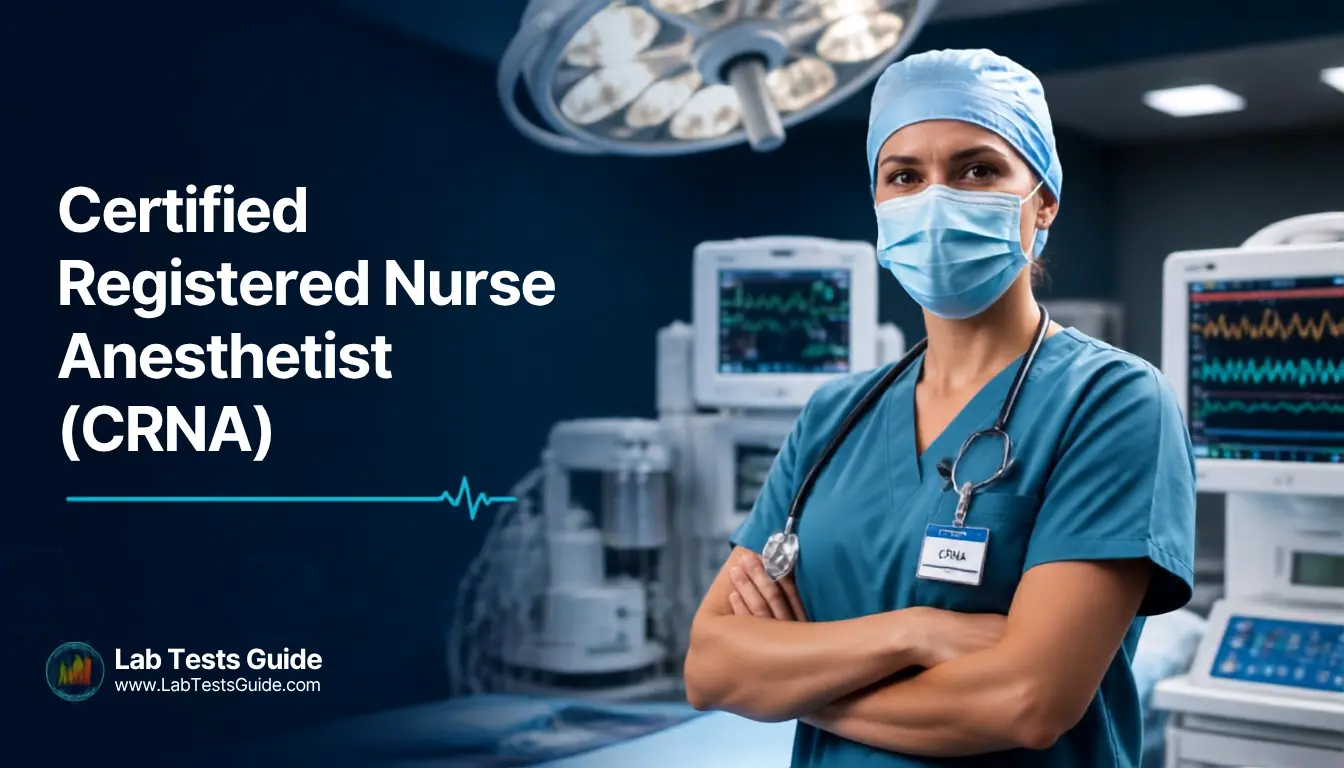
A Certified Registered Nurse Anesthetist (CRNA) is an advanced practice registered nurse who has completed graduate-level education and specialized clinical training in anesthesia. CRNAs are anesthesia professionals who provide comprehensive anesthesia care across a wide range of clinical settings.
CRNAs work in collaboration with surgeons, anesthesiologists, and other healthcare professionals to deliver safe, patient-centered anesthesia care. Their responsibilities include pre-anesthesia assessment, anesthesia administration, intraoperative monitoring, and post-anesthesia care. CRNAs are recognized as APRNs in many U.S. regulatory frameworks.
CRNA practice authority and supervision requirements vary by jurisdiction.
What Does a CRNA Do?
Pre-anesthesia assessment
Evaluating patients before anesthesia.
Reviewing medical history
Analyzing patient health records.
Airway assessment
Evaluating airway anatomy and risk.
Medication review
Checking medications and allergies.
Developing anesthesia plans
Creating patient-specific strategies.
Administering anesthesia
Delivering anesthesia safely.
Managing analgesia
Providing pain management.
Intraoperative monitoring
Continuously assessing patient status.
Airway management
Maintaining patent airways.
Emergency response
Managing anesthesia-related emergencies.
Postoperative pain management
Managing pain after procedures.
Documentation
Recording anesthesia care details.
Quality improvement
Contributing to patient safety initiatives.
Patient education
Teaching patients about anesthesia.
Specific responsibilities depend on jurisdiction, practice setting, and credentialing.
Types of Anesthesia and Anesthetic Care
- General anesthesia – Complete loss of consciousness and sensation.
- Regional anesthesia – Numbing a specific region of the body.
- Neuraxial anesthesia – Epidural or spinal anesthesia.
- Local anesthesia – Numbing a small, localized area.
- Sedation and monitored anesthesia care – Sedation with continuous monitoring.
- Acute pain management – Managing pain in perioperative settings.
The specific anesthetic technique depends on the procedure, patient condition, clinical assessment, and institutional protocols.
CRNA Patient Care Workflow
CRNAs contribute at every stage of the anesthesia care continuum, from pre-anesthesia evaluation to post-anesthesia follow-up.
CRNA Pre-Anesthesia Assessment
Important components of the pre-anesthesia evaluation include:
- Medical history – Current and past health conditions.
- Previous anesthesia history – Prior anesthetic experiences and complications.
- Medication review – Current medications, including over-the-counter drugs.
- Allergy assessment – Drug, latex, and environmental allergies.
- Airway assessment – Anatomical evaluation for potential difficulty.
- Cardiovascular assessment – Heart function and risk evaluation.
- Respiratory assessment – Lung function and breathing evaluation.
- Relevant laboratory results – Labs that may inform anesthesia risk.
- Imaging and diagnostic information – Relevant studies and findings.
- Fasting status – Last oral intake for aspiration risk assessment.
- Risk assessment – ASA physical status classification and other risk tools.
- Procedure-specific considerations – Factors related to the planned procedure.
CRNAs interpret clinical information as part of the broader anesthesia assessment and collaborate with the healthcare team as appropriate.
CRNA and Laboratory Testing
Laboratory information can support anesthesia assessment and patient safety. Common laboratory tests that may be relevant include:
CBC
- Hemoglobin – Oxygen-carrying capacity assessment.
- Hematocrit – Blood volume assessment.
- Platelets – Clotting function assessment.
- White blood cell count – Infection indicators.
Basic Metabolic Panel (BMP)
- Sodium – Fluid and osmotic balance.
- Potassium – Cardiac and neuromuscular function.
- Chloride – Acid-base and fluid balance.
- Bicarbonate/CO₂ – Acid-base status.
- BUN – Renal function and hydration assessment.
- Creatinine – Kidney function assessment.
- Glucose – Metabolic control assessment.
Comprehensive Metabolic Panel (CMP)
Broader metabolic and hepatic information may be relevant depending on the patient and procedure.
Coagulation Testing
- PT – Prothrombin time.
- INR – International normalized ratio.
- aPTT – Activated partial thromboplastin time.
Blood Type & Screen / Crossmatch
Important when significant blood loss is anticipated.
Arterial Blood Gas (ABG)
May be relevant in selected critically ill or complex patients.
Glucose Testing
Relevant in patients with diabetes or altered glucose metabolism.
Pregnancy Testing
May be clinically relevant before certain procedures in patients who could be pregnant.
Renal and Hepatic Testing
Organ function can influence medication selection, metabolism, and perioperative risk assessment.
CRNA and Common Lab Tests
| Laboratory Test | What It Measures | Possible Relevance to Anesthesia Care |
|---|---|---|
| CBC | Blood cells, hemoglobin, platelets | Anemia, infection indicators, bleeding considerations |
| BMP | Electrolytes, kidney-related markers, glucose | Metabolic and renal assessment |
| CMP | BMP + liver-related markers and proteins | Broader metabolic/hepatic assessment |
| PT/INR | Extrinsic coagulation pathway | Coagulation assessment |
| aPTT | Intrinsic/common coagulation pathways | Coagulation assessment |
| ABGs | Oxygenation, ventilation, acid-base status | Selected critically ill patients |
| Glucose | Blood glucose | Perioperative glucose management |
| Type & Screen | ABO/Rh and antibody screening | Blood availability planning |
| Crossmatch | Compatibility testing | When transfusion may be anticipated |
Laboratory requirements vary according to patient condition, procedure, institution, and clinical judgment.
CRNA and Patient Monitoring
CRNAs continuously monitor patients during anesthesia care, including:
- Oxygenation – Pulse oximetry and blood gas analysis.
- Ventilation – Capnography and respiratory assessment.
- Cardiovascular status – ECG, blood pressure, and heart rate.
- Blood pressure – Invasive and non-invasive monitoring.
- Heart rate – Continuous cardiac monitoring.
- Temperature – Core temperature monitoring.
- Neurologic status – Depth of anesthesia assessment.
- Fluid status – Hemodynamic and volume assessment.
- Laboratory values – Relevant point-of-care or lab results.
Continuous clinical assessment and appropriate monitoring standards are essential for patient safety.
CRNA Emergency Responsibilities
CRNAs are trained to recognize and respond to complications including:
- Airway obstruction
- Hypoxemia
- Hypotension
- Hypertension
- Cardiac arrhythmias
- Hemodynamic instability
- Severe allergic reactions
- Malignant hyperthermia
- Local anesthetic systemic toxicity
- Difficult airway situations
- Major bleeding
This list is educational and not intended as a comprehensive emergency management protocol.
CRNA Education and Training
The typical U.S. educational pathway for CRNAs includes:
- Undergraduate nursing education – BSN or equivalent.
- RN licensure – NCLEX-RN and state licensure.
- Critical care nursing experience – Where required or expected.
- Graduate-level nurse anesthesia education – Master’s or doctoral program.
- Clinical anesthesia education – Extensive supervised clinical training.
- National certification – Passing the National Certification Examination.
- State licensure/authorization – APRN licensure in applicable jurisdictions.
- Continuing professional development – Ongoing education and competency maintenance.
Admission requirements and regulatory requirements can change. Always consult current authoritative sources.
CRNA Certification
- National certification – NBCRNA certification examination.
- Recertification/continuing certification – Maintenance of certification requirements.
- Continuing education – Required CE credits for certification renewal.
- Professional competency – Ongoing demonstration of clinical competence.
- State licensure – APRN licensure in applicable jurisdictions.
- Institutional credentialing – Hospital and facility privileges.
CRNA vs RN
| Feature | RN | CRNA |
|---|---|---|
| Education | Nursing education | Graduate-level nurse anesthesia education |
| Clinical Focus | Broad nursing care | Anesthesia and related advanced practice |
| Anesthesia | Generally not independently responsible for anesthesia practice | Specialized anesthesia practice within applicable authority |
| Patient Assessment | Yes | Advanced anesthesia-focused assessment |
| Monitoring | Yes | Advanced anesthesia monitoring |
| Scope | Varies by jurisdiction | Advanced scope varies by jurisdiction |
| Certification | RN licensure/credentials | RN/APRN pathway + nurse anesthesia certification/credentials |
CRNA vs Anesthesiologist
- CRNA – Background in advanced practice nursing with specialized anesthesia training.
- Anesthesiologist – Physician with medical education and anesthesia residency training.
- Different educational pathways and professional credentialing.
- Shared focus on anesthesia and perioperative patient safety.
- Often work in team-based care models.
- Practice authority differs by jurisdiction and healthcare setting.
Both professions are essential to safe anesthesia care. Neither is universally “better” than the other.
Where Do CRNAs Work?
Hospitals
Inpatient and surgical settings.
Operating rooms
Surgical and procedural areas.
Ambulatory surgery centers
Outpatient surgical facilities.
Emergency departments
Procedural areas.
Labor and delivery
Obstetric anesthesia.
Pain management
Acute and chronic pain services.
Endoscopy suites
Procedural sedation.
Military healthcare
Military medical facilities.
Rural healthcare
Critical access hospitals.
Academic medical centers
Teaching hospitals.
Available roles and privileges vary by setting and jurisdiction.
CRNA and Patient Safety
Pre-anesthesia assessment
Identifying patient risk factors.
Medication reconciliation
Verifying medication lists.
Allergy verification
Confirming allergies.
Equipment checks
Ensuring proper equipment function.
Airway assessment
Evaluating airway risk.
Appropriate monitoring
Using proper monitoring standards.
Infection prevention
Following infection control practices.
Communication
Effective team communication.
Documentation
Accurate anesthesia records.
Emergency preparedness
Ready for complications.
Post-anesthesia recovery
Monitoring after anesthesia.
Team-based safety
Collaborative safety practices.
CRNA and Medical Laboratory Professionals
CRNAs interact with laboratory services in several important ways:
- CBC interpretation – Evaluating blood cell counts and hemoglobin.
- Coagulation studies – Reviewing PT/INR and aPTT results.
- Electrolytes – Monitoring sodium, potassium, and other electrolytes.
- Renal function – Reviewing creatinine and eGFR values.
- Glucose – Assessing blood glucose levels.
- ABGs – Evaluating oxygenation and acid-base status.
- Blood bank testing – Type and screen, crossmatch results.
- Critical laboratory values – Communicating urgent results.
- Preoperative laboratory information – Reviewing for risk assessment.
- Point-of-care testing – Where available and authorized.
Common Abbreviations
| Abbreviation | Meaning |
|---|---|
| CRNA | Certified Registered Nurse Anesthetist |
| RN | Registered Nurse |
| APRN | Advanced Practice Registered Nurse |
| SRNA | Student Registered Nurse Anesthetist |
| PACU | Post-Anesthesia Care Unit |
| OR | Operating Room |
| ABG | Arterial Blood Gas |
| PT | Prothrombin Time |
| INR | International Normalized Ratio |
| aPTT | Activated Partial Thromboplastin Time |
| ASA | American Society of Anesthesiologists |
| MAC | Monitored Anesthesia Care |
Abbreviations can have multiple meanings depending on context.
CRNA Career Pathway
Exact requirements vary by jurisdiction and program.
Skills Needed to Become a CRNA
Frequently Asked Questions
What is a CRNA?
A CRNA is a Certified Registered Nurse Anesthetist, an advanced practice registered nurse who specializes in anesthesia care.
What does a CRNA do?
CRNAs assess patients, administer anesthesia, monitor patients during procedures, and manage postoperative pain.
Is a CRNA an advanced practice registered nurse?
Yes, CRNAs are APRNs in many U.S. regulatory frameworks.
What education is required to become a CRNA?
CRNAs must complete a graduate-level nurse anesthesia program and pass a national certification examination.
What is the difference between a CRNA and an RN?
CRNAs have advanced education and specialize in anesthesia, while RNs provide broader nursing care.
What is the difference between a CRNA and an anesthesiologist?
CRNAs are advanced practice nurses, while anesthesiologists are physicians. Both provide anesthesia care.
Do CRNAs review laboratory test results?
Yes, CRNAs may review laboratory results as part of pre-anesthesia assessment and clinical monitoring.
What laboratory tests may be relevant before anesthesia?
CBC, electrolytes, coagulation studies, renal function, glucose, ABGs, and blood bank testing may be relevant depending on clinical circumstances.
Where do CRNAs work?
Hospitals, operating rooms, ambulatory surgery centers, labor and delivery units, and other clinical settings.
Can CRNAs administer anesthesia?
Yes, CRNAs are authorized to administer anesthesia within their scope of practice and applicable regulations.
What certification does a CRNA need?
CRNAs must pass the National Certification Examination and maintain certification through continuing education and competency requirements.
Does every CRNA have the same scope of practice?
No, CRNA scope of practice varies by jurisdiction, practice setting, and credentialing.
Key Takeaways
- CRNAs are advanced practice nurses specializing in anesthesia care.
- CRNA education involves graduate-level specialized preparation.
- CRNAs assess patients before anesthesia and monitor them throughout anesthesia care.
- Laboratory and diagnostic information can support anesthesia risk assessment.
- CBC, electrolytes, renal function, coagulation studies, glucose, ABGs, and blood bank testing may be relevant depending on clinical circumstances.
- CRNA scope of practice varies by jurisdiction and healthcare setting.
- CRNAs work closely with multidisciplinary healthcare teams.
- Patient safety, monitoring, clinical judgment, and evidence-based practice are central to CRNA care.
Related LabTestsGuide Topics
The information provided on this page is for educational purposes only and does not constitute medical or legal advice. Always consult the appropriate regulatory body for specific licensing and scope of practice requirements.
