Community Health Nurse
What Is a Community Health Nurse?
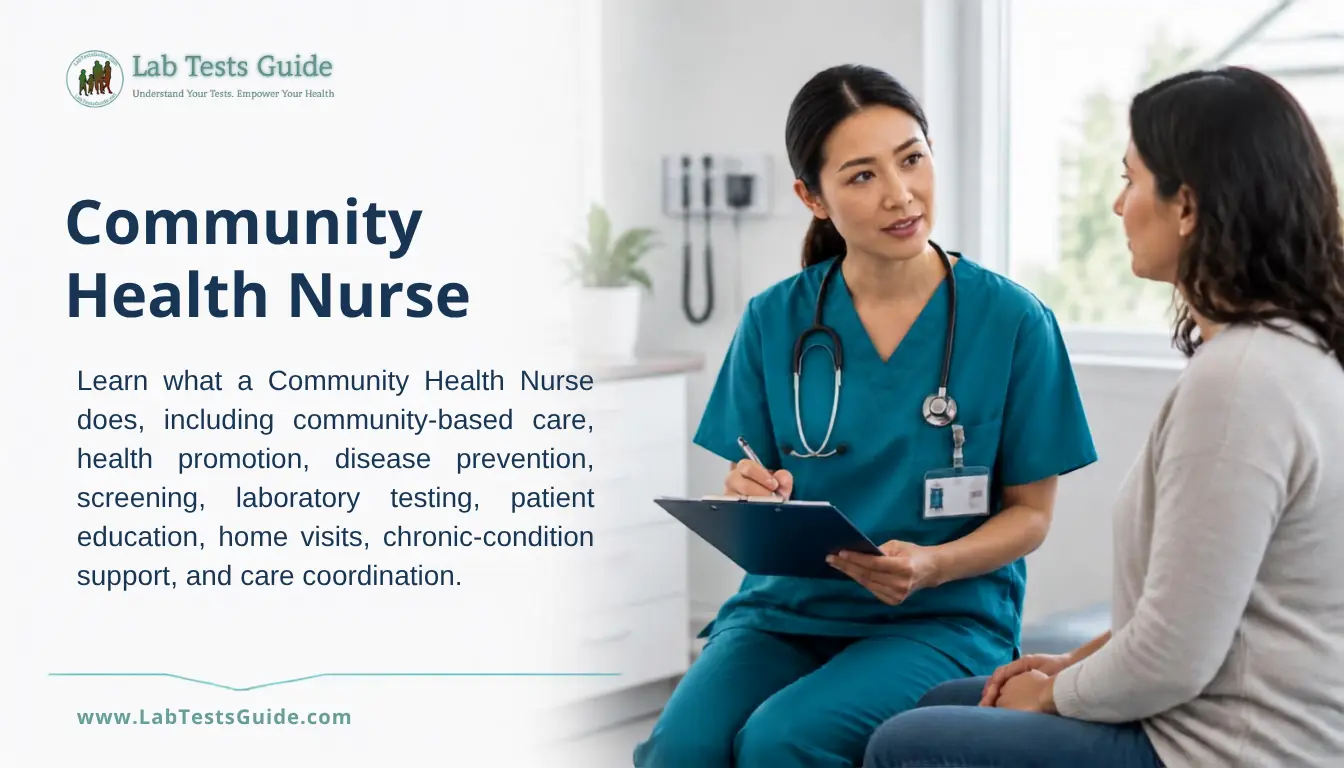
A Community Health Nurse is a licensed nursing professional who provides nursing services outside traditional inpatient settings, focusing on individuals, families, groups, and communities. Community Health Nurses combine direct care, prevention, health promotion, education, screening, care coordination, and population-focused activities.
Community Health Nurses address health needs in diverse settings, including community health centers, clinics, public health departments, home-based programs, schools, and outreach programs. They help connect people with healthcare resources and support preventive health initiatives.
Community Health Nurses responsibilities, qualifications, scope of practice, clinical authority, and work settings vary by jurisdiction, employer, healthcare system, population, and applicable regulations.
What Does a Community Health Nurse Do?
Community assessment
Assessing community health needs.
Individual health assessment
Evaluating patient health status.
Health education
Teaching health and wellness.
Disease prevention
Supporting preventive health.
Health screening
Conducting health screenings.
Chronic-condition support
Supporting chronic disease management.
Home visits
Where applicable.
Immunization programs
Supporting immunization services.
Communicable-disease prevention
Preventing disease spread.
Care coordination
Coordinating healthcare services.
Referral services
Connecting with resources.
Patient advocacy
Supporting patient needs.
Community outreach
Engaging with communities.
Health-risk assessment
Identifying health risks.
Documentation
Maintaining health records.
Follow-up
Tracking patient outcomes.
Exact responsibilities vary by jurisdiction, employer, and setting.
Community Health Nurse Daily Workflow
Community Health Nursing Approach
- Individual-focused care – Direct care to individual patients.
- Family-focused care – Supporting family health needs.
- Group-focused care – Health education and support groups.
- Population-focused care – Addressing community health issues.
Community Health Nurses may address both immediate health needs and broader prevention goals.
Social Determinants of Health
Factors that can influence health outcomes include:
- Housing – Safe and stable housing.
- Food access – Access to nutritious food.
- Transportation – Access to transportation.
- Education – Health literacy and education.
- Employment – Income and employment status.
- Income – Financial resources.
- Healthcare access – Access to healthcare services.
- Social support – Family and community support.
- Environmental conditions – Environmental health factors.
Community Health Nurses identify barriers, connect people with resources, and support appropriate referrals.
Community Health Nurse and Laboratory Testing
Community Health Nurses may interact with laboratory testing through:
- Screening programs – Health screening initiatives.
- Specimen collection – Collecting specimens within scope.
- Point-of-care testing – Bedside testing where authorized.
- Blood glucose testing – Diabetes screening and monitoring.
- Urinalysis – Urinary screening.
- Communicable-disease testing – Infection screening.
- Specimen identification – Correct patient identification.
- Specimen labeling – Accurate specimen labeling.
- Collection timing – Appropriate timing.
- Specimen transport – Proper transport.
- Result communication – Communicating results.
- Referral for follow-up – Referral for confirmatory testing.
- Documentation – Recording test information.
- Communication with laboratory professionals – Effective collaboration.
- Reducing pre-analytical errors – Ensuring specimen quality.
Common Laboratory Tests in Community Health
| Test/Screening | General Purpose | Community Nursing Considerations |
|---|---|---|
| Blood Glucose | Blood sugar monitoring | Screening, patient education, referral |
| HbA1c | Longer-term glucose control | Diabetes monitoring, education |
| Lipid Panel | Cholesterol and triglycerides | Cardiovascular risk screening |
| CBC | Blood cells, hemoglobin | Anemia and health assessment |
| BMP | Electrolytes, renal markers, glucose | Metabolic and renal assessment |
| CMP | Metabolic and liver markers | Broader systemic assessment |
| Urinalysis | Urinary findings | Urinary and metabolic assessment |
| HIV Testing | HIV screening | Where applicable, referral |
| Hepatitis Testing | Hepatitis screening | Where applicable, referral |
Available testing varies by program, jurisdiction, clinical setting, and scope of practice.
Community Health Nurse and Specimen Quality
Community Health Nurses can help reduce pre-analytical errors through:
- Correct patient identification – Verifying patient identity.
- Correct specimen/container – Using appropriate materials.
- Proper collection technique – Following proper procedures.
- Accurate labeling – Correct specimen labeling.
- Adequate specimen volume – Ensuring sufficient sample.
- Appropriate timing – Collecting at the right time.
- Proper storage – Maintaining specimen integrity.
- Timely transport – Prompt delivery.
- Avoiding contamination – Preventing contamination.
- Following laboratory instructions – Adhering to protocols.
- Communication with laboratory staff – Effective collaboration.
Community Health Nurse and Health Promotion
- Healthy nutrition – Balanced eating habits.
- Physical activity – Exercise and movement.
- Sleep – Importance of adequate sleep.
- Hygiene – Personal and environmental hygiene.
- Preventive healthcare – Regular check-ups.
- Chronic-disease prevention – Risk reduction strategies.
- Smoking/tobacco cessation – Supporting cessation efforts.
- Substance-use prevention – Education and support.
- Health literacy – Understanding health information.
Community Health Nurse and Chronic Conditions
Community Health Nurses may support people living with:
- Diabetes
- Hypertension
- Cardiovascular disease
- Asthma
- Chronic respiratory disease
- Kidney disease
- Obesity
- Cancer
- Other long-term conditions
Support may include monitoring, education, self-management support, medication adherence education, follow-up, referral, and care coordination.
Community Health Nurse and Immunization
- Immunization education – Teaching about vaccines.
- Vaccine-preventable disease prevention – Preventing disease.
- Immunization clinics – Supporting vaccination programs.
- Record review – Reviewing immunization records.
- Community outreach – Engaging communities.
- Vaccine communication – Providing accurate information.
- Public-health coordination – Collaborating with public health.
- Catch-up vaccination programs – Supporting catch-up efforts.
Immunization schedules and requirements vary by jurisdiction.
Communicable Disease Prevention
- Infection prevention – Education and practices.
- Health education – Teaching prevention strategies.
- Exposure assessment – Evaluating potential exposures.
- Case coordination – Coordinating case management.
- Public-health coordination – Collaborating with public health.
- Community outbreak response – Responding to outbreaks.
- Referral – Referring for testing and treatment.
- Surveillance activities – Monitoring disease trends.
Community Health Nurses should follow current local public-health guidance.
Community Health Screening
- Blood pressure screening – Hypertension detection.
- Diabetes screening – Glucose testing.
- Cholesterol screening – Lipid testing.
- Cancer screening education – Promoting cancer screening.
- Vision screening – Visual acuity assessment.
- Hearing screening – Hearing assessment.
- Infectious-disease screening – Infection testing.
- Pregnancy-related screening – Where appropriate.
Screening vs Diagnosis: Screening identifies potential health concerns; diagnosis requires clinical evaluation by a qualified healthcare provider.
Community Health Nurse and Vulnerable Populations
Community Health Nurses may serve populations experiencing barriers to care, including:
- Rural communities
- Older adults
- Low-resource communities
- People experiencing homelessness
- People with limited healthcare access
- Migrant populations
- People with chronic illnesses
- People facing transportation barriers
Use respectful, non-stigmatizing language when discussing vulnerable populations.
Community Health Nurse and Medical Laboratory Professionals
Collaboration involves:
- Screening programs – Coordinating screening initiatives.
- Specimen collection – Following instructions.
- Laboratory instructions – Understanding test requirements.
- Specimen transport – Proper transport procedures.
- Result reporting – Communicating results.
- Follow-up testing – Coordinating additional testing.
- Rejected specimens – Addressing specimen issues.
- Quality assurance – Maintaining quality standards.
- Patient education – Teaching about tests and preparation.
Essential Community Health Nurse Skills
Community Health Nurse Education and Qualifications
- Nursing education – Approved nursing program.
- RN licensure – Where applicable.
- BSN – Where required or preferred.
- Clinical experience – Direct patient care experience.
- Community/public-health experience – Relevant experience.
- Continuing education – Ongoing learning.
- Specialty certification – Where available.
Exact requirements vary by jurisdiction and employer.
Community Health Nursing Certifications
- Public/community health nursing certification – Where available.
- Specialty nursing certifications – As applicable.
- Basic life-support certification – Where required.
- Continuing professional education – Ongoing development.
Licensure ≠ Certification ≠ Employment Role
Not every Community Health Nurse holds all certifications. Requirements vary by employer and jurisdiction.
Community Health Nurse vs Other Nursing Roles
| Role | Primary Focus | Typical Setting | Population | Laboratory Interaction |
|---|---|---|---|---|
| Community Health Nurse | Community health | Community settings | Individuals, families, communities | Screening, specimen collection |
| Public Health Nurse | Population health | Public health departments | Communities, populations | Public health screening |
| School Nurse | School health | Educational settings | Students | School-based screening |
| Home Health Nurse | Home-based care | Patient homes | Patients | Home-based specimen collection |
| Staff Nurse | Direct patient care | Hospitals, clinics | Patients | Specimen collection, result review |
| Nurse Practitioner | Advanced patient care | Clinical practice | Patients | Ordering, interpreting tests |
Roles and responsibilities vary by organization and jurisdiction.
Community Health Nurse Work Settings
Community Health Centers
Community-based care.
Public Health Departments
Public health programs.
Clinics
Outpatient care.
Home-Based Programs
Home visits.
Rural Health Programs
Rural community care.
Outreach Programs
Community outreach.
Schools
School-based health.
Nonprofit Organizations
Community health initiatives.
Workplace Health Programs
Occupational health.
Career Advantages and Challenges
Advantages
- Community impact
- Preventive healthcare
- Health education
- Long-term relationships
- Population-health experience
- Care coordination
- Diverse work environments
Challenges
- Limited resources
- Large community needs
- Transportation barriers
- Complex social determinants
- Difficult follow-up
- High documentation demands
- Exposure to diverse health conditions
- Coordination across organizations
Community Health Nurse Career Pathway
Actual career pathways vary by jurisdiction and employer.
Common Community Health Nursing Abbreviations
| Abbreviation | Meaning |
|---|---|
| RN | Registered Nurse |
| LPN | Licensed Practical Nurse |
| LVN | Licensed Vocational Nurse |
| BSN | Bachelor of Science in Nursing |
| MSN | Master of Science in Nursing |
| APRN | Advanced Practice Registered Nurse |
| NP | Nurse Practitioner |
| PHN | Public Health Nurse |
| CHW | Community Health Worker |
| EHR | Electronic Health Record |
| PPE | Personal Protective Equipment |
| BMI | Body Mass Index |
| UA | Urinalysis |
| HIV | Human Immunodeficiency Virus |
| TB | Tuberculosis |
| QI | Quality Improvement |
Abbreviations may have multiple meanings depending on context.
Frequently Asked Questions
What is a Community Health Nurse?
A Community Health Nurse is a licensed nursing professional who provides nursing services outside traditional inpatient settings, focusing on individuals, families, groups, and communities.
What does a Community Health Nurse do?
Community Health Nurses assess health needs, provide education, conduct screenings, support chronic conditions, coordinate care, and promote health in community settings.
Where do Community Health Nurses work?
Community health centers, public health departments, clinics, home-based programs, rural health programs, and outreach programs.
What education does a Community Health Nurse need?
Most Community Health Nurses are RNs with BSN degrees, though requirements vary by jurisdiction and employer.
Does a Community Health Nurse need to be an RN?
Many positions require RN licensure, but requirements vary by employer and jurisdiction.
Is Community Health Nurse a separate nursing license?
No, Community Health Nurse is a role, not a separate nursing license.
What is the difference between a Community Health Nurse and Public Health Nurse?
Community Health Nurses often focus on individuals and families in community settings; Public Health Nurses may focus on population-level health and policy.
What is the difference between a Community Health Nurse and Home Health Nurse?
Community Health Nurses work in diverse community settings; Home Health Nurses primarily provide care in patients’ homes.
Do Community Health Nurses perform home visits?
Yes, some Community Health Nurses perform home visits as part of their role.
Do Community Health Nurses provide health screening?
Yes, screening is a core activity for many Community Health Nurses.
Do Community Health Nurses perform laboratory testing?
Some Community Health Nurses perform point-of-care testing and collect specimens within their scope.
What laboratory tests may be used in community health?
Blood glucose, HbA1c, lipid panels, CBC, BMP, CMP, urinalysis, and infectious-disease tests.
What is the difference between screening and diagnosis?
Screening identifies potential health concerns; diagnosis requires clinical evaluation by a qualified healthcare provider.
Do Community Health Nurses support chronic diseases?
Yes, Community Health Nurses support chronic disease management through education, monitoring, and care coordination.
Do Community Health Nurses provide immunization services?
Many Community Health Nurses support immunization programs and education.
How do Community Health Nurses help prevent communicable diseases?
Through education, screening, immunization support, and public-health coordination.
What skills are important for Community Health Nurses?
Community assessment, communication, health education, cultural competence, and care coordination.
What certifications can Community Health Nurses obtain?
Public/community health nursing certification and other specialty certifications.
How can an RN become a Community Health Nurse?
Through gaining clinical experience, community/public-health preparation, and applying for community health positions.
Do Community Health Nurses work with laboratory professionals?
Yes, they collaborate on screening, specimen collection, result communication, and quality assurance.
How do Community Health Nurses address social determinants of health?
By identifying barriers, connecting people with resources, and supporting appropriate referrals.
What are the challenges of Community Health Nursing?
Limited resources, transportation barriers, complex social determinants, and coordinating care across organizations.
Key Takeaways
- Community Health Nurses provide nursing care in community-based settings.
- They focus on individuals, families, groups, and populations.
- Community Health Nurses promote health and prevent disease.
- They support screening and early identification of health concerns.
- Community Health Nurses coordinate healthcare and community resources.
- They may interact with laboratory testing within their scope and program requirements.
- Community Health Nurses address barriers that affect access to healthcare.
- They support evidence-informed community health initiatives.
Related LabTestsGuide Topics
The information provided on this page is for educational purposes only and does not constitute medical or legal advice. Always consult the appropriate regulatory body for specific licensing and scope of practice requirements.
