

Bartholin’s Gland: Anatomy, Functions & Common Conditions
Bartholin’s Gland: Anatomy, Functions & Common Conditions
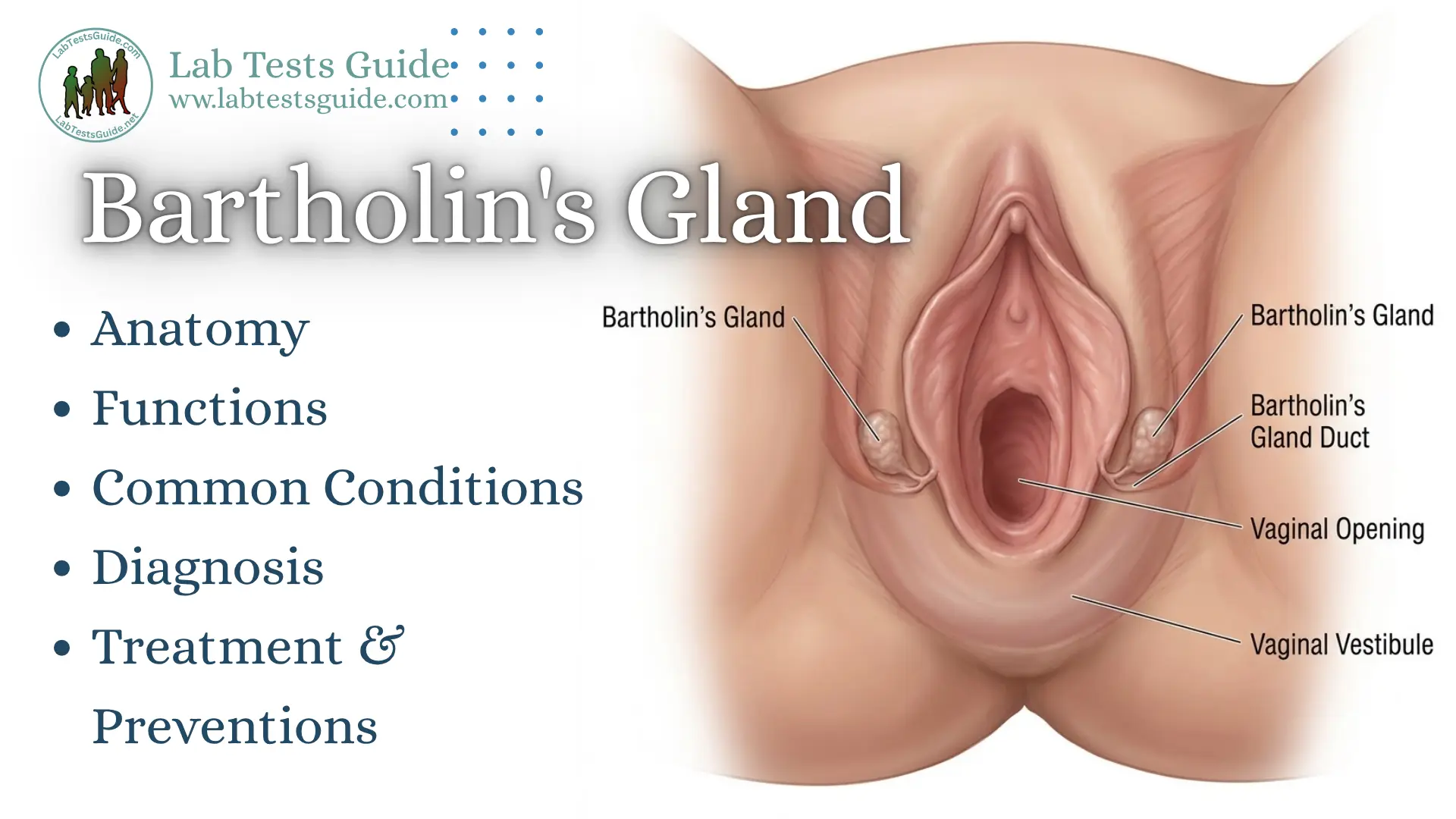
The Bartholin’s glands are small glands located on either side of the vaginal opening that secrete lubricating fluid and contribute to normal vulvovaginal function.
01 What Is the Bartholin’s Gland?
The Bartholin’s glands, also called the greater vestibular glands, are a pair of small glands located on either side of the vaginal opening. Each gland is connected to the vaginal vestibule by a small duct through which its secretions are released.
The Bartholin’s glands produce a mucus-like lubricating fluid that helps moisten the vaginal opening. Blockage of a gland duct can lead to a Bartholin’s gland cyst, while infection may result in a Bartholin’s gland abscess.
02 Types and Functions of the Bartholin’s Gland
The Bartholin’s glands produce and release mucus-like fluid that helps lubricate the vaginal opening, particularly during sexual arousal. Their ducts provide a pathway for these secretions to reach the vaginal vestibule. Blockage or infection of a duct or gland can result in a Bartholin’s gland cyst or abscess.
03 Common Bartholin’s Gland Problems
04 Laboratory Tests and Diagnosis
Most Bartholin’s gland cysts and abscesses are diagnosed through the patient’s symptoms and clinical examination. Laboratory testing is usually reserved for selected cases, particularly when infection, recurrent disease, sexually transmitted infection, or an unusual or persistent mass is suspected.
05 Bartholin’s Gland Symptoms and When to Seek Care
Seek medical evaluation for a painful or enlarging lump, significant swelling, fever, pus or drainage, difficulty walking or sitting, recurrent symptoms, or a persistent or unusual mass near the vaginal opening. A new Bartholin’s gland mass in women aged 40 years or older should receive appropriate clinical evaluation to exclude other causes.
06 How Are Bartholin’s Gland Problems Diagnosed?
Bartholin’s gland problems are usually diagnosed from the patient’s symptoms, medical history, and physical examination of the vulvar area. Laboratory tests are not routinely required for an uncomplicated cyst, but selected testing may be considered when infection, sexually transmitted infection, recurrent disease, or an unusual mass is suspected.
07 Treatment and Prevention
- Small or asymptomatic Bartholin’s gland cysts may not require treatment and can sometimes resolve without intervention.
- Warm sitz baths may help relieve discomfort and encourage drainage in selected cases.
- A symptomatic or infected cyst or abscess may require drainage by a healthcare professional.
- Antibiotics may be prescribed when there is significant infection or when clinically indicated.
- Maintain good vulvar hygiene and keep the area clean and dry.
- Avoid squeezing, puncturing, or attempting to drain a Bartholin’s gland cyst or abscess at home.
- Practice safer sex and use barrier protection to reduce the risk of sexually transmitted infections.
- Seek medical evaluation for recurrent cysts, abscesses, or persistent masses as advised by a healthcare professional.
08 Key Takeaways & Related Laboratory Tests
The Bartholin’s glands are paired glands located near the vaginal opening that produce mucus-like fluid to support lubrication. Most uncomplicated cysts are diagnosed clinically, while laboratory testing may be useful in selected cases involving infection, recurrent disease, sexually transmitted infections, or a persistent or unusual mass.
Related Laboratory Tests
References and Sources
- American College of Obstetricians and Gynecologists (ACOG). Disorders of the Vulva: Common Causes of Vulvar Pain, Burning, and Itching. ACOG — Disorders of the Vulva – (accessed on September 01, 2026)
- Mayo Clinic. Bartholin’s Cyst: Symptoms & Causes. Mayo Clinic — Bartholin’s Cyst – (accessed on September 01, 2026)
- StatPearls Publishing. Anatomy, Abdomen and Pelvis: Bartholin Gland. NCBI Bookshelf. NCBI Bookshelf — Bartholin Gland – (accessed on September 01, 2026)
- Centers for Disease Control and Prevention (CDC). Gonorrhea Laboratory Information. CDC — Gonorrhea Laboratory Information – (accessed on September 01, 2026)
- National Health Service (NHS). Bartholin’s Cyst. NHS — Bartholin’s Cyst – (accessed on September 01, 2026)
- Healthdirect Australia. Bartholin’s Cysts. Healthdirect — Bartholin’s Cysts – (accessed on September 01, 2026)
- Cleveland Clinic. Bartholin Cyst: Causes, Symptoms & Treatment. Cleveland Clinic — Bartholin Cyst – (accessed on September 01, 2026)
- University College London Hospitals NHS Foundation Trust. Bartholin’s Cyst or Abscess. UCLH — Bartholin’s Cyst or Abscess – (accessed on September 01, 2026)
