

Hospice Nurse: Responsibilities, Skills, Education, and Hospice Nursing Care
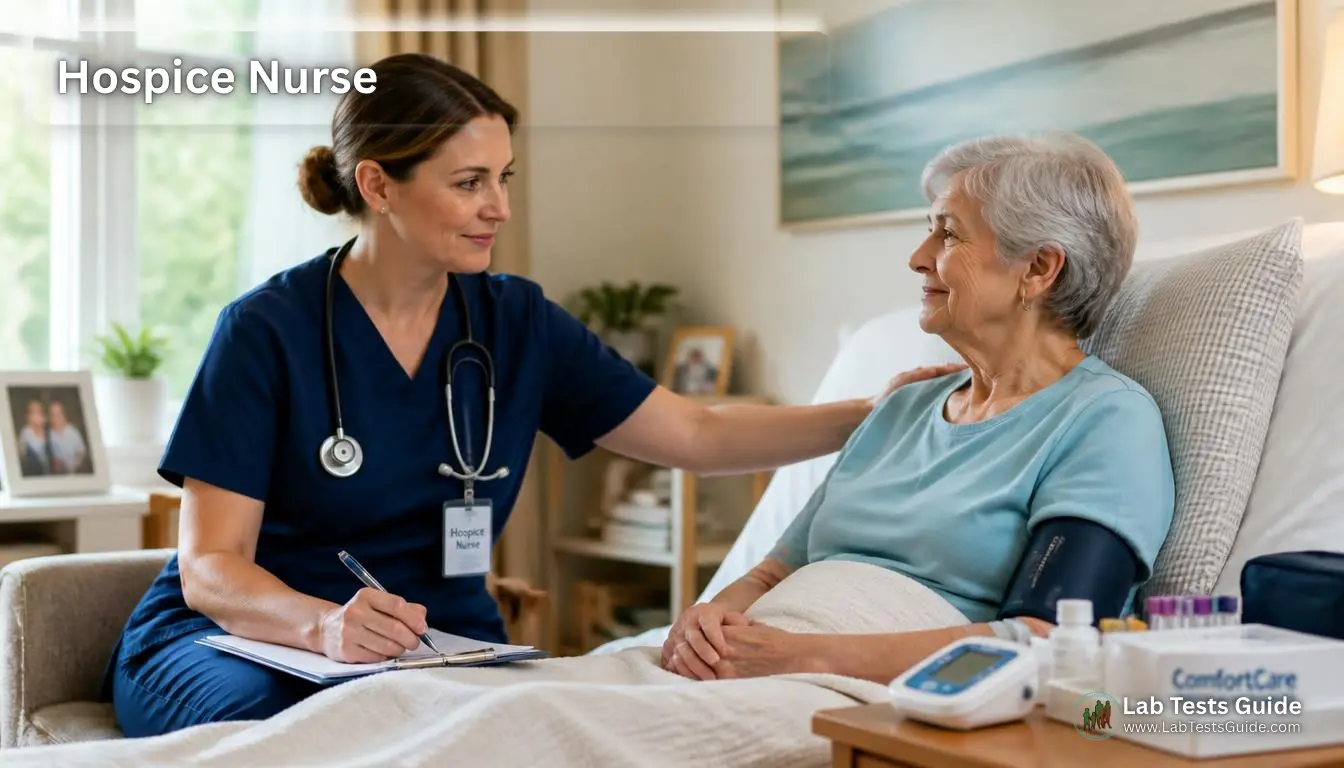
What Is a Hospice Nurse?
A Hospice Nurse is a licensed nursing professional who provides nursing care focused primarily on comfort, quality of life, symptom support, dignity, and the needs of patients and families facing advanced or terminal illness. Hospice care is centered on comfort rather than disease-directed curative treatment when hospice eligibility and goals of care have been established.
Hospice Nurses work as part of an interdisciplinary team to support physical, emotional, social, and spiritual needs. They may provide care in patient homes, hospice facilities, hospitals, nursing homes, assisted living settings, or other approved care environments depending on the healthcare system.
Hospice nursing is patient-centered and family-centered, focusing on symptom management, education, emotional support, and honoring patient preferences and goals.
Hospice Care vs Palliative Care
| Feature | Hospice Care | Palliative Care |
|---|---|---|
| Primary Goal | Comfort, quality of life, dignity | Relief of symptoms and stress from serious illness |
| Timing | Typically when curative treatment is no longer the focus | Can begin at diagnosis and continue through treatment |
| Eligibility | Usually requires a prognosis consistent with hospice criteria | No specific prognosis required |
| Disease-Directed Treatment | Generally not curative; focused on comfort | Can be provided alongside curative treatment |
| Family Support | Major component, including bereavement | Important component |
| Symptom Management | Major focus | Major focus |
Definitions and eligibility rules vary by healthcare system and payer. Hospice and palliative care are distinct but related services.
What Does a Hospice Nurse Do?
Patient assessment
Evaluating patient health and comfort.
Symptom assessment
Assessing physical and emotional symptoms.
Pain assessment
Evaluating pain and comfort needs.
Comfort-focused care
Providing comfort-centered nursing care.
Medication support
Managing medications within scope.
Monitoring changes
Observing changes in condition.
Wound and skin care
Assessing and caring for skin.
Respiratory support
Addressing breathing concerns.
Emotional support
Supporting patients and families emotionally.
Family education
Teaching and guiding caregivers.
Care coordination
Coordinating hospice team care.
Communication
Communicating with clinicians and team.
Laboratory coordination
Coordinating testing when appropriate.
Documentation
Maintaining clinical records.
Care-plan updates
Updating care plans as needed.
Follow-up
Ongoing monitoring and reassessment.
Bereavement coordination
Connecting families with bereavement services.
Not every Hospice Nurse performs every listed activity. Responsibilities vary by role and setting.
Hospice Nursing Workflow
Pain Assessment & Management
- Pain assessment – Evaluating pain characteristics and severity.
- Pain characteristics – Location, quality, intensity, timing.
- Severity assessment – Using validated pain scales.
- Functional impact – How pain affects daily life.
- Patient-reported symptoms – Listening to patient experiences.
- Non-pharmacologic comfort measures – Positioning, relaxation, massage.
- Medication-related monitoring – Observing response to medications.
- Communication with prescribers – Sharing concerns and observations.
- Documentation – Recording pain assessments and interventions.
- Reassessment – Ongoing evaluation of comfort.
Pain management is individualized and follows the patient’s care plan and applicable clinical guidance.
Common Hospice Symptoms
Pain
Physical and emotional discomfort.
Shortness of breath
Respiratory distress and anxiety.
Fatigue
Extreme tiredness and weakness.
Nausea
Feeling sick to the stomach.
Constipation
Digestive discomfort.
Anxiety
Fear, worry, and restlessness.
Confusion
Changes in awareness and thinking.
Sleep disturbance
Difficulty sleeping or restlessness.
Poor appetite
Loss of interest in food.
Weakness
Decreased strength and mobility.
Skin discomfort
Dryness, itching, pressure injuries.
Symptom assessment and management are individualized and guided by the patient’s goals of care.
End-of-Life Changes
- Increased fatigue – Greater need for rest.
- Reduced appetite – Decreased interest in food.
- Reduced fluid intake – Drinking less.
- Changes in breathing – Breathing pattern changes.
- Changes in alertness – Increased sleep and confusion.
- Increased sleep – Sleeping more frequently.
- Reduced mobility – Less movement.
- Changes in circulation – Temperature and skin changes.
Individual experiences vary. Unexpected or concerning changes should be communicated to the healthcare team.
Family & Caregiver Support
- Education – Teaching about the dying process.
- Emotional support – Providing compassion and presence.
- Communication – Honest and empathetic discussions.
- Care-plan explanation – Helping families understand the care plan.
- Symptom observation – Teaching what to watch for.
- Practical guidance – Supporting daily caregiving tasks.
- Resource coordination – Connecting with hospice team services.
- Support during changes – Helping families through transitions.
Medication-Related Responsibilities
- Review medication lists – Verifying current medications.
- Reconcile medications – Identifying discrepancies.
- Administer medications – When authorized.
- Educate patients/caregivers – Teaching about medications.
- Monitor response – Observing effectiveness.
- Observe for adverse effects – Watching for side effects.
- Communicate concerns – Reporting to prescribers.
- Document medication-related care – Recording medication information.
Laboratory Testing in Hospice Care
Laboratory testing in hospice is generally guided by the patient’s goals of care and whether testing is likely to provide meaningful information that supports comfort, decision-making, or the established plan of care.
- Monitoring selected conditions – When clinically appropriate.
- Evaluating symptoms – When results could affect comfort-focused care.
- Medication-related monitoring – When clinically appropriate.
- Assessing anemia or metabolic abnormalities – When relevant.
- Supporting clinical decision-making – Informing care discussions.
Common Laboratory Tests in Hospice Care
| Test/Category | Potential Clinical Relevance |
|---|---|
| CBC | Assessment of anemia or other hematologic findings |
| Blood Glucose | Monitoring selected diabetes-related concerns |
| HbA1c | Longer-term glycemic assessment when relevant |
| BMP | Electrolyte, glucose, and kidney-related information |
| CMP | Broader metabolic and organ-related information |
| Creatinine/eGFR | Kidney function information when clinically relevant |
| Liver Tests | Evaluation of selected liver-related concerns |
| Calcium | Assessment of selected metabolic concerns |
| Albumin | Nutritional or disease-related clinical context |
| Urinalysis | Evaluation of selected urinary findings |
| PT/INR | Coagulation/anticoagulation monitoring |
Laboratory testing should be ordered or performed according to clinical judgment, patient goals, applicable scope, and hospice protocols.
Hospice Nurse & Laboratory Professionals
| Role | Primary Focus |
|---|---|
| Hospice Nurse | Assesses symptoms, coordinates care, communicates clinical changes, supports patient/family goals, may collect or coordinate specimens |
| Medical Laboratory Professional | Processes specimens, performs laboratory testing, applies quality procedures, reports analytical findings |
Communication is important when laboratory testing is selected as part of comfort-focused or clinically meaningful care.
Specimen Collection & Laboratory Quality
- Correct patient identification – Verifying patient identity.
- Correct specimen type – Collecting the right specimen.
- Proper collection technique – Following proper procedures.
- Correct container – Using appropriate materials.
- Labeling – Accurate specimen labeling.
- Timing – Collecting at the right time.
- Storage – Maintaining specimen integrity.
- Transport – Proper transport to the laboratory.
- Documentation – Recording specimen information.
- Communication with laboratory staff – Effective collaboration.
Unnecessary or poorly planned testing may create burden for seriously ill patients. Testing should be clinically purposeful.
Wound & Skin Care
- Skin assessment – Evaluating skin integrity.
- Pressure injury prevention – Preventing skin breakdown.
- Wound assessment – Evaluating wounds.
- Dressing care – Where authorized.
- Moisture-related skin problems – Addressing skin irritation.
- Comfort – Supporting patient comfort.
- Infection observation – Monitoring for infection signs.
- Documentation – Recording skin and wound care.
- Caregiver education – Teaching wound and skin care.
Respiratory Comfort
- Shortness of breath – Assessing and addressing breathing concerns.
- Breathing pattern – Observing respiratory effort.
- Patient distress – Recognizing and responding to anxiety.
- Comfort – Supporting comfort measures.
- Oxygen-related care – When prescribed and within scope.
- Communication with the healthcare team – Reporting concerns.
Hospice Interdisciplinary Team
Interdisciplinary care supports physical, emotional, social, and spiritual needs.
Hospice Settings
Patient’s home
Home-based hospice care.
Hospice residence
Hospice facility care.
Nursing facility
Skilled nursing setting.
Assisted living
Residential care settings.
Hospital
Hospital-based hospice.
Other settings
Community and residential settings.
Home Hospice Nursing
- Home visits – Providing care in the patient’s home.
- Patient assessment – Evaluating patient status.
- Family education – Teaching and guiding caregivers.
- Symptom monitoring – Observing changes in symptoms.
- Medication support – Within scope.
- Care coordination – Coordinating hospice team care.
- Laboratory coordination – Coordinating testing when appropriate.
- Safety assessment – Evaluating home safety.
- Follow-up – Ongoing monitoring.
Hospice Nurse vs Home Health Nurse
| Feature | Hospice Nurse | Home Health Nurse |
|---|---|---|
| Primary Goal | Comfort and quality of life | Skilled home-based healthcare |
| Typical Population | Patients receiving hospice care | Patients receiving home health services |
| Disease-Directed Care | Guided by goals of care | Often supports recovery/management |
| Symptom Management | Major focus | Important component |
| Family Education | Major component | Major component |
| Laboratory Testing | Goal-directed when appropriate | Often used for monitoring |
| End-of-Life Focus | Central | Not necessarily central |
Essential Hospice Nursing Skills
Education & Qualifications
- RN pathways – Registered Nurse education and licensure.
- LPN/LVN roles – Where applicable.
- Nursing licensure – Valid nursing license.
- Clinical experience – Direct patient care experience.
- Hospice orientation – Hospice training.
- Continuing education – Ongoing professional development.
Requirements vary by jurisdiction and employer.
Certifications & Professional Development
- Hospice and palliative nursing – Hospice certification.
- Pain and symptom management – Pain management training.
- Wound care – Wound care certification.
- Geriatric nursing – Gerontology certification.
- Palliative care – Palliative care training.
- Grief and bereavement – Bereavement support training.
- End-of-life communication – Communication skills training.
Not all certifications are universally required. Requirements vary by employer and jurisdiction.
Documentation
- Symptoms – Recording symptom assessments.
- Pain assessment – Documenting pain evaluations.
- Functional status – Recording mobility and function.
- Medication-related observations – Documenting medication care.
- Patient/family education – Recording education provided.
- Laboratory testing – Documenting testing information.
- Specimen collection – Recording specimen details.
- Communication – Documenting care discussions.
- Care-plan changes – Updating care plans.
- Interdisciplinary coordination – Recording team communications.
- Follow-up – Documenting ongoing monitoring.
Documentation should be accurate, timely, and objective.
Important Hospice Nursing Abbreviations
| Abbreviation | Meaning |
|---|---|
| HN | Hospice Nurse |
| RN | Registered Nurse |
| LPN | Licensed Practical Nurse |
| LVN | Licensed Vocational Nurse |
| NP | Nurse Practitioner |
| APRN | Advanced Practice Registered Nurse |
| EOL | End of Life |
| EHR | Electronic Health Record |
| ADL | Activities of Daily Living |
| DNR | Do Not Resuscitate |
| DNI | Do Not Intubate |
| ACP | Advance Care Planning |
| PRN | As Needed |
Terminology and legal documents vary by jurisdiction.
Frequently Asked Questions
What is a Hospice Nurse?
A Hospice Nurse is a licensed nursing professional who provides comfort-focused, symptom-directed nursing care to patients and families facing advanced or terminal illness.
What does a Hospice Nurse do?
Hospice Nurses assess symptoms, manage pain, provide comfort care, educate families, coordinate care, and support patients and families emotionally.
What is hospice nursing?
Hospice nursing is nursing care focused on comfort, quality of life, symptom management, and dignity for patients with advanced illness.
What is the difference between hospice and palliative care?
Hospice care is typically for patients who are no longer pursuing curative treatment; palliative care can be provided at any stage of serious illness alongside curative treatment.
Where do Hospice Nurses work?
Patient homes, hospice facilities, hospitals, nursing homes, assisted living settings, and other residential settings.
Does a Hospice Nurse provide care at home?
Yes, many Hospice Nurses provide care in patients’ homes.
Do Hospice Nurses manage pain?
Yes, pain assessment and management are central to hospice nursing.
Do Hospice Nurses administer medications?
When authorized and within scope, Hospice Nurses may administer medications and monitor response.
Can Hospice Nurses collect blood samples?
When authorized and trained, Hospice Nurses may collect specimens if testing is clinically appropriate and consistent with patient goals.
Do Hospice patients still receive laboratory tests?
Some patients may have laboratory testing if it supports comfort, symptom management, or clinical decision-making consistent with goals of care.
What laboratory tests may be used in hospice care?
CBC, blood glucose, BMP, CMP, creatinine/eGFR, liver tests, PT/INR, and urinalysis may be used when clinically appropriate.
Does hospice mean all medical testing stops?
No. Testing decisions are individualized and based on goals of care, clinical judgment, and patient preferences.
What is the role of a Hospice Nurse in symptom management?
Hospice Nurses assess symptoms, implement comfort measures, monitor response, educate families, and communicate with the healthcare team.
How does a Hospice Nurse support family caregivers?
Through education, emotional support, practical guidance, communication, and connecting families with hospice team services.
What happens during a hospice nursing visit?
Assessment of symptoms, medication review, comfort care, education, communication with family, and care coordination.
What education is required to become a Hospice Nurse?
Most Hospice Nurses are licensed RNs with clinical experience and hospice training. Requirements vary by employer and jurisdiction.
Do Hospice Nurses need to be Registered Nurses?
Many positions require RN licensure, but some LPN/LVN roles are available depending on employer and jurisdiction.
What skills does a Hospice Nurse need?
Compassionate communication, clinical assessment, symptom management, family education, care coordination, and documentation.
What is the difference between a Hospice Nurse and a Home Health Nurse?
Hospice Nurses focus on comfort and quality of life; Home Health Nurses focus on skilled home-based healthcare and recovery.
What is the difference between a Hospice Nurse and a Palliative Care Nurse?
Hospice Nurses work in hospice settings with a comfort focus; Palliative Care Nurses may work in various settings and can provide care alongside curative treatment.
Do Hospice Nurses provide wound care?
Yes, Hospice Nurses may provide wound assessment and care within their scope to promote comfort.
How do Hospice Nurses work with doctors and other healthcare professionals?
Hospice Nurses collaborate with physicians, advanced practice clinicians, social workers, chaplains, and other hospice team members.
Is Hospice Nursing emotionally difficult?
Hospice nursing can be emotionally challenging but also meaningful and rewarding for those who feel called to this work.
Is Hospice Nursing a good career?
Hospice Nursing offers meaningful work, patient and family relationships, and the opportunity to provide compassionate end-of-life care.
How does laboratory testing support hospice nursing?
Laboratory testing may help monitor symptoms, guide medication decisions, and support clinical discussions when consistent with patient goals.
Key Takeaways
- Hospice Nurses provide comfort-focused, compassionate nursing care.
- They focus on quality of life, dignity, and symptom management.
- Hospice Nurses assess pain and symptoms to support comfort.
- They educate and support families and caregivers.
- Hospice Nurses coordinate interdisciplinary hospice care.
- Laboratory testing may continue when clinically meaningful and consistent with goals of care.
- Hospice Nurses respect patient autonomy, dignity, and goals.
- Responsibilities vary by jurisdiction, employer, and hospice program.
Related LabTestsGuide Topics
The information provided on this page is for educational purposes only and does not constitute medical or legal advice. Always consult the appropriate regulatory body for specific licensing and scope of practice requirements.
