

Oily skin is one of the most common, and most misunderstood, skin conditions people try to manage on their own. Many people respond to excess shine with harsh cleansers or by skipping moisturizer entirely, assuming their skin already has enough oil. Both habits tend to make the underlying issue worse rather than better.
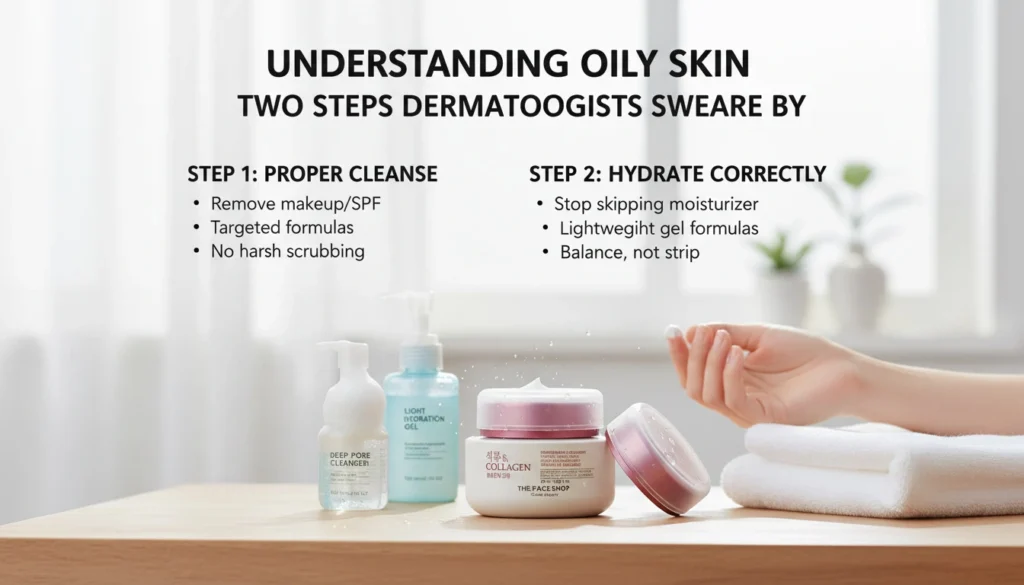
Understanding what’s actually happening at the skin barrier level helps explain why. Oily skin isn’t simply a matter of “too much oil.” It’s often the result of an imbalanced skin barrier and improper cleansing habits that trigger the skin to overproduce sebum as a protective response. Addressing the root cause, rather than just blotting away the symptoms, comes down to two key steps: proper cleansing and the right kind of hydration.
Step 1: Remove Makeup Properly, Not Just Quickly
A lot of oily-skin frustration starts at the cleansing stage. Rubbing a basic face wash over makeup, sunscreen, and a full day of oil buildup doesn’t actually clear your pores. It just moves everything around, often leaving behind a fine layer of residue that mixes with your skin’s natural oil overnight and contributes to clogged pores and breakouts.
This is where a dedicated makeup-removing face wash makes a real difference. Formulas built specifically to dissolve makeup and sunscreen work more thoroughly than a general cleanser, without requiring the kind of hard scrubbing that irritates oily, breakout-prone skin. A proper cleanse sets the stage for everything you apply afterward. If step one isn’t working, nothing that follows will work as well as it should either.
Step 2: Stop Skipping Moisturizer
Here’s the part that trips up almost everyone with oily skin: skipping moisturizer because your skin already feels oily enough. It feels logical, but it tends to backfire. When skin senses it’s dehydrated, it often responds by producing even more oil to compensate, which is the exact opposite of what you’re trying to achieve.
The real fix isn’t skipping hydration, it’s choosing the right kind. A lightweight, gel-based moisturizer formulated for oily skin delivers the hydration your skin actually needs without adding heaviness or contributing to shine. Ingredients like niacinamide help regulate oil production over time, while a water-light texture means the product absorbs fully instead of sitting on the surface. Applied to clean skin (after a proper makeup-removing cleanse), a good oil-control moisturizer should disappear within a minute, leaving skin balanced rather than greasy.
Why This Combination Works Better Than Piling On Products
Oily skin routines often get more complicated than they need to be: extra toners, multiple serums, heavy-duty clay masks used daily. But the foundation of a good routine really comes down to these two steps done well. A thorough, non-stripping cleanse removes the buildup that clogs pores and causes breakouts. A lightweight, targeted moisturizer replaces lost hydration without adding excess oil. Get those two right, and everything else in your routine works better because your skin is starting from a genuinely clean, balanced baseline instead of fighting against residue and dehydration.
The Bottom Line
Managing oily skin effectively isn’t about stripping it dry or withholding moisture out of caution. It comes down to two fundamentals: a cleanser that genuinely removes what’s built up on the skin, and a moisturizer that restores hydration without adding excess shine. Getting these two steps right addresses the root imbalance behind oily skin, rather than just managing the visible symptoms day to day.
