

Doctors warn delaying hepatitis B shot for newborns could revive a deadly threat
As U.S. health officials consider delaying the newborn hepatitis B vaccine, leading experts warn that reversing decades-long immunization gains could open the door to more infections, chronic liver disease and childhood liver cancer.
Experts urge keeping the hepatitis B birth-dose vaccine for newborns, warning that delaying it might reignite life-threatening infections and reverse decades of progress in preventing liver disease.
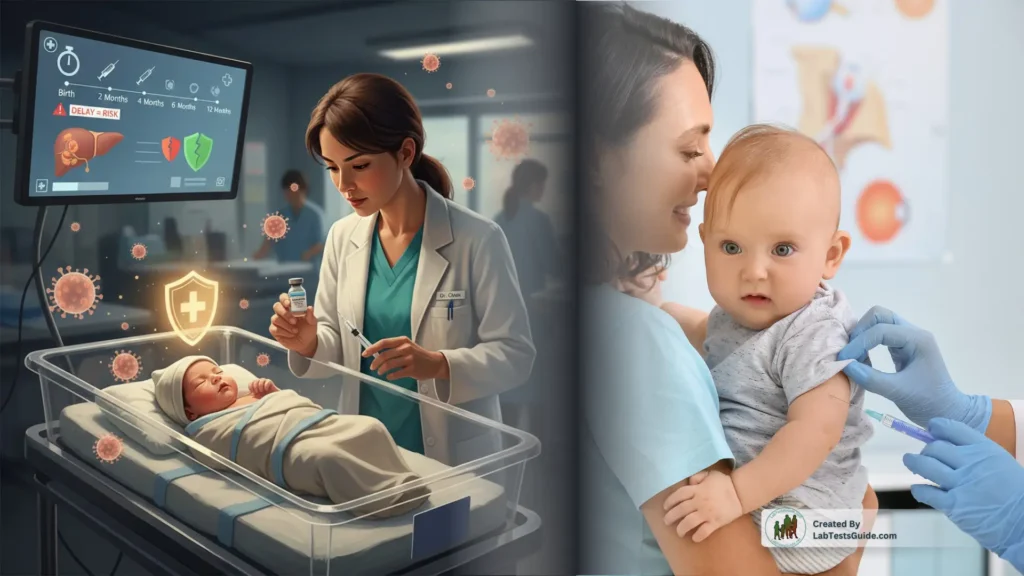
For decades, the first 24 hours of a newborn’s life have offered a critical opportunity: a timely dose of the hepatitis B vaccine. That small shot, given within hours of birth, has helped protect millions of infants from a virus that can silently lead to chronic liver disease, liver cancer and in too many cases, death.
But today, that life-saving window is under threat. A newly reconstituted vaccine advisory panel in the U.S. is considering major changes to long-established newborn immunization guidelines, a move that has alarmed medical experts and public-health advocates.
From near-eradication to risk of resurgence
Since 1991, when the strategy of universal newborn vaccination for hepatitis B regardless of apparent risk — was adopted, the incidence of hepatitis B infections among children and teens in the U.S. has dropped by roughly 99%. Global- and U.S.-based studies consistently show that when given within 24 hours of birth, the hepatitis B vaccine confers strong protection.
Experts say any delay in that first dose even in infants whose mothers tested negative removes a crucial safety net. That’s because a significant portion of people with hepatitis B are unaware of their infection. The virus can spread through microscopic amounts of blood or bodily fluid; even surface contact can suffice.
A recent independent review by the Vaccine Integrity Project (VIP) a collaboration under Center for Infectious Disease Research and Policy (CIDRAP) looked at over 400 studies spanning 40 years and found no evidence that delaying the vaccine improved safety or efficacy. Instead, the review concluded that maintaining universal birth-dose vaccination remains the safest, most effective way to prevent infection.
The numbers are stark: even a delay of just two months among infants born to mothers assumed negative could lead to hundreds or thousands of preventable infections, dozens of additional liver-cancer cases, and hundreds of avoidable deaths over time.
What’s driving the potential shift
The push to revise the schedule comes from the recently reloaded vaccine-advisory panel the Advisory Committee on Immunization Practices (ACIP) under guidance of Robert F. Kennedy Jr., U.S. Health Secretary. Some members reportedly view universal newborn vaccination as unnecessary if the mother tests negative, arguing that newborns have “low risk.”
On December 2, 2025, Reuters broke the news that the panel is set to vote on whether to delay or eliminate routine hepatitis B shots for newborns.
If passed, the change could also affect how the vaccine is funded and covered potentially removing it from programs that provide free or low-cost care to infants.
Why medical experts are sounding alarm bells
Public-health researchers and clinicians say delaying the birth dose is not just unnecessary it’s dangerous. As part of the VIP review, Michael T. Osterholm, Director of CIDRAP, emphasized that the data “overwhelmingly supports keeping the recommendation for universal birth dose,” adding there is “no new evidence” to warrant a delay.
Medical organizations such as American Academy of Pediatrics (AAP) stress that delaying vaccination “will needlessly endanger the health of America’s children,” causing potentially thousands of preventable infections and undermining decades-long public-health gains.
Critics also warn the move could sow distrust: many parents already confused by conflicting messaging around vaccine safety might interpret the policy shift as evidence that the birth dose is unsafe. That misunderstanding, experts say, could result in lower vaccination rates overall.
History proves the birth dose works and saves lives
Before universal newborn vaccination, hepatitis B regularly claimed young lives. In remote U.S. communities decades ago, children as young as 8 with no apparent risk factors developed aggressive liver cancers, often tied to infections acquired at birth or in early childhood. One physician recalled treating a child whose tumor grew so fast, the boy died within a week of diagnosis. Such tragedies became far less common after the birth-dose policy took hold.
The preventative power of the vaccine is clear: when the full three-dose series is completed, about 98% of healthy infants achieve immunity, which can last for decades.
Organizations like the World Health Organization continue to recommend that all infants receive their first hepatitis B dose as soon as possible after birth ideally within 24 hours with any delay diminishing effectiveness.
Why the birth dose should stay
- Early window matters: The first hours are critical. Delays even if the mother tested negative risk perinatal or postnatal exposure during hospital stay or at home.
- Silent spreaders: Many people living with hepatitis B are asymptomatic and unaware of their infection; microscopic exposure (e.g., through a caregiver’s unrecognized infection) can infect a newborn.
- Long-term consequences: Babies infected early are far more likely to develop chronic hepatitis B, increasing their lifetime risk of cirrhosis, liver failure, liver cancer or premature death.
- Decades of safety data: Countless studies over 40+ years show the birth-dose vaccine is safe, with only mild and temporary side-effects like fussiness or redness no link to serious conditions.
- Public-health gains at stake: Universal newborn vaccination drove a roughly 99% decline in pediatric hepatitis B cases. Reversing that risks undoing years of progress and preventable suffering.
What this means for readers and for Pakistan
While the current debate is unfolding in the United States, its implications are global. Newborn birth-dose vaccination remains one of the most effective tools to prevent perinatal and early-childhood transmission of hepatitis B a virus that continues to pose a serious health burden worldwide, including regions such as South Asia.
Delaying initial doses could potentially lead to resurgence of chronic hepatitis B infections in infants, more cases of liver cancer decades later, and increased pressure on healthcare systems.
For expecting parents and healthcare providers everywhere including Pakistan this debate underlines a critical truth: timely vaccination matters.
If you are a new or expecting parent: talk to your doctor about ensuring that any newborn receives their first hepatitis B dose as soon as possible after birth, and completes the full vaccine series.
References
- Doctors warn delaying hepatitis B shot for newborns could revive a deadly threat – NRP – (Accessed on Dec 03, 2025)
- RFK Jr.’s vaccine panel expected to recommend delaying hepatitis B shot for newborns – CNN – (Accessed on Dec 03, 2025)
- Hepatitis B vaccine safe; delaying would lead to increased infections – AAP News – (Accessed on Dec 03, 2025)
- Dropping hepatitis B shots for newborns would ignore history and endanger children, scientists warn – SATA News – (Accessed on Dec 03, 2025)
- Scientists Release Data Backing Hepatitis B Vaccines for Newborns Ahead of Crucial Vaccine Panel Vote – AOL – (Accessed on Dec 03, 2025)
