

Fish is a cornerstone of healthy diets worldwide, including the renowned Mediterranean diet1, prized for its cardiovascular and cognitive benefits. However, concerns over mercury contamination2—particularly in larger fish like tuna—have led to consumption advisories, especially for pregnant women and young children. Now, researchers from Sweden may have found a surprisingly simple way to reduce mercury levels in tuna by up to 35%, offering a potential breakthrough in food safety.
A Cysteine-Based Solution
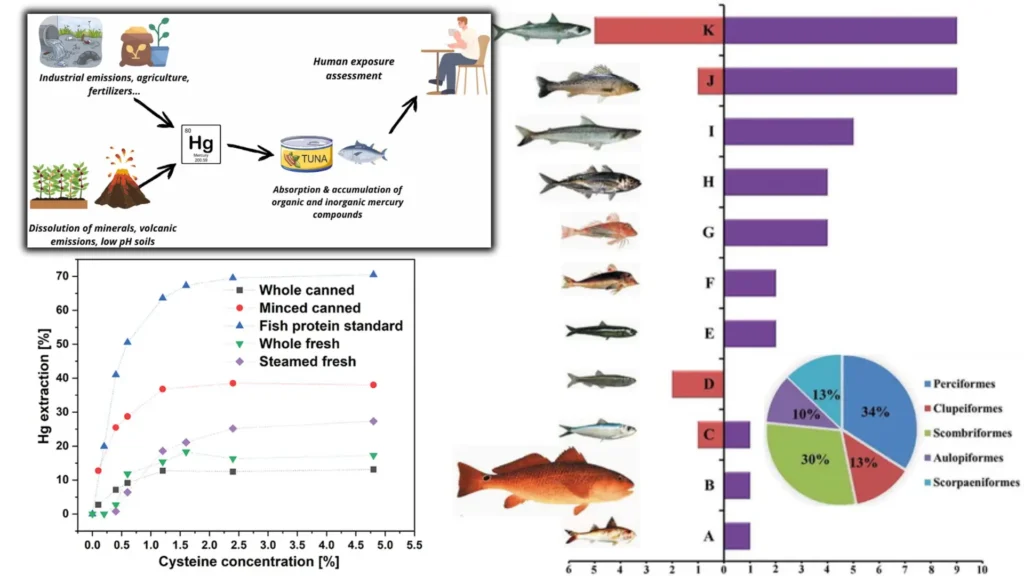
A team from the Swedish University of Agricultural Sciences and Chalmers University of Technology discovered that soaking tuna in a water-based solution containing the amino acid cysteine effectively draws out mercury3. Their experiments, conducted on canned tuna (one of the most mercury-prone fish products), showed that cysteine binds strongly to mercury, pulling it from the fish flesh into the surrounding liquid.
“We believed this would allow some of the mercury to be drawn out and instead bind to the solution, where it can be discarded,” explains Przemysław Strachowski4, a chemist at Chalmers University. The method removed 25–35% of mercury, with higher reductions occurring when more fish was exposed to the solution.
No Added Chemicals, No Compromised Quality
Remarkably, the process requires no additional additives and leaves the tuna’s taste, smell, and appearance unaffected. The mercury extraction continues for up to two weeks, making it ideal for packaging applications.
“The beauty of this method is that it works while the product sits on the shelf,” says Strachowski. “If implemented industrially, no extra production steps would be needed.”
A Safer Future for Seafood Consumption
While current mercury levels in most fish are not immediately dangerous, long-term exposure can pose health risks. This innovation could expand safe consumption limits, particularly for vulnerable groups.
“Our study offers an alternative to simply restricting fish intake,” says Mehdi Abdollahi5, a food scientist at Chalmers. “The goal is to improve food safety and allow people to benefit from fish without unnecessary health concerns.”
Further research is needed to refine the technique and safely dispose of extracted mercury. But with promising early results, this method could soon make tuna—and possibly other fish—safer for everyone.
- A Mediterranean Lifestyle Really Can Help You Live Longer, Study Shows – Science Alert – (Accessed on Apr 08, 2025) ↩︎
- What You Need to Know About Mercury in Fish and Shellfish – WebMD – (Accessed on Apr 08, 2025) ↩︎
- Mercury in Tuna: Is This Fish Safe to Eat? – Healthline – (Accessed on Apr 08, 2025) ↩︎
- Mercury content in tuna can be reduced with new packaging solution – CHALMERS – (Accessed on Apr 08, 2025) ↩︎
- Mercury content in tuna can be reduced with new packaging solution – CHALMERS – (Accessed on Apr 08, 2025) ↩︎
Reference: Strachowski P, Mandava G, Lundqvist J, et al. New Insight into Mercury Removal from Fish Meat Using a Single-Component Solution Containing cysteine. Global Chall. 2025. doi: 10.1002/gch2.202400161
