

Throat: Anatomy, Functions, Common Problems & Tests
Throat: Anatomy, Functions & Common Conditions
The throat is a muscular passage connecting the nose and mouth with the esophagus and larynx, helping with breathing, swallowing, speech, and the movement of food and air.
01 What Is the Throat?
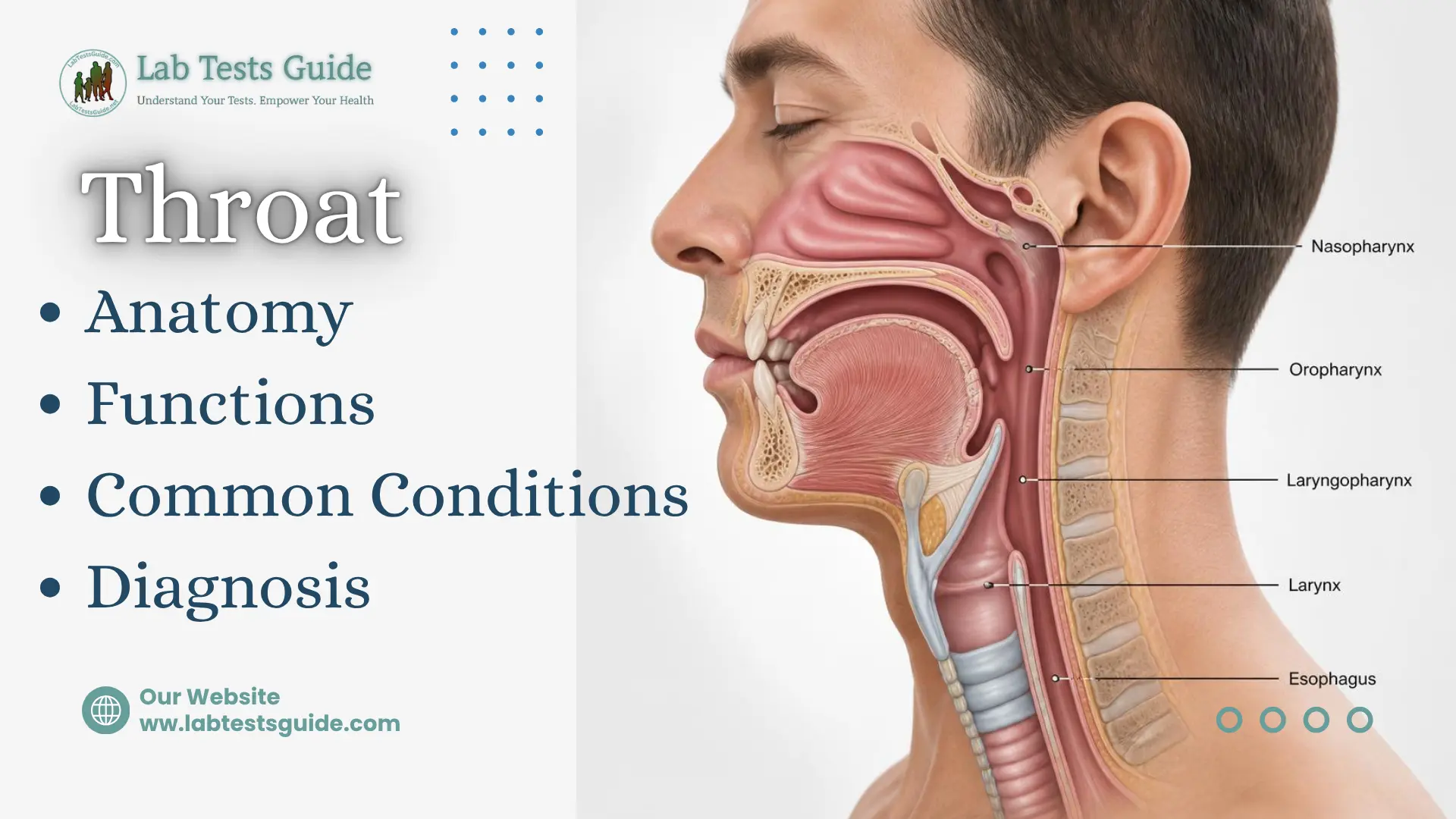
The throat, also called the pharynx, is a muscular passage located behind the nose and mouth. It connects the upper respiratory and digestive pathways and helps direct air toward the larynx and food toward the esophagus.
The throat is divided into three main regions: the nasopharynx, oropharynx, and laryngopharynx. These areas work together during breathing, swallowing, and speech, while structures such as the tonsils and epiglottis contribute to protection and normal function.
02 Parts and Functions of the Throat
The throat helps conduct air and food, supports swallowing, contributes to speech and voice production, and provides an important part of the body’s defense against inhaled or swallowed microorganisms.
03 Common Throat Problems
04 Laboratory Tests and Diagnosis
Most uncomplicated throat problems are diagnosed from the patient’s symptoms and clinical examination. Laboratory testing may be used when a bacterial infection, significant inflammation, recurrent disease, or another underlying condition is suspected.
05 Throat Symptoms and When to Seek Care
Seek medical evaluation for severe or persistent throat symptoms, difficulty breathing or swallowing, inability to swallow saliva, significant swelling, high fever, recurrent infections, severe dehydration, or symptoms that rapidly worsen. Prompt medical attention is especially important when breathing or swallowing becomes difficult. More medical advice
06 How Are Throat Problems Diagnosed?
Throat problems are usually diagnosed from the patient’s symptoms, medical history, and examination of the throat, tonsils, and surrounding areas. Laboratory tests may be used when a specific infection or other underlying condition needs to be identified.
07 Treatment and Prevention
- Rest, adequate fluids, and soothing measures may help relieve throat discomfort.
- Symptom-relieving medicines may be recommended when appropriate.
- Antibiotics are used when a bacterial infection is suspected or confirmed and treatment is clinically indicated.
- Persistent or recurrent throat problems may require further medical or specialist evaluation.
- Maintain good hand hygiene to reduce the spread of respiratory infections.
- Avoid close contact with people who have contagious throat infections when possible.
- Avoid cigarette smoke and other throat irritants.
- Maintain adequate hydration and manage allergies or other underlying conditions as advised by a healthcare professional.
08 Key Takeaways & Related Laboratory Tests
The throat is a muscular passage that connects the nose and mouth with the larynx and esophagus and plays important roles in breathing, swallowing, and speech. Most uncomplicated throat problems are diagnosed clinically, while laboratory testing may be useful when a specific infection or other underlying condition is suspected.
