

Tendons: Anatomy, Functions & Common Conditions
Tendons: Anatomy, Functions & Common Conditions
Tendons are strong bands of connective tissue that attach muscles to bones, helping transmit muscle force and produce controlled movement of the joints and body.
01 What Are Tendons?
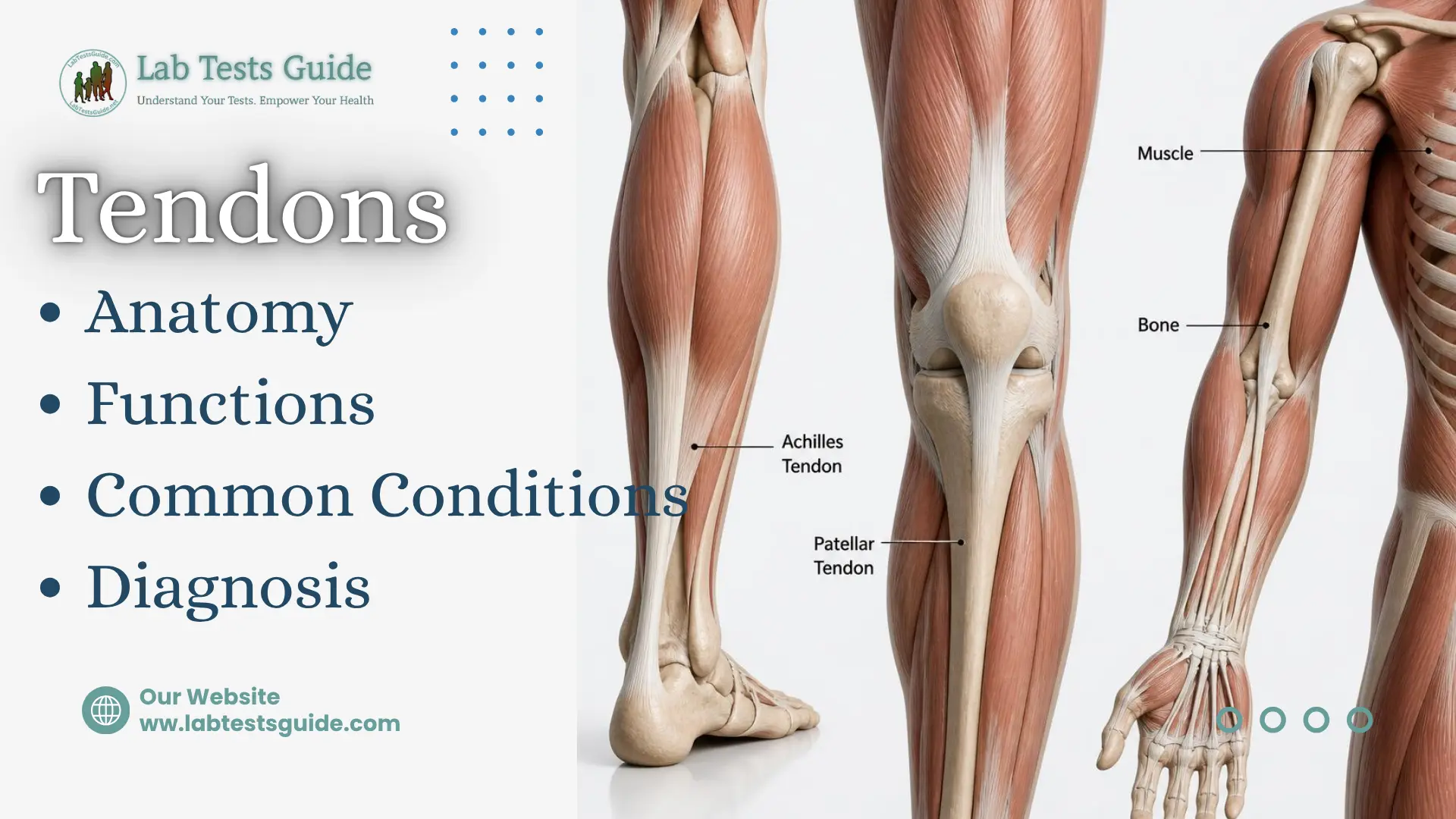
Tendons are strong bands of fibrous connective tissue that connect muscles to bones. They are mainly composed of densely arranged collagen fibers that provide strength and help transmit the force generated by muscles to the skeleton.
Tendons are found throughout the body and help produce controlled movement of the joints. Common examples include the Achilles tendon, patellar tendon, rotator cuff tendons, and flexor and extensor tendons of the hands and feet.
02 Types and Functions of Tendons
Tendons transmit the force produced by muscles to bones, allowing joints to move. They also help stabilize joints and provide efficient transfer of mechanical forces during activities such as walking, lifting, running, and jumping.
03 Common Tendon Problems
04 Laboratory Tests and Diagnosis
Most tendon problems are diagnosed through the patient’s symptoms, medical history, and physical examination. Laboratory testing is usually not required for uncomplicated tendon injuries, but selected tests may be considered when systemic inflammation, infection, autoimmune disease, or another underlying condition is suspected.
05 Tendon Symptoms and When to Seek Care
Seek medical evaluation for severe or persistent tendon pain, significant swelling, sudden weakness, inability to move the affected area normally, or symptoms following an acute injury. Immediate assessment may be important when a tendon rupture is suspected or when there is a sudden snapping or popping sensation accompanied by loss of function. Read more for Medical Advice
06 How Are Tendon Problems Diagnosed?
Tendon problems are usually diagnosed from the patient’s symptoms, medical history, physical examination, and assessment of the affected joint or muscle. Laboratory tests are not routinely required for uncomplicated tendon injuries or overuse conditions.
07 Treatment and Prevention
- Rest and temporary modification of activities may help reduce stress on an irritated or injured tendon.
- Physical therapy and targeted exercises may improve flexibility, strength, and tendon function.
- Pain-relieving medicines may be recommended when appropriate and medically suitable.
- Severe tendon injuries or complete ruptures may require specialist assessment and, in some cases, surgical treatment.
- Increase physical activity gradually and avoid sudden increases in training intensity.
- Use proper technique and appropriate equipment during sports or repetitive activities.
- Allow adequate recovery between demanding activities and address persistent pain early.
- Maintain appropriate muscle strength and flexibility through regular, balanced exercise.
08 Key Takeaways & Related Laboratory Tests
Tendons are strong connective tissues that attach muscles to bones and transmit muscle force to support movement and joint stability. Most uncomplicated tendon problems are diagnosed clinically, while laboratory testing may be useful in selected cases when systemic inflammation, infection, autoimmune disease, or another underlying condition is suspected.
