

Sperm Duct (Vas Deferens): Anatomy, Functions, Problems & Tests
Sperm Duct: Anatomy, Functions & Common Conditions
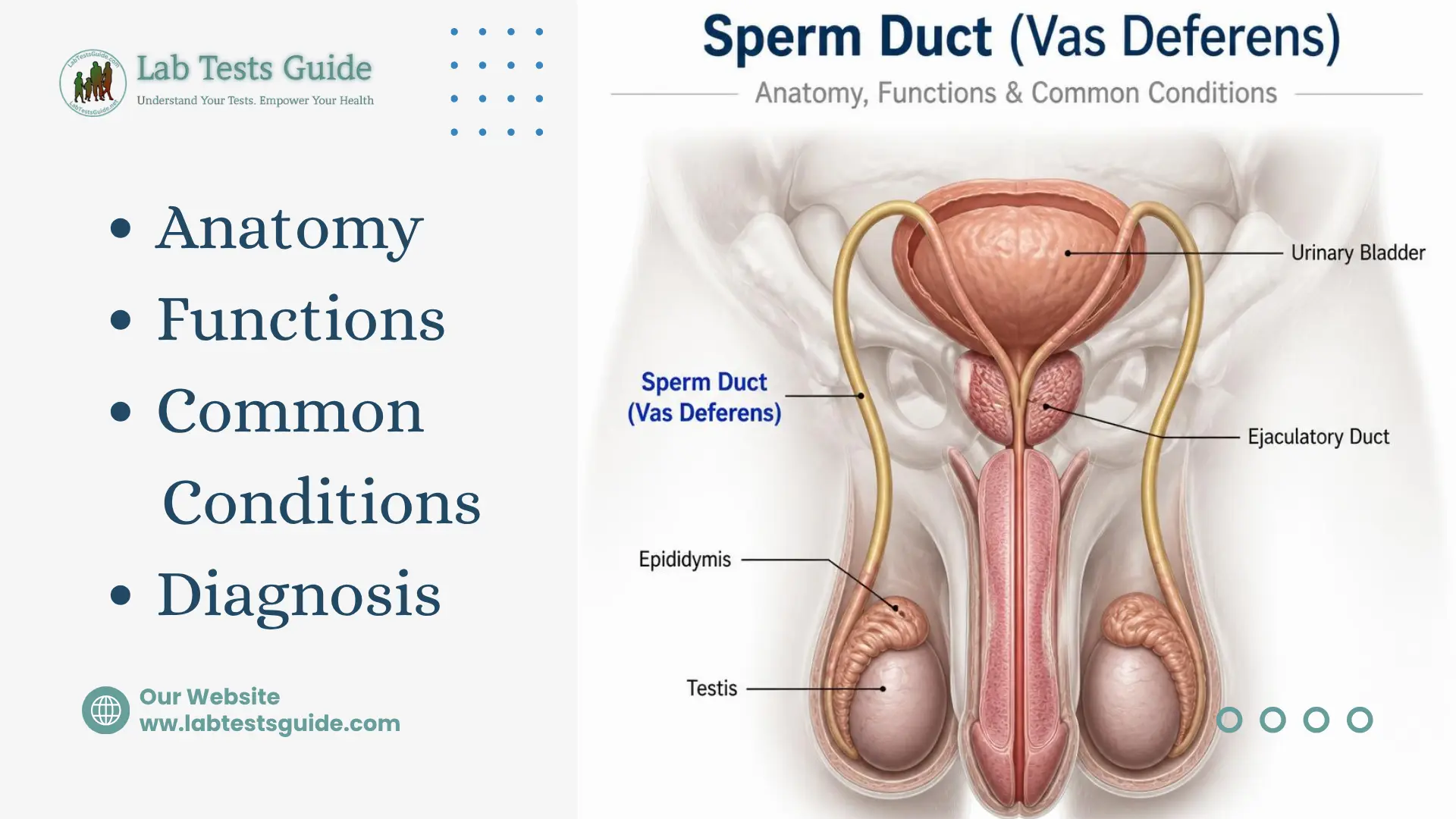
The sperm duct, also called the vas deferens, is a muscular tube that transports mature sperm from the epididymis toward the ejaculatory ducts during ejaculation.
01 What Is the Sperm Duct?
The sperm duct, also called the vas deferens, is a pair of long, muscular tubes that form an important part of the male reproductive system. Each sperm duct carries mature sperm from the epididymis toward the ejaculatory ducts.
The sperm ducts travel upward from the testes through the spermatic cords and into the pelvic cavity. Their muscular walls contract during ejaculation to help propel sperm forward, where it combines with fluids from other reproductive glands to form semen.
02 Parts and Functions of the Sperm Duct
The sperm duct transports mature sperm from the epididymis toward the ejaculatory duct. During ejaculation, contractions of its muscular wall help propel sperm forward so they can mix with seminal fluid and eventually pass through the urethra.
03 Common Sperm Duct Problems
04 Laboratory Tests and Diagnosis
Problems involving the sperm duct are usually evaluated as part of a broader assessment of male reproductive health, particularly when infertility or absent sperm in the ejaculate is suspected. Laboratory testing can help assess sperm production and identify abnormalities that may suggest a problem with sperm transport.
05 Sperm Duct Problems and When to Seek Care
Seek medical evaluation when infertility persists, semen analysis repeatedly shows absent or very low sperm counts, or there is unexplained testicular, scrotal, or pelvic pain. Further assessment may be recommended to determine whether sperm production or sperm transport is affected. Medical advice
06 How Are Sperm Duct Problems Diagnosed?
Sperm duct problems are usually evaluated as part of a male fertility assessment. The evaluation may include medical history, physical examination, semen analysis, and selected laboratory or imaging tests to determine whether the problem involves sperm production, sperm transport, or another part of the reproductive system.
07 Treatment and Management
- Management depends on whether the problem involves obstruction, congenital absence, infection, injury, or another reproductive condition.
- Underlying causes of male infertility should be evaluated and treated when possible.
- Obstructive conditions may sometimes be treated with microsurgical procedures when clinically appropriate.
- Assisted reproductive techniques may be considered when normal sperm transport cannot be restored.
- Protect the genital area from significant trauma and seek appropriate care after reproductive tract injuries.
- Follow medical advice after procedures involving the reproductive tract.
- Discuss fertility preservation with a healthcare professional before treatments or procedures that may affect fertility.
- Seek evaluation when infertility or persistent reproductive symptoms are present.
08 Key Takeaways & Related Laboratory Tests
The sperm duct, or vas deferens, is a muscular tube that transports mature sperm from the epididymis toward the ejaculatory ducts. Problems such as obstruction or congenital absence may interfere with sperm transport and contribute to male infertility. Laboratory testing, particularly semen analysis, plays an important role in evaluating suspected reproductive abnormalities.
