

Licensed Practical Nurse (LPN)
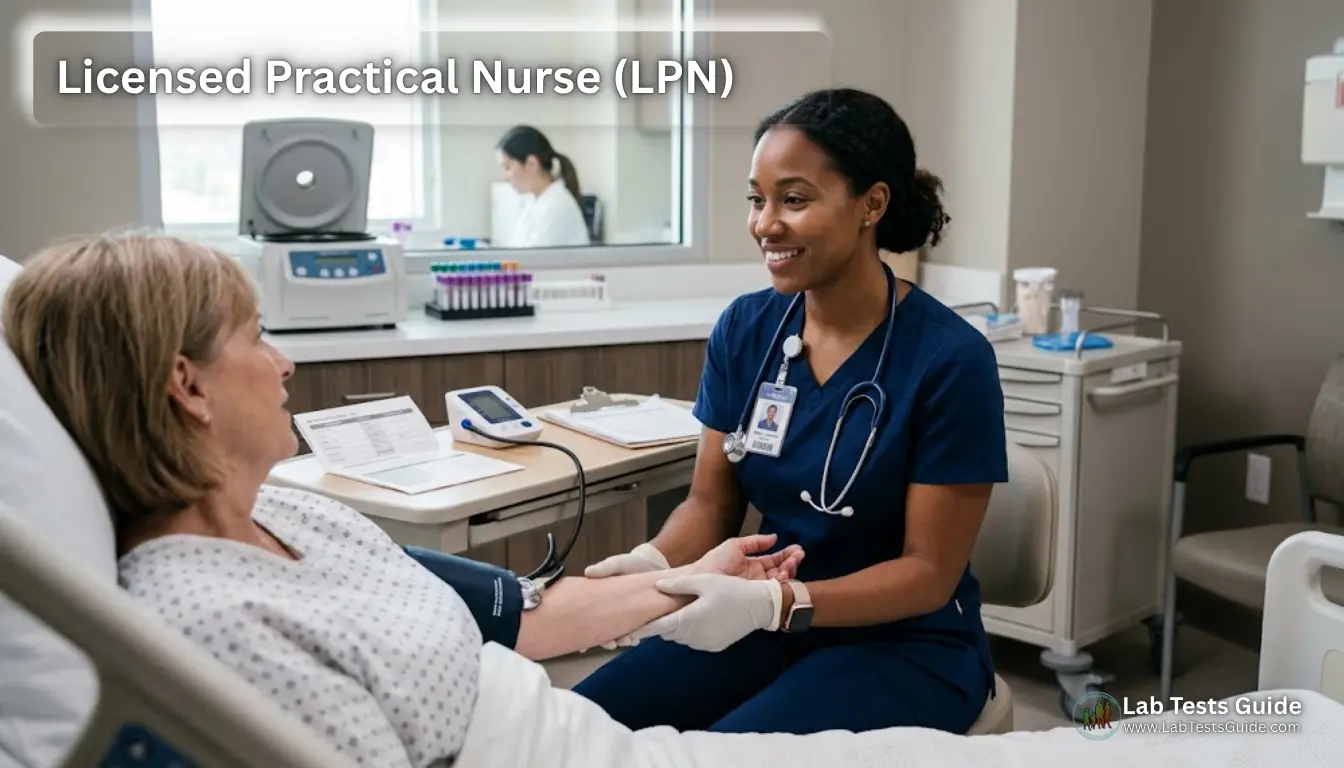
What is an LPN?
A Licensed Practical Nurse (LPN) is a healthcare professional who has completed a state-approved practical nursing program and passed the NCLEX-PN licensure examination (in the U.S.). LPNs provide direct patient care under the supervision of registered nurses (RNs) or physicians, depending on state regulations and facility policies. Their responsibilities include monitoring patients, administering medications within their scope, performing wound care, collecting specimens, and assisting with activities of daily living. LPNs are vital members of the healthcare team, particularly in long-term care, rehabilitation, and outpatient settings.
LPN responsibilities vary by jurisdiction and employer. Always practice within the legal scope defined by your licensing board.
What Does an LPN Do?
Monitoring patients
Observing and reporting changes in condition.
Measuring vital signs
Blood pressure, pulse, temperature, respiration, SpO₂.
Basic nursing care
Bathing, dressing, feeding, and mobility assistance.
Activities of daily living
Supporting patients with hygiene, toileting, and nutrition.
Medication administration
Oral, topical, and some injectable medications (within scope).
Wound and dressing care
Changing dressings, observing wound healing.
Specimen collection
Blood, urine, sputum, and other specimens (when permitted).
Supporting diagnostic testing
Preparing patients and assisting with procedures.
Recording patient information
Accurate documentation in medical records.
Communicating changes
Alerting RNs/physicians to changes in patient condition.
Patient education
Teaching patients about medications, treatments, and self-care.
Supporting treatment plans
Implementing care plans as directed by the healthcare team.
Responsibilities vary according to local laws, regulations, employer policies, and patient acuity.
LPN Scope of Practice
The scope of practice for LPNs defines the procedures, actions, and processes that a licensed practical nurse is permitted to perform under the law. Scope is determined by:
- Jurisdictional regulations – State nursing boards define legal scope.
- Supervision requirements – Some tasks require RN or physician oversight.
- Employer policies – Facilities may restrict or expand certain duties.
- Patient complexity – LPNs typically care for stable, predictable patients.
- Education and competency – Additional training may be required for some skills.
LPN Education and Training
- Prerequisite education – High school diploma or equivalent; some programs require prerequisite courses.
- Practical nursing program – Completion of a state-approved LPN/LVN program.
- Classroom learning – Courses in anatomy, physiology, pharmacology, nursing fundamentals.
- Laboratory/simulation training – Practice skills in a controlled environment.
- Clinical rotations – Supervised hands-on experience in healthcare settings.
- Graduation – Award of a certificate or diploma in practical nursing.
- Licensure examination – Passing the NCLEX-PN (U.S.) or equivalent exam.
- State/provincial licensing – Application for licensure with the appropriate regulatory body.
- Continuing education – May be required for license renewal (varies by jurisdiction).
Program duration and specific requirements vary by state and country. Always verify with the relevant nursing board.
NCLEX-PN
NCLEX-PN stands for the National Council Licensure Examination for Practical Nurses. It is the standardized examination used in the United States to assess the competency of candidates seeking licensure as practical or vocational nurses. The exam evaluates entry-level nursing knowledge and is administered by the National Council of State Boards of Nursing (NCSBN).
- Passing the NCLEX-PN is required for licensure in most U.S. states.
- The exam covers areas such as safe and effective care environment, health promotion, and psychosocial integrity.
- Content is based on current nursing practice and changes periodically.
LPN vs RN
| Feature | LPN | RN |
|---|---|---|
| Full Name | Licensed Practical Nurse | Registered Nurse |
| Education | Practical nursing program (approx. 1 year) | ADN, BSN, or diploma program (2–4 years) |
| Licensure Exam | NCLEX-PN | NCLEX-RN |
| Scope | Depends on jurisdiction | Depends on jurisdiction |
| Patient Care | Provides nursing care within scope | Provides broader nursing responsibilities within scope |
| Assessment | Performs assessments as permitted by jurisdiction | Performs comprehensive nursing assessment |
| Care Planning | Participates according to role/scope | Develops/manages nursing care plans as permitted |
| Supervision | May work under required supervision | May supervise/delegate according to law and policy |
Exact responsibilities vary by jurisdiction, employer, and clinical setting.
LPN vs LVN
LPN = Licensed Practical Nurse
LVN = Licensed Vocational Nurse
The terms are used differently in the United States depending on the state, while referring to comparable practical/vocational nursing roles. In most states, the title LPN is used. In Texas and California, the title LVN is used. The scope of practice, education, and licensure examination (NCLEX-PN) are essentially equivalent. Always verify the specific regulations of your state nursing board.
Common LPN Work Settings
Hospitals
Medical-surgical, maternity, and specialty units.
Long-Term Care
Nursing homes and skilled nursing facilities.
Rehabilitation Centers
Post-acute and physical rehabilitation.
Clinics
Outpatient and specialty clinics.
Physician Offices
Primary care and specialty practices.
Home Health
Visiting patients in their homes.
Community Health
Public health and community-based care.
Assisted Living
Supporting residents in assisted living communities.
Specialty Care
Dialysis, hospice, correctional health, and more.
LPN Clinical Skills
Common skills performed by LPNs include:
Specific skills permitted vary by jurisdiction, employer policy, and individual competency.
LPN and Laboratory Testing
LPNs interact with laboratory testing through various activities, including:
- Preparing patients – Explaining procedures, positioning, and ensuring proper preparation.
- Collecting specimens – Blood, urine, sputum, and other specimens when permitted.
- Labeling and handling – Proper labeling and handling according to policy.
- Monitoring patients – Before and after certain procedures.
- Recognizing abnormal results – Identifying results that require communication/escalation.
- Documenting – Recording laboratory-related care in medical records.
- Specimen transport – Supporting transport according to facility protocols.
LPNs do not replace medical laboratory professionals. Instead, nursing and laboratory teams work together to ensure appropriate specimen collection, handling, communication, and patient care. Always follow facility policies and scope of practice guidelines.
Common Laboratory Tests LPNs May Encounter
| Test | Common Clinical Purpose |
|---|---|
| CBC | Evaluates blood cell counts |
| BMP | Evaluates electrolytes, glucose, and kidney-related markers |
| CMP | Provides broader metabolic and liver-related information |
| PT/INR | Evaluates aspects of blood clotting |
| aPTT | Evaluates part of the coagulation pathway |
| HbA1c | Reflects average blood glucose over approximately 2–3 months |
| Urinalysis | Evaluates urine characteristics and abnormalities |
| Blood glucose | Measures current blood glucose |
| Cultures | Helps identify infectious organisms |
| Lipid panel | Evaluates cholesterol and triglycerides |
Interpretation of laboratory results and clinical decisions depend on the patient’s overall condition and the responsibilities of the appropriate licensed professionals.
LPN Documentation
Accurate and timely documentation is essential for patient safety, continuity of care, and legal protection. LPNs document:
- Vital signs and patient observations
- Medication administration records
- Specimen collection and handling
- Changes in patient condition
- Communications with the healthcare team
- Treatments and patient responses
Documentation should be objective, complete, and compliant with facility policies and regulatory standards.
LPN Responsibilities in Patient Safety
Medication safety
Verifying orders, rights of administration, and monitoring for side effects.
Infection prevention
Hand hygiene, aseptic technique, and isolation precautions.
Fall prevention
Assessing risk and implementing prevention strategies.
Patient identification
Using two identifiers before any procedure or medication administration.
Specimen identification
Proper labeling to prevent errors.
Communication
Clear, timely reporting of changes or concerns.
Documentation
Accurate, timely, and complete records.
Monitoring for changes
Recognizing and escalating early signs of deterioration.
Important LPN Abbreviations
| Abbreviation | Meaning |
|---|---|
| LPN | Licensed Practical Nurse |
| LVN | Licensed Vocational Nurse |
| RN | Registered Nurse |
| APRN | Advanced Practice Registered Nurse |
| CNA | Certified Nursing Assistant |
| NCLEX-PN | National Council Licensure Examination for Practical Nurses |
| VS | Vital Signs |
| BP | Blood Pressure |
| HR | Heart Rate |
| RR | Respiratory Rate |
| SpO₂ | Oxygen Saturation |
| I&O | Intake and Output |
| PRN | As Needed |
| NPO | Nothing by Mouth |
| IV | Intravenous |
| IM | Intramuscular |
| SQ | Subcutaneous |
Frequently Asked Questions
What does LPN stand for?
LPN stands for Licensed Practical Nurse.
What is an LPN?
An LPN is a licensed nursing professional who provides essential patient care under the supervision of RNs or physicians, within a defined scope of practice.
What does an LPN do?
LPNs monitor patients, measure vital signs, administer medications (within scope), provide wound care, collect specimens, document, and educate patients.
What is the difference between an LPN and an RN?
RNs have broader education and scope of practice, while LPNs typically provide more focused care under supervision. Both are licensed and essential team members.
Is an LPN the same as an LVN?
LPN and LVN are essentially the same role, with the title varying by state (LPN in most states, LVN in Texas and California).
What exam do LPNs take?
In the United States, LPNs take the NCLEX-PN examination for licensure.
Where do LPNs work?
Hospitals, long-term care, clinics, physician offices, home health, rehabilitation centers, and community health settings.
Can LPNs administer medications?
Yes, within their scope of practice and according to state regulations and employer policies.
Can LPNs collect laboratory specimens?
Yes, LPNs may collect specimens such as blood, urine, and sputum when permitted by their scope of practice and facility policies.
Do LPN responsibilities vary by state?
Yes, scope of practice varies by jurisdiction. Always follow your state nursing board regulations.
What laboratory tests do LPNs commonly encounter?
CBC, BMP, CMP, PT/INR, aPTT, HbA1c, urinalysis, blood glucose, cultures, and lipid panels.
Can an LPN become an RN?
Yes, many LPNs pursue additional education through LPN-to-RN or LPN-to-BSN bridge programs to become registered nurses.
Key Takeaways
- LPN stands for Licensed Practical Nurse, a vital member of the healthcare team.
- LPNs provide essential patient care, including monitoring, medication administration (within scope), wound care, and specimen collection.
- Scope of practice varies by jurisdiction and employer; always follow local regulations.
- Education includes a practical nursing program and passing the NCLEX-PN (in the U.S.).
- LPNs work in hospitals, long-term care, clinics, home health, and many other settings.
- LPNs interact with laboratory testing through specimen collection, preparation, and monitoring.
- LPNs can advance to RN roles through bridge programs.
- Always practice within your scope and collaborate with the healthcare team.
Related LabTestsGuide Topics
The information provided on this page is for educational purposes only and does not constitute medical or legal advice. Always consult the appropriate regulatory body for specific licensing and scope of practice requirements.
