

Registered Nurse (RN)
Introduction
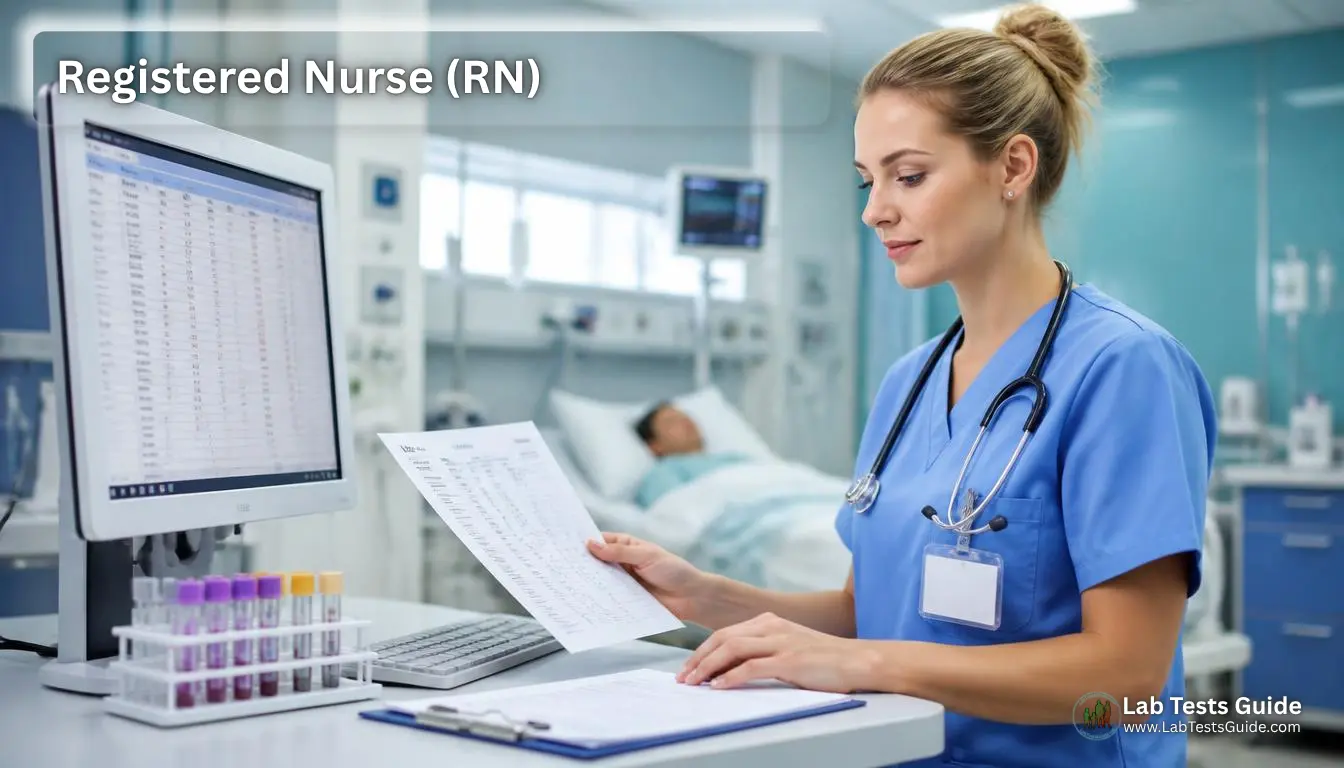
A Registered Nurse (RN) is a licensed healthcare professional who provides, coordinates, and monitors patient care across a wide range of settings. RNs are essential to the healthcare system — they are often the first to assess a patient’s condition, the constant presence throughout a hospital stay, and the critical link between the patient, the family, and the broader care team. Their work encompasses direct nursing care, patient education, care coordination, and collaboration with physicians, advanced practitioners, laboratory professionals, and allied health staff.
Because RNs are intimately involved in daily patient assessment and treatment, they routinely encounter diagnostic testing and laboratory results. Understanding the purpose of common laboratory tests, recognizing significant trends, and communicating results to the healthcare team are all part of safe, effective nursing practice. This guide provides a comprehensive overview of the RN role — from education and licensure to clinical responsibilities, laboratory involvement, and career development.
What Is a Registered Nurse (RN)?
RN stands for Registered Nurse. A Registered Nurse is a licensed nursing professional who has completed an approved nursing education program, passed the required licensing examination (e.g., NCLEX-RN in the United States), and holds an active license granted by the appropriate regulatory authority. RNs provide and coordinate patient care, educate patients and families about health conditions, and offer emotional support and guidance.
A Registered Nurse (RN) is a licensed nursing professional who provides, coordinates, and monitors patient care within the scope of practice established by the applicable regulatory authority.
RNs work in hospitals, clinics, community health, long-term care, home health, schools, and many other environments. Education, licensure, and scope of practice vary by country, state, and jurisdiction; nurses always practice within the legal framework of their licensing body.
What Does RN Stand For?
RN stands for Registered Nurse. The abbreviation is used globally to denote a nurse who has met the educational and licensure requirements of a particular jurisdiction. While the title is consistent, the specific requirements and scope of practice are defined by local nursing boards or regulatory authorities.
What Does a Registered Nurse Do?
Patient assessment
Health history, physical exam, and symptom evaluation.
Monitoring vital signs
Temperature, pulse, respiration, BP, SpO₂, pain.
Administering medications
Safe medication administration and monitoring.
Providing nursing care
Activities of daily living, wound care, IV therapy.
Care planning
Developing or contributing to individualized care plans.
Monitoring treatment response
Evaluating effectiveness of interventions.
Patient education
Teaching about disease, medications, and self-care.
Health promotion
Preventive care and wellness counseling.
Wound care & IV therapy
Authorized procedures within scope.
Supporting diagnostics
Preparing patients, collecting specimens (where permitted).
Documentation
Accurate, timely charting and record-keeping.
Patient advocacy
Protecting patient rights and preferences.
Communication
Clear handoffs, team collaboration, and family updates.
Care coordination
Liaising with physicians, labs, therapists, and others.
Infection prevention
Aseptic technique, isolation precautions, and education.
Discharge planning
Preparing patients for safe transition home or to other care.
Responsibilities vary according to jurisdiction, education, specialty, employer policy, and clinical setting.
Registered Nurse Responsibilities
Patient Assessment
RNs perform comprehensive assessments, including health history, current symptoms, physical observations, vital signs, pain evaluation, mental status, mobility, nutrition, hydration, and intake/output. Assessment is the foundation for care planning and clinical decision-making.
Patient Monitoring
Continuous monitoring of clinical condition — recognizing subtle changes, deterioration, or improvement, and communicating findings to the healthcare team in a timely manner.
Medication and Treatment Support
Administering medications, monitoring for side effects and therapeutic response, and providing treatments within the scope of practice and in accordance with orders.
Patient Education
Teaching patients and families about medications, procedures, disease management, follow-up care, lifestyle measures, and warning signs to promote self-management and adherence.
Documentation
Maintaining accurate, timely, and legally sound nursing documentation, including assessments, interventions, patient responses, and communications.
Care Coordination
Collaborating with physicians, advanced practice nurses, LPNs/LVNs, pharmacists, medical laboratory professionals, radiology staff, therapists, and other healthcare workers to ensure integrated, patient-centered care.
RN Work Settings
| Work Setting | Typical RN Responsibilities |
|---|---|
| Hospital | Acute and inpatient patient care, medical-surgical, specialty units. |
| Emergency Department | Rapid assessment, triage, and emergency care. |
| ICU | Monitoring critically ill patients, advanced interventions. |
| Operating Room | Perioperative nursing support and patient safety. |
| Clinic | Outpatient assessment, procedures, and follow-up. |
| Primary Care | Preventive care, chronic disease management, health coaching. |
| Long-Term Care | Ongoing care for older adults or chronically ill residents. |
| Home Health | Skilled nursing care delivered in patients’ homes. |
| School | Student health, wellness, and emergency response. |
| Community/Public Health | Screening, immunization, health education, outreach. |
| Hospice/Palliative Care | Comfort-focused, supportive end-of-life care. |
| Occupational Health | Workplace health services, injury prevention. |
| Telehealth | Remote patient assessment, triage, and education. |
RN Nursing Specialties
Critical Care / ICU
Care for acutely ill patients requiring intensive monitoring and life support.
Emergency Nursing
Rapid assessment and management of urgent and life-threatening conditions.
Medical-Surgical Nursing
Care for adult patients with a wide variety of medical and surgical conditions.
Pediatric Nursing
Nursing care for infants, children, and adolescents.
Neonatal Nursing
Care for newborns, especially those who are premature or ill.
Oncology Nursing
Care for patients with cancer, including treatment and symptom management.
Cardiac Nursing
Care for patients with heart disease, post-cardiac surgery, and interventions.
Perioperative Nursing
Care before, during, and after surgery (OR, PACU).
Psychiatric/Mental Health
Care for patients with mental health disorders and behavioral health needs.
Geriatric Nursing
Care for older adults, focusing on age-related conditions and functional status.
Community/Public Health
Population-focused care, health promotion, and disease prevention.
Dialysis Nursing
Care for patients with end-stage renal disease requiring hemodialysis or peritoneal dialysis.
Rehabilitation Nursing
Care for patients recovering from injury, illness, or surgery to regain function.
Home Health Nursing
Skilled nursing care in the home setting for acute and chronic conditions.
Hospice Nursing
Compassionate end-of-life care emphasizing comfort and dignity.
School Nursing
Health services in educational settings, including first aid and health education.
Informatics Nursing
Integration of nursing science with information technology to improve patient outcomes.
Forensic Nursing
Care for patients who are victims of violence or trauma, including evidence collection.
Travel Nursing
Short-term nursing assignments in various locations, often with high demand.
How to Become a Registered Nurse
Step 1 — Choose an Approved Nursing Education Program
Select a nursing program approved by the relevant nursing regulatory authority in your jurisdiction. Pathways vary — common U.S. options include ADN, BSN, and diploma programs.
Step 2 — Complete Nursing Education
Complete the required didactic and clinical coursework. In the U.S., ADN (Associate Degree in Nursing) and BSN (Bachelor of Science in Nursing) are the most common pathways, with BSN often preferred by employers and required for advancement.
Step 3 — Complete Clinical Training
Clinical rotations provide supervised hands-on experience in hospitals, clinics, and community settings. Classroom, simulation, and laboratory training prepare students for real-world practice.
Step 4 — Apply for Licensure
Submit an application to the appropriate nursing regulatory body (e.g., State Board of Nursing in the U.S.). This includes an application fee, background check, and verification of education.
Step 5 — Pass the Required Licensing Examination
In the United States, the NCLEX-RN (National Council Licensure Examination for Registered Nurses) is the standard licensing exam. Other countries have their own examinations.
Step 6 — Obtain the Nursing License
After passing the exam and meeting all requirements, the licensing authority issues an active nursing license. Passing the exam alone does not constitute a license — the license must be granted by the regulatory board.
Step 7 — Maintain Licensure
Licenses must be renewed periodically, often requiring continuing education and proof of clinical practice. Renewal requirements vary by jurisdiction.
RN Education Pathways
| Pathway | Typical Purpose | General Characteristics |
|---|---|---|
| ADN | Entry to RN practice | Associate-level nursing education, often 2–3 years. |
| BSN | Bachelor-level RN education | Broader academic preparation, including leadership, research, and public health. |
| Nursing Diploma | RN preparation | Hospital-based diploma programs (less common in many areas). |
| Accelerated BSN | Second-degree pathway | Intensive program for individuals with a prior bachelor’s degree in another field. |
| RN-to-BSN | Further education | Bachelor’s completion pathway for ADN or diploma-prepared RNs. |
Program length, availability, and admission requirements vary by institution and jurisdiction.
RN Licensing and NCLEX-RN
In the United States, RN licensure is governed by individual State Boards of Nursing. The process typically includes:
- Graduation from an approved nursing program.
- Application for licensure with the state board.
- Authorization to Test (ATT) and scheduling the NCLEX-RN.
- Passing the NCLEX-RN examination.
- Granting of a license by the state board.
- Renewal and continuing education as required.
NCLEX-RN is the licensing examination used in the United States and some Canadian provinces. It is not a universal examination — other countries have their own licensing exams. The Nurse Licensure Compact (NLC) allows nurses to hold one license that is valid in participating states; requirements and participation are subject to change.
Always consult the specific state board or regulatory authority for current, jurisdiction-specific requirements.
Internationally Educated Nurses
Nurses educated outside the United States who wish to practice in the U.S. generally need to:
- Have their nursing education and licensure evaluated by a credential evaluation service (e.g., CGFNS International).
- Meet English-language proficiency requirements (e.g., TOEFL, IELTS).
- Pass the NCLEX-RN examination.
- Meet any additional state-specific requirements (e.g., jurisprudence exams, background checks).
- Obtain appropriate immigration and work authorization.
Requirements vary significantly by state and individual circumstances. Internationally educated nurses should contact the state board of nursing where they intend to practice for specific guidance.
Registered Nurse vs LPN vs LVN
| Feature | RN | LPN | LVN |
|---|---|---|---|
| Full Name | Registered Nurse | Licensed Practical Nurse | Licensed Vocational Nurse |
| Education | ADN, BSN, or diploma (1–4 years) | Practical nursing diploma (~1 year) | Vocational nursing certificate (~1 year) |
| General Scope | Broader, includes assessment, planning, complex care | Basic nursing care, often under RN supervision | Basic nursing care, often under RN supervision |
| Patient Care | Direct and comprehensive care across all settings | Direct care for stable patients | Direct care for stable patients |
| Assessment | Comprehensive health assessment | Focused assessment | Focused assessment |
| Medication Responsibilities | Broad, including IV medications (where permitted) | Limited, depending on state/jurisdiction | Limited, depending on state/jurisdiction |
| Common Work Settings | Hospitals, ICU, ED, clinics, community, schools | Long-term care, rehab, clinics | Long-term care, rehab, clinics |
| U.S. Licensing Exam | NCLEX-RN | NCLEX-PN | NCLEX-PN |
LPN and LVN generally refer to comparable practical/vocational nursing roles in the United States, with terminology depending on jurisdiction. Responsibilities vary by state and employer.
Registered Nurse and Laboratory Tests
RNs frequently encounter laboratory testing as part of patient assessment, monitoring, treatment, medication safety, and care coordination. The table below illustrates common tests and their relevance to nursing practice.
| Laboratory Test | What It Evaluates | Why It May Matter in Nursing |
|---|---|---|
| CBC | Blood cells (RBC, WBC, platelets, hemoglobin, hematocrit) | Infection, anemia, bleeding, and general monitoring |
| BMP | Electrolytes, glucose, BUN, creatinine, calcium | Metabolic and fluid/electrolyte monitoring |
| CMP | BMP + liver proteins and enzymes (ALT, AST, bilirubin, albumin) | Broader metabolic and organ-function monitoring |
| Blood Glucose | Blood sugar level | Diabetes and glucose monitoring; insulin therapy |
| HbA1c | Longer-term glucose control (2–3 months) | Diabetes assessment and management |
| LFTs | Liver enzymes and proteins (ALT, AST, ALP, bilirubin) | Liver-related conditions and treatment monitoring |
| PT/INR | Coagulation (extrinsic pathway) | Anticoagulation therapy (e.g., warfarin) and bleeding risk |
| aPTT | Coagulation (intrinsic pathway) | Monitoring heparin therapy and clotting disorders |
| Urinalysis | Urine characteristics, cells, protein, glucose, ketones | Urinary, renal, and metabolic assessment |
| ABG | Oxygenation, ventilation, acid-base balance (pH, pCO₂, pO₂, HCO₃) | Critical-care respiratory and metabolic assessment |
| Creatinine/eGFR | Kidney function | Renal monitoring and medication dosing |
| BUN | Blood urea nitrogen | Renal and hydration-related assessment |
| Electrolytes | Sodium, potassium, chloride, bicarbonate | Fluid/electrolyte balance and cardiac monitoring |
| Troponin | Cardiac injury marker | Evaluation of suspected myocardial injury |
| Blood Culture | Bloodstream infection | Evaluation of suspected bacteremia/sepsis |
How RNs Use Laboratory Results
- Monitoring trends – Comparing current results to previous values to detect patterns or changes.
- Identifying changes that should be communicated – Alerting providers to critical values or significant shifts.
- Supporting patient assessment – Correlating lab findings with physical exam and symptoms.
- Monitoring treatment response – Evaluating effectiveness of antibiotics, anticoagulants, or electrolyte replacement.
- Medication safety – Checking renal/hepatic function prior to dosing certain medications.
- Preparing patients for procedures – Ensuring lab prerequisites are met (e.g., INR for surgery).
- Communicating with the healthcare team – Providing accurate, context-rich updates to physicians and other clinicians.
- Supporting patient education – Explaining the purpose of tests and implications of results in understandable terms.
- Coordinating care – Ensuring timely follow-up on abnormal results and collaborating with laboratory and diagnostic teams.
Example: An RN may monitor potassium levels in a patient on diuretics, noting a downward trend, and communicate the finding to the provider. The RN may also reinforce dietary teaching about potassium-rich foods as ordered.
Common Laboratory Values RNs Encounter
WBC
White blood cells — infection or immune response.
RBC
Red blood cells — oxygen transport.
Hemoglobin
Oxygen-carrying capacity of blood.
Hematocrit
Proportion of blood volume occupied by RBCs.
Platelets
Clotting function and bleeding risk.
MCV
Mean corpuscular volume — red blood cell size.
Sodium
Fluid balance and neurological function.
Potassium
Cardiac and neuromuscular function.
Chloride
Acid-base and fluid balance.
Bicarbonate/CO₂
Acid-base status.
Glucose
Metabolic control.
BUN
Renal function and hydration.
Creatinine
Kidney function.
eGFR
Estimated glomerular filtration rate.
AST, ALT
Liver enzymes — hepatocellular integrity.
ALP
Alkaline phosphatase — liver/bone marker.
Bilirubin
Liver and biliary function.
Albumin
Nutritional and hepatic status.
PT/INR
Coagulation status.
RN Clinical Skills
- Vital-sign measurement – accurate assessment of temperature, pulse, respiration, blood pressure, SpO₂, and pain.
- Patient assessment – comprehensive health history and physical examination.
- Medication administration – safe administration via oral, IV, IM, SC, and other routes (within scope).
- Wound care – assessment, cleansing, dressing, and monitoring of wounds.
- Infection prevention – hand hygiene, aseptic technique, isolation precautions.
- Patient education – teaching about health conditions, medications, and self-care.
- Documentation – accurate and timely charting in electronic health records.
- IV-related skills – insertion, maintenance, and monitoring of IV lines (where authorized).
- Specimen collection – blood, urine, sputum, and other specimens (where permitted).
- Basic emergency response – CPR, BLS, and initial management of acute events.
- Communication – therapeutic communication, interdisciplinary collaboration, and patient/family advocacy.
- Care planning – developing, implementing, and evaluating individualized nursing care plans.
- Patient safety – fall prevention, medication safety, and error reduction strategies.
RN Career Advancement
Registered Nurses have numerous opportunities for career growth, including:
- Charge Nurse – leading a unit or shift team.
- Nurse Manager – administrative and leadership roles in nursing units.
- Nurse Educator – teaching nursing students or providing staff development.
- Clinical Nurse Specialist (CNS) – advanced practice with focus on evidence-based practice and system improvement.
- Nurse Practitioner (NP) – advanced practice with prescriptive authority (requires additional education and certification).
- Nurse Anesthetist (CRNA) – advanced practice in anesthesia (requires graduate education).
- Nurse Midwife (CNM) – advanced practice in obstetrics and women’s health.
- Nursing Informatics – integration of technology and data in healthcare.
- Nursing Leadership – executive and administrative positions.
Advanced practice roles require additional education (master’s or doctoral), certification, and licensure according to jurisdiction.
RN Salary and Job Outlook
RN compensation varies based on geographic location, specialty, experience, education, work setting, shift differentials, overtime, and certifications. In the United States, the U.S. Bureau of Labor Statistics (BLS) provides authoritative salary and employment data. As of recent BLS reports, median annual wages for registered nurses vary by state and industry, with higher wages typically found in metropolitan areas and specialty hospitals.
Salary figures are U.S.-specific and should not be generalized to other countries. Always consult current, authoritative sources for the most up-to-date information.
Advantages and Challenges of an RN Career
Potential Advantages
- Diverse career opportunities
- Multiple specialties
- Meaningful patient impact
- Career advancement potential
- Opportunities for further education
- Variety of work settings
Common Challenges
- Shift work and irregular hours
- Emotional demands
- Physical demands
- High responsibility
- Workplace stress
- Exposure to illness
- Continuing education requirements
Frequently Asked Questions
What does RN stand for?
RN stands for Registered Nurse.
What is a Registered Nurse?
A licensed nursing professional who provides and coordinates patient care, educates patients, and collaborates with the healthcare team within the scope of practice defined by a regulatory authority.
What does a Registered Nurse do?
RNs assess patients, monitor vital signs, administer medications, educate patients, document care, and coordinate with the healthcare team.
How do you become an RN?
Complete an approved nursing program (ADN, BSN, or diploma), pass the licensing exam (e.g., NCLEX-RN), and obtain a license from the appropriate regulatory authority.
What degree do you need to become an RN?
Common U.S. pathways include an Associate Degree in Nursing (ADN) or a Bachelor of Science in Nursing (BSN). Requirements vary by jurisdiction.
What is the NCLEX-RN?
The National Council Licensure Examination for Registered Nurses — the licensing exam used in the United States and some other countries.
What is the difference between an RN and LPN?
RNs have broader education and scope (ADN/BSN), while LPNs complete a shorter practical nursing program and work under supervision.
What is the difference between RN and LVN?
RN and LVN differ in education and scope; LVN is a title used in some U.S. states, equivalent to LPN in most others.
What laboratory tests do RNs commonly encounter?
CBC, BMP, CMP, glucose, HbA1c, PT/INR, aPTT, urinalysis, ABG, creatinine, BUN, electrolytes, troponin, and blood cultures.
Do RNs interpret laboratory results?
RNs monitor results and identify trends to communicate with the team. Definitive interpretation and diagnosis are made by the treating provider.
Can an RN specialize?
Yes, RNs can obtain certification in areas such as critical care, emergency, oncology, pediatrics, and many others.
Can an internationally educated nurse become an RN in the United States?
Yes, but they must have their credentials evaluated, meet English proficiency requirements, pass the NCLEX-RN, and meet state-specific licensure requirements.
Key Takeaways
- RN stands for Registered Nurse — a licensed professional who provides and coordinates patient care.
- RNs work in hospitals, clinics, community health, schools, and many other settings.
- Education and licensure requirements vary by jurisdiction; NCLEX-RN is part of the U.S. pathway.
- RNs frequently encounter laboratory testing, using results to monitor trends, support medication safety, and communicate with the team.
- Laboratory results are always interpreted in clinical context and in collaboration with the healthcare team.
- RNs can specialize in areas like critical care, pediatrics, oncology, and pursue advanced practice roles with additional education.
- Career advancement includes leadership, education, and advanced practice nursing roles.
Related LabTestsGuide Topics
Sources & References
- U.S. Bureau of Labor Statistics — Occupational Outlook Handbook: Registered Nurses
- National Council of State Boards of Nursing (NCSBN) — NCLEX-RN Examination
- State Boards of Nursing (individual state websites)
- CGFNS International — Credential Evaluation Services
- Official nursing regulatory authorities (for jurisdictional scope and licensure)
This article is for educational and informational purposes. Licensure, scope, and regulatory requirements are subject to change; always consult the official regulatory body in your jurisdiction.
The information provided on this page is for educational purposes only and does not constitute medical or legal advice. Always consult a qualified healthcare provider or regulatory authority for specific guidance.
