

Cataract surgery is one of the most common and effective procedures used to restore vision. While the surgery itself is typically quick and straightforward, many people have questions about what happens afterward. Understanding the recovery process can help set realistic expectations and make the experience less uncertain.
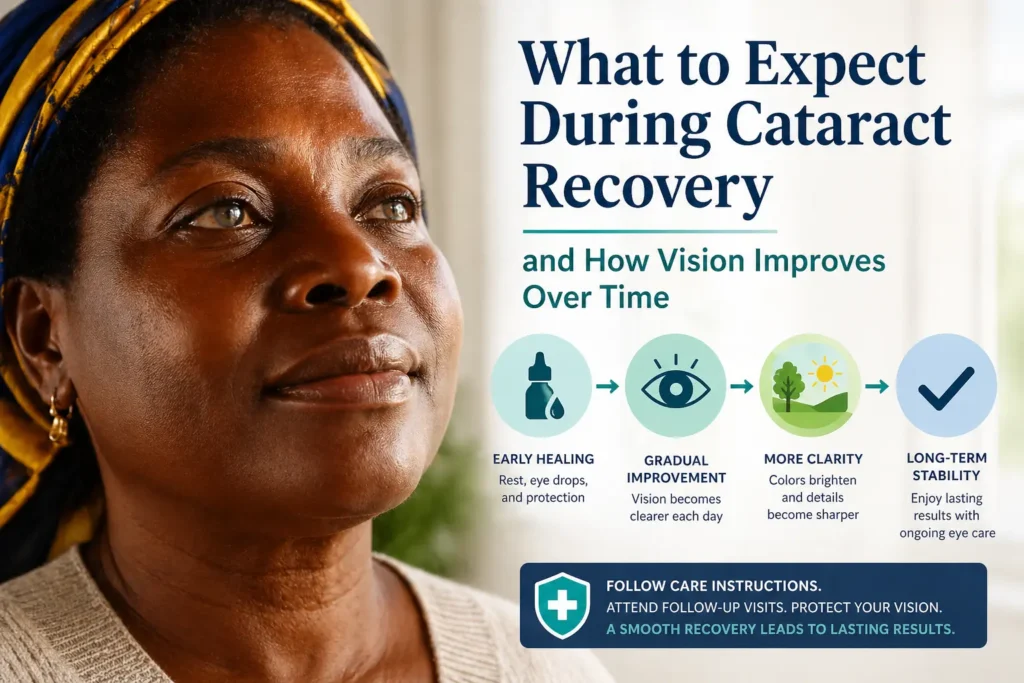
Healing after cataract surgery happens in stages, and vision often improves gradually. Knowing what changes are normal and how to care for the eyes during this period can support a smoother recovery and better long-term results.
How Cataract Surgery Affects the Eye
During cataract surgery, the cloudy natural lens is removed and replaced with a clear artificial lens. This new lens allows light to pass through properly, helping restore clearer vision. Although the procedure is minimally invasive, the eye still needs time to adjust and heal afterward.
In the first few days, it is common to notice changes in vision as the eye adapts. Some people experience sharper sight almost immediately, while others may need a bit more time before seeing full improvement.
Temporary symptoms such as mild discomfort, sensitivity to light, or slight blurriness are part of the normal healing process.
The Early Days After Surgery
The initial recovery period usually begins within the first 24 to 48 hours. During this time, vision may appear brighter, and colors often seem more vivid than before. However, the eye can still feel sensitive, and it is important to follow care instructions closely.
Patients are typically advised to use prescribed eye drops to prevent infection and reduce inflammation. Avoiding rubbing the eye and protecting it from dust or water helps prevent complications during these early stages.
Rest is also important, allowing the eye to heal without unnecessary strain.
Adjusting to Visual Changes
As the eye begins to heal, the brain also adjusts to the new way of processing light. This adjustment period can lead to slight fluctuations in vision. Some days may feel clearer than others, which is a normal part of recovery.
Gradually, vision stabilizes, and clarity improves. Most individuals notice steady progress within the first week.
Understanding the Full Recovery Timeline
While initial improvements can happen quickly, complete healing takes longer. The full recovery process may extend over several weeks as the eye continues to adjust and settle. During this time, follow-up appointments help monitor progress and ensure everything is healing properly.
For a more detailed overview of what to expect at each stage, this explanation of the cataract surgery recovery timeline provides helpful insight into how vision typically improves over time.
Understanding this gradual progression can help reduce concern if vision is not immediately perfect after surgery.
Common Symptoms During Healing
It is normal to experience mild symptoms as the eye recovers. These may include dryness, itching, or a sensation that something is in the eye. Sensitivity to light is also common, especially in the early days.
These symptoms usually improve as healing continues. Using prescribed medications and following care instructions can help manage discomfort effectively.
If symptoms become severe or do not improve, it is important to contact an eye care professional for guidance.
Returning to Daily Activities
Most people can return to light activities within a few days after surgery. Reading, watching television, and walking are generally safe as long as the eyes are not strained. However, certain activities may need to be avoided temporarily.
Heavy lifting, swimming, and exposure to dusty environments are often restricted during the early recovery period. These precautions help reduce the risk of infection or injury.
Gradually, as healing progresses, normal routines can be resumed with greater ease.
Long-Term Vision Stability
After the initial recovery period, vision typically becomes more stable. Many people find that they can see more clearly than they have in years. Colors appear more natural, and details are easier to distinguish.
Some individuals may still need glasses for certain tasks, depending on the type of artificial lens used. Regular eye exams help ensure that vision remains stable over time.
The Importance of Ongoing Eye Care
Cataract surgery improves vision by replacing the cloudy lens, but it does not prevent other eye conditions. Maintaining regular eye care is essential for long-term visual health.
Routine checkups allow for early detection of other issues such as glaucoma or age-related changes. They also help ensure that the artificial lens continues to function as expected.
This broader approach to maintaining eye health is explored in this guide to comprehensive vision care, which highlights the importance of ongoing attention to eye health at every stage of life.
How Cataract Surgery Compares to Other Vision Procedures
Some people wonder how cataract surgery differs from other types of vision correction, such as laser eye surgery. While both aim to improve vision, they address different underlying issues.
Cataract surgery replaces the natural lens when it becomes cloudy, while laser procedures reshape the cornea to correct refractive errors. Each approach has its own purpose and recovery process.
For more information about how laser procedures work, this resource from Medical News Today’s guide to laser eye surgery provides a clear explanation of these differences.
Conclusion
Recovery after cataract surgery is a gradual process that involves both physical healing and visual adjustment. While many people notice improvements quickly, full clarity develops over time as the eye continues to heal.
By understanding what to expect and following recommended care guidelines, individuals can support a smooth recovery and enjoy lasting improvements in vision. Staying engaged with regular eye care ensures that these benefits continue well into the future.
