

Let’s be honest: nobody goes to grad school for counseling or psychology because they are passionate about paperwork. You became a therapist to help people navigate their toughest moments and guide them toward healing. Yet, if you run a private practice, you likely spend a shocking amount of your week staring at a screen, fighting with your Electronic Health Records (EHR) software just to finish your clinical notes.
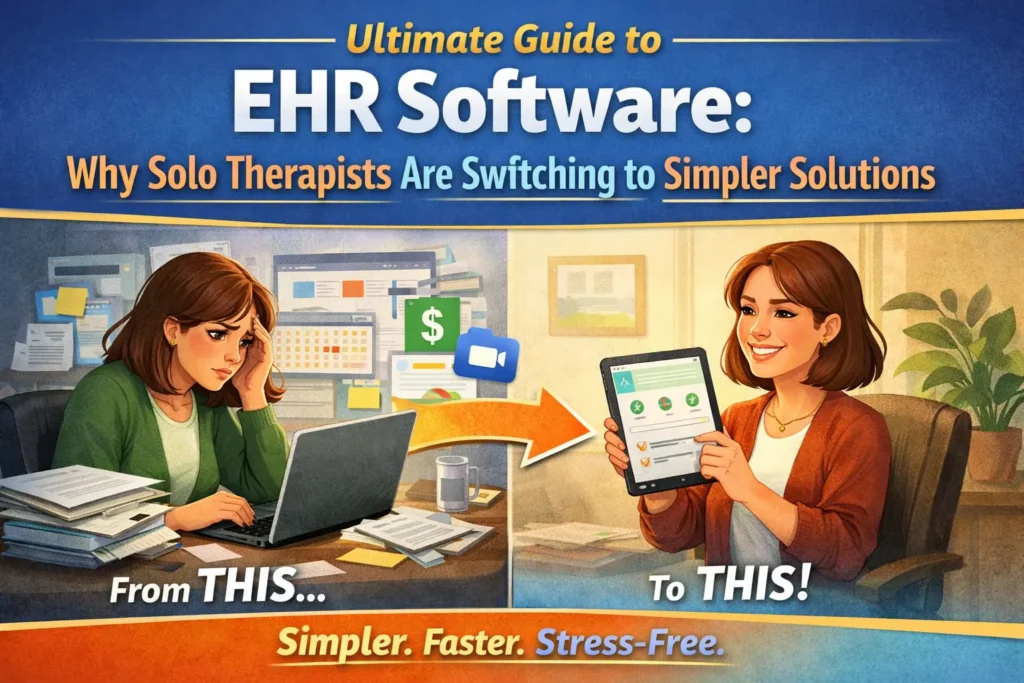
While the healthcare industry’s rapid digital transformation has vastly improved patient care and data security, a massive disconnect has formed between the massive tech companies building this software and the solo therapists actually using it.
Here is a deep dive into the evolution of EHR software, why the “industry standard” platforms are failing private practitioners, and how a new wave of user-friendly alternatives is helping therapists reclaim their time.
What is EHR Software?
Electronic Health Record (EHR) software is a digital system designed to store, manage, and securely access patient medical information. Replacing overflowing filing cabinets and misplaced paper charts, modern EHR platforms create a centralized database that allows healthcare professionals to operate efficiently.
A high-quality EHR system typically manages:
- Digital Patient Records: Securely storing intake forms, treatment plans, and session progress notes.
- Scheduling & Calendars: Automating patient bookings, cancellations, and appointment reminders.
- Billing & Invoicing: Processing credit card payments and generating superbills for insurance claims.
- Secure Communication: Providing a HIPAA-compliant portal for safe client-therapist messaging.
For large hospitals, these systems are revolutionary. They improve care coordination, reduce medical errors, and provide faster access to critical patient information. However, for the solo mental health professional, these massive systems often introduce entirely new problems.
The UI/UX Crisis: Why Traditional EHRs Fail Solo Practitioners
If you’ve used any of the big, private-equity-backed EHR systems recently, you already know the pain points. These platforms are built with large, multi-specialty clinics in mind. When a solo therapist signs up, they end up paying for a massive commercial jet when all they really need is a reliable bicycle.
This lack of focus on User Interface (UI) and User Experience (UX) leads to three major headaches:
- Feature Bloat: The screen is cluttered with dropdown menus, complex coding interfaces, and administrative tools you will never use. This makes navigating the software incredibly slow and frustrating.
- The Click Fatigue: Why does it take seven clicks and three page reloads just to duplicate last week’s session note? Bad UX design drains your energy between sessions.
- The Subscription Trap: You sign up at a reasonable introductory rate, but within a year, the price hikes hit. Suddenly, you’re paying expensive add-on fees for basic features like telehealth integration or calendar syncing.
A Breath of Fresh Air: Enter EasyMindCare
Recognizing the widespread frustrations of independent mental health professionals, software developers are finally stepping up to create niche tools specifically for solo practitioners. One platform currently making waves for its refreshingly simple approach is EasyMindCare.
Instead of trying to be everything to everyone, this platform stripped away the noise. It is built entirely around the daily workflow of an independent therapist, minimizing your screen time so you can maximize your client time.
Features Built for Real Therapy Workflows
When software is designed with a strict focus on UI/UX, the features just make sense. Here is how modern platforms are streamlining the workday:
- Custom Note Builder: Not everyone loves rigid, standard SOAP notes. If you practice EMDR, Play Therapy, or specialized couples counseling, you need specific templates. This feature lets you drag and drop your own custom forms in minutes.
- One-Click Carry Over: This is a massive time saver. Instead of rewriting redundant client history, a single click pulls over the relevant data from your previous session, letting you finish a progress note in under two minutes.
- Automated Client Onboarding: You can easily set up digital intake forms that are automatically sent to new clients. They fill them out securely on their phone before they ever step foot in your office.
- Frictionless Billing: Whether you are managing private pay clients or generating compliant superbills for out-of-network insurance, it is all handled natively without jumping through multiple screens.
Comparing the Market: The Giants vs. The Innovators
To truly highlight the difference a clean user interface makes, here is a quick look at how your typical corporate EHR stacks up against a tailored solution like EasyMindCare:
| What You Need | The Corporate Giants | The EasyMindCare Approach |
| Customizing Notes | Extremely rigid formats; very hard to change or add fields. | Custom Builder; easily drag-and-drop any specific form you need. |
| Speed & UX | Cluttered dashboards; requires too many clicks to perform basic tasks. | Minimalist UI; one-click note carry-over and fast navigation. |
| Telehealth | Usually requires an expensive tier upgrade or add-on fee. | Integrated native video, or the ability to bring your own (Zoom/Meet). |
| Your Data | Vendor lock-in; notoriously difficult to export your own files. | Complete Ownership; export your practice data seamlessly at any time. |
| Pricing Model | Constant annual price hikes and hidden fees. | Grandfathered Pricing; no surprise increases. |
Finally, Pricing That Doesn’t Feel Like a Trap
Perhaps the most “human” element of this new wave of software is its transparent pricing structure. easymindcare.com tackles the industry’s subscription fatigue with a strict “Grandfathered Pricing” rule—meaning whatever price you sign up at is the price you keep forever.
They offer highly tailored tiers that actually match where you are in your career:
- The Moonlighter ($9.99/mo): Perfect for therapists just starting out or seeing a few clients on the side. This tier gives you unlimited clients, a calendar, custom notes, and SMS reminders for less than the cost of a streaming subscription.
- The Solo Pro ($25/mo): Ideal for the full-time practitioner, adding robust features like Auto-Pay billing and an AI assistant to help you draft clinical notes faster.
- Founder’s Club ($149 one-time): A revolutionary option in today’s SaaS market. If you hate monthly subscriptions, you can pay once and have access to the core software for the lifetime of your practice.
The Bottom Line
Your practice management software should work for you, not the other way around. While massive digital health platforms have their place in large hospitals, solo therapists need a simple, secure, and affordable solution. If you are ending your workday feeling exhausted by data entry, rigid templates, and a cluttered screen, it is time to rethink your tech stack.
