

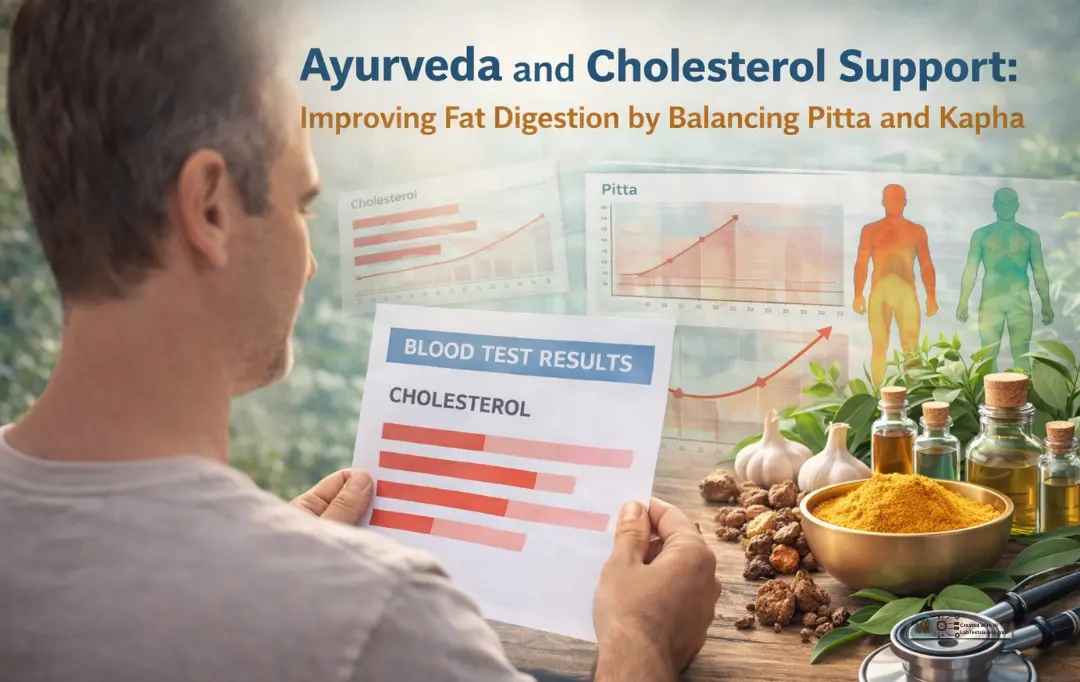
People use tests such as apoprotein and cholesterol levels to gain clarity on cardiovascular risk. Modern lab testing is invaluable. It helps identify elevated LDL, imbalanced apoproteins, and other indicators of metabolic stress. From an Ayurvedic perspective, however, these numbers are only part of the story. Ayurveda looks deeper—at digestion, inflammation, and how well the body metabolizes fats at the tissue level.
Cholesterol Through the Ayurvedic Lens
In Ayurveda, cholesterol accumulation is often understood as the result of impaired fat metabolism within meda dhatu (fat tissue), combined with systemic inflammation. When digestion (agni) is weak or overloaded, fats are not properly transformed. Instead, they circulate in a partially processed form, contributing to buildup in the channels (srotas).
This process is not limited to one body type. Both Pitta and Kapha constitutions can experience cholesterol imbalance—though for slightly different reasons.
- Kapha types tend toward heaviness, slower metabolism, and congestion. Excess oils, fried foods, dairy, and heavy meals can quickly overwhelm their digestion, leading to accumulation.
- Pitta types, although metabolically strong, are prone to inflammatory processes. If they consume too many heating, oily, or fried foods, inflammation can “spread” through the tissues, contributing to vascular irritation and lipid imbalance.
In both cases, the improper use of oils is central.
The Proper Use of Oils: Quality and Quantity Matter
Ayurveda does not say oils are inherently bad. In fact, healthy fats are essential. The key lies in proper use—aligned with body type and digestive capacity.
For Kapha types:
- Use minimal oil overall.
- Favor light oils such as small amounts of mustard oil or limited olive oil.
- Avoid deep-fried foods, excess ghee, creamy sauces, and heavy dairy.
- Emphasize dry cooking methods—steaming, baking, light sautéing.
Kapha digestion is easily overwhelmed. Even “healthy fats” can become problematic if consumed in excess.
For Pitta types:
- Avoid overheating oils or cooking at very high temperatures.
- Favor moderate amounts of cooling fats like ghee or coconut oil.
- Reduce excessive use of pungent oils and spicy fried foods.
Pitta does not need heavy oil intake, and too much can fuel inflammatory pathways. The focus should be on calming, steady nourishment rather than stimulating or greasy foods.
If digestion cannot properly process the fats coming in, the “input” remains high—even if someone is taking cholesterol medication. Lab values may improve temporarily, but the underlying metabolic burden persists.
The Role of Inflammation
Ayurveda often describes cholesterol accumulation as a combination of impaired meda metabolism and inflammatory spread. In modern terms, this parallels what we understand about oxidative stress and vascular inflammation contributing to plaque formation.
A person may lower cholesterol numbers with medication, but if inflammatory drivers remain—poor diet, stress, improper oil use, weak digestion—the terrain that created the imbalance is unchanged.
That’s why Ayurveda emphasizes digestive fire (agni) first. When digestion is efficient, fats are metabolized appropriately, tissues are nourished without excess, and inflammatory residues (ama) are minimized.
Herbs Traditionally Used for Cholesterol Support
Several classical Ayurvedic herbs are commonly used to support healthy lipid metabolism and cardiovascular function:
- Turmeric (Curcuma longa) – Known for supporting healthy inflammatory balance and liver function. However, Pitta types must use turmeric in moderation, preferably cooked into food with cooling herbs rather than taken in high-dose, concentrated forms.
- Garlic (Allium sativum) – Traditionally used to support circulation and lipid metabolism. It can be very heating. Pitta individuals should avoid raw garlic and instead use it lightly cooked, combined with cooling spices.
- Guggulu (Commiphora mukul) – A classical resin used in Ayurvedic formulations to support meda tissue metabolism and healthy lipid levels.
- Arjuna (Terminalia arjuna) – Revered for its supportive role in cardiovascular health and heart tissue nourishment.
Herbs are most effective when used according to constitution. For example, a strong garlic-heavy formula may benefit Kapha, but aggravate Pitta. Likewise, excess turmeric in supplement form may overstimulate someone already prone to inflammation.
Testing and Medication: Part of the Picture
Modern testing—cholesterol panels, apoprotein measurements, inflammatory markers—provides essential information. Medication can be lifesaving and medically necessary. Ayurveda does not reject this.
However, numbers alone do not correct digestive imbalance.
If someone continues consuming heavy oils, fried foods, or constitutionally inappropriate fats, they are still overwhelming meda (fat tissue) metabolism. The root cause remains: improper fat digestion and inflammatory spread.
In simple terms, if the input remains high, the burden remains high.
Aligning Diet with Body Constitution
True cholesterol support in Ayurveda means:
- Strengthening digestion before adding more fats.
- Matching oil type and quantity to body constitution.
- Reducing inflammatory food patterns.
- Using herbs appropriately for the individual.
- Supporting the liver and metabolic pathways gently, not aggressively.
When digestion is balanced and fats are used intelligently, the body becomes more efficient at processing lipids. This shifts the internal environment—often reflected in improved lab markers over time.
The integrative approach is clear: test when needed, follow medical advice, but also address digestion, inflammation, and constitutional alignment. Cholesterol balance is not just about lowering a number. It is about transforming how the body handles fats at the deepest level. To go deeper, consider taking an Ayurveda dosha test to better understand your body type, or explore Ayurveda courses online to learn how Pitta, Kapha, and other constitutions influence digestion, metabolism, and long-term cardiovascular health.
