

In modern reconstructive care, some of the most life-changing outcomes come from procedures performed on structures so small they can’t be reliably handled by the naked eye. That is where microsurgery comes in. At Liv Hospital, microsurgery is approached as a high-precision branch of plastic surgery that restores form and function by repairing tiny blood vessels, nerves, and delicate tissues—often after cancer surgery, trauma, or complex congenital conditions.
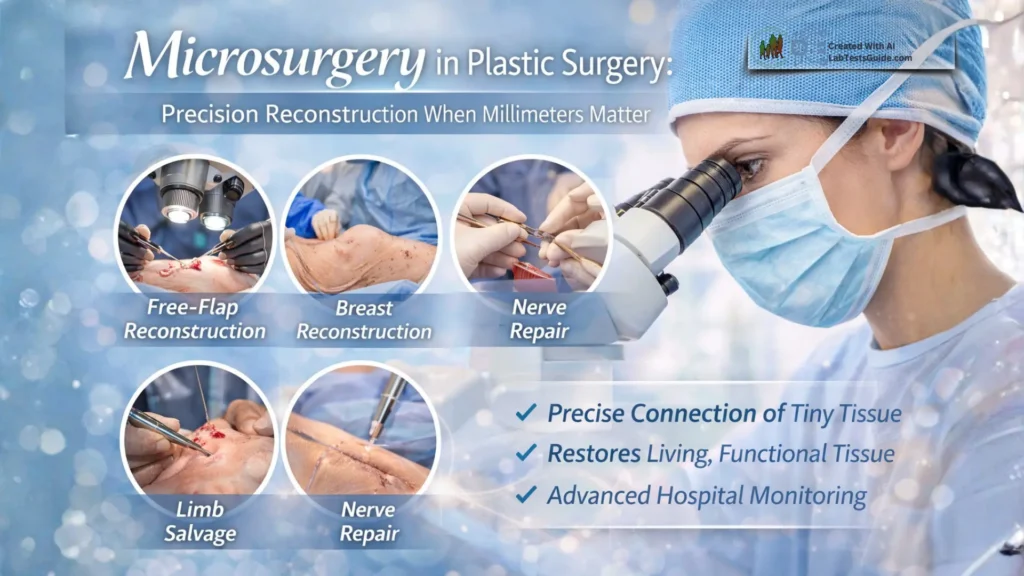
What “Microsurgery” Really Means
Microsurgery isn’t a single procedure—it’s a surgical technique. The defining feature is the use of an operating microscope (or high-magnification loupes) and specialized micro-instruments that allow surgeons to connect structures that may be only 1–3 mm wide.
This matters because successful reconstruction often depends on:
- Blood supply (arteries and veins) to keep transferred tissue alive
- Nerve repair to restore movement or sensation
- Lymphatic pathways in selected cases to reduce swelling and infection risk
When these connections are done well, reconstruction doesn’t just “fill a gap”—it can restore real, everyday function.
Where Microsurgery Is Used in Plastic Surgery
Microsurgery becomes essential when the body needs healthy tissue moved from one area to another or when delicate structures must be repaired rather than removed.
Common microsurgical applications include:
1) Free-Flap Reconstruction (Tissue Transfer)
A “free flap” is tissue (skin, fat, muscle, or bone) moved from a donor area to a defect site, then reconnected using microvascular techniques. This is frequently used after tumor removal, major trauma, or complicated wound breakdown.
Why it’s powerful:
- It can rebuild volume, contour, and coverage in one operation
- It can bring fresh blood supply into areas with poor healing potential
- It helps restore a more natural appearance than skin grafts alone in many cases
2) Breast Reconstruction After Cancer Treatment
Microsurgical breast reconstruction often uses the patient’s own tissue (for example, abdominal or thigh-based flaps) and reconnects vessels in the chest area. The goal is a breast shape that feels and moves naturally, with long-term stability.
3) Limb Salvage and Trauma Reconstruction
In severe injuries—especially those involving exposed bone, tendon, or hardware—microsurgery can provide durable tissue coverage and improve healing. In selected cases, it can also support efforts to avoid amputation.
4) Nerve Repair and Functional Restoration
When nerves are cut or damaged (from trauma, surgery, or tumors), microsurgery can help reconnect them or bridge gaps using nerve grafts. This can be critical for restoring:
- Facial movement
- Hand function
- Protective sensation (important for injury prevention)
5) Replantation (Reattachment of Fingers or Parts)
Replantation requires reconnecting arteries, veins, tendons, and nerves—often all in the same operation. It’s one of the clearest examples of why microsurgery is considered a “precision” specialty.
What Happens During a Microsurgery Procedure?
While every case is different, most microsurgical reconstructions follow a structured plan:
- Defect assessment: what is missing (skin, muscle, bone), and what function must be restored
- Donor tissue selection: tissue chosen for the best match in thickness, texture, and function
- Microvascular connection: vessels are reconnected under magnification to re-establish blood flow
- Fine-tuning and shaping: contouring the reconstruction for natural proportion and movement
- Monitoring in early recovery: the first 24–72 hours are crucial to confirm healthy circulation
This is why microsurgery is typically performed in advanced hospital settings where post-operative monitoring is specialized and consistent.
Who Is a Good Candidate?
Microsurgery is highly individualized, but strong candidates usually have:
- A reconstruction goal that requires tissue transfer or microvascular repair
- A stable medical profile that can tolerate longer surgery time
- Optimized lifestyle factors that support healing (for example, smoking cessation is often advised because it reduces microcirculation)
A thoughtful consultation helps determine whether microsurgery is the best approach, or whether a simpler technique would provide a safer or equally effective outcome. If you want the service page context in one place, the PLASTIC SURGERY Microsurgery section lays out how this discipline fits within broader reconstructive and aesthetic care.
Recovery and Results: What Patients Usually Notice
Recovery depends heavily on what microsurgery is being used for—breast reconstruction differs from nerve repair, and trauma reconstruction differs from lymphedema-related procedures. That said, many patients describe the same key milestones:
- Early recovery focuses on circulation, swelling control, and wound healing
- Functional improvement may be gradual (especially with nerve-related repairs)
- Scar maturation and contour refinement often continues for months, not weeks
The biggest long-term benefit is that microsurgery aims to restore living, functional tissue, which can improve durability and quality of life compared with purely surface-level repair.
Why Microsurgery Is Considered “Reconstructive Engineering”
Microsurgery is often the difference between “closing a wound” and restoring a life routine—eating comfortably, moving a limb, wearing normal clothing, returning to work, or regaining confidence after cancer treatment. It’s reconstructive surgery performed at the smallest scale, but with the largest goals: strength, sensation, shape, and independence.
And because healing is not just surgical, consistent recovery habits—sleep quality, mobility, hydration, and stress management—can make a real difference after complex procedures, which is why some patients also benefit from wellness-focused support like live and feel once the surgical plan and early recovery phase are complete.