

Acute Viral Hepatitis Panel Test – Detect Hepatitis A, B, C & E Quickly
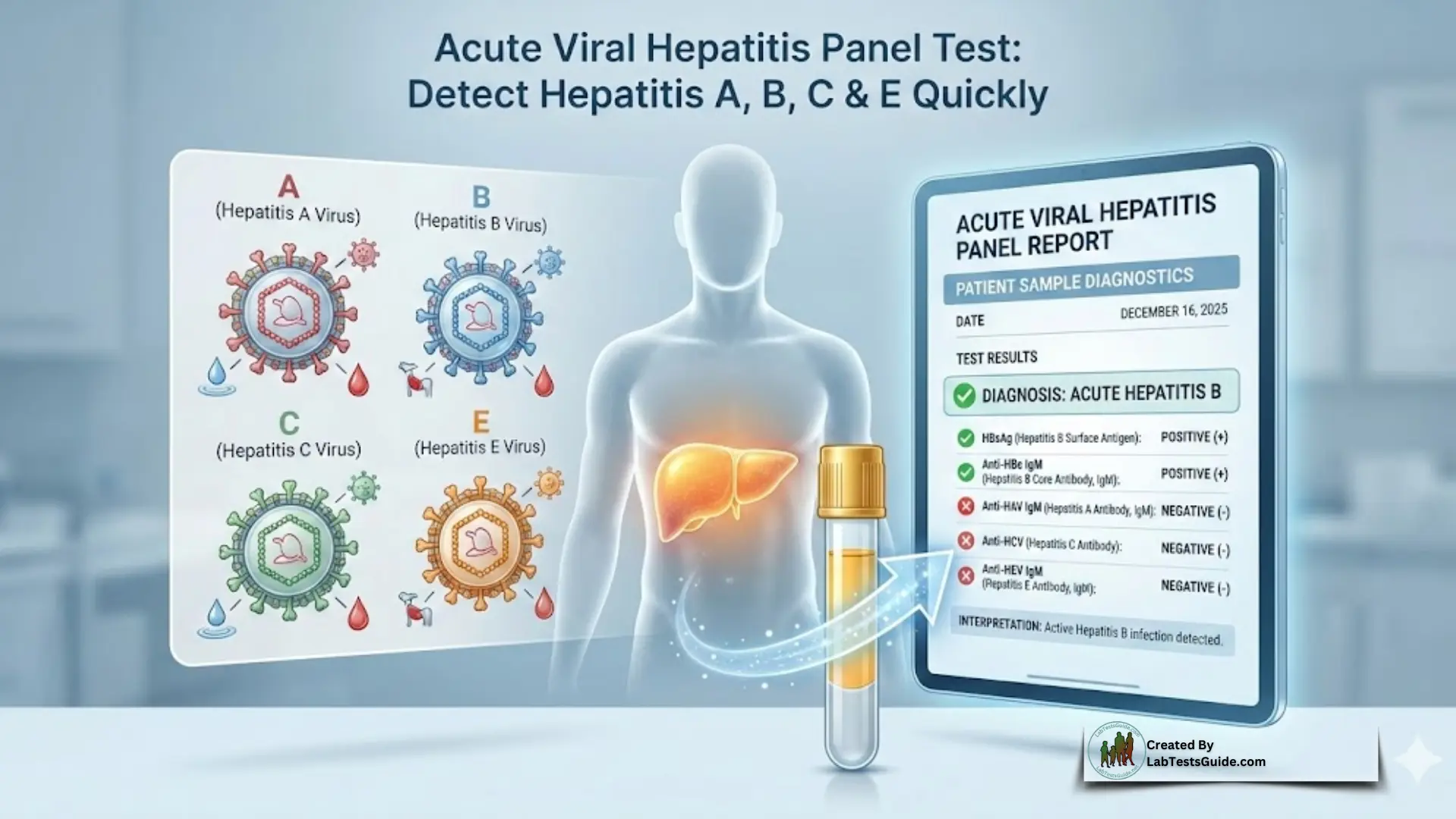
An acute viral hepatitis panel is a set of blood tests that detects current or past infections with the most common hepatitis viruses (A, B, and C) to diagnose liver inflammation, identify the specific virus, and determine whether the infection is recent (acute) or chronic. It looks for viral proteins (antigens) or the body’s infection-fighting antibodies in a single blood sample, helping doctors quickly find the cause of liver problems.
Understand Your Test Results:
Understand your Acute Viral Hepatitis Panel Test – Detect Hepatitis A, B, C & E Quickly Results
AI-powered Lab Test Results Meaning tool 🤖
Quick Facts:
What is Acute Viral Hepatitis Panel Test?
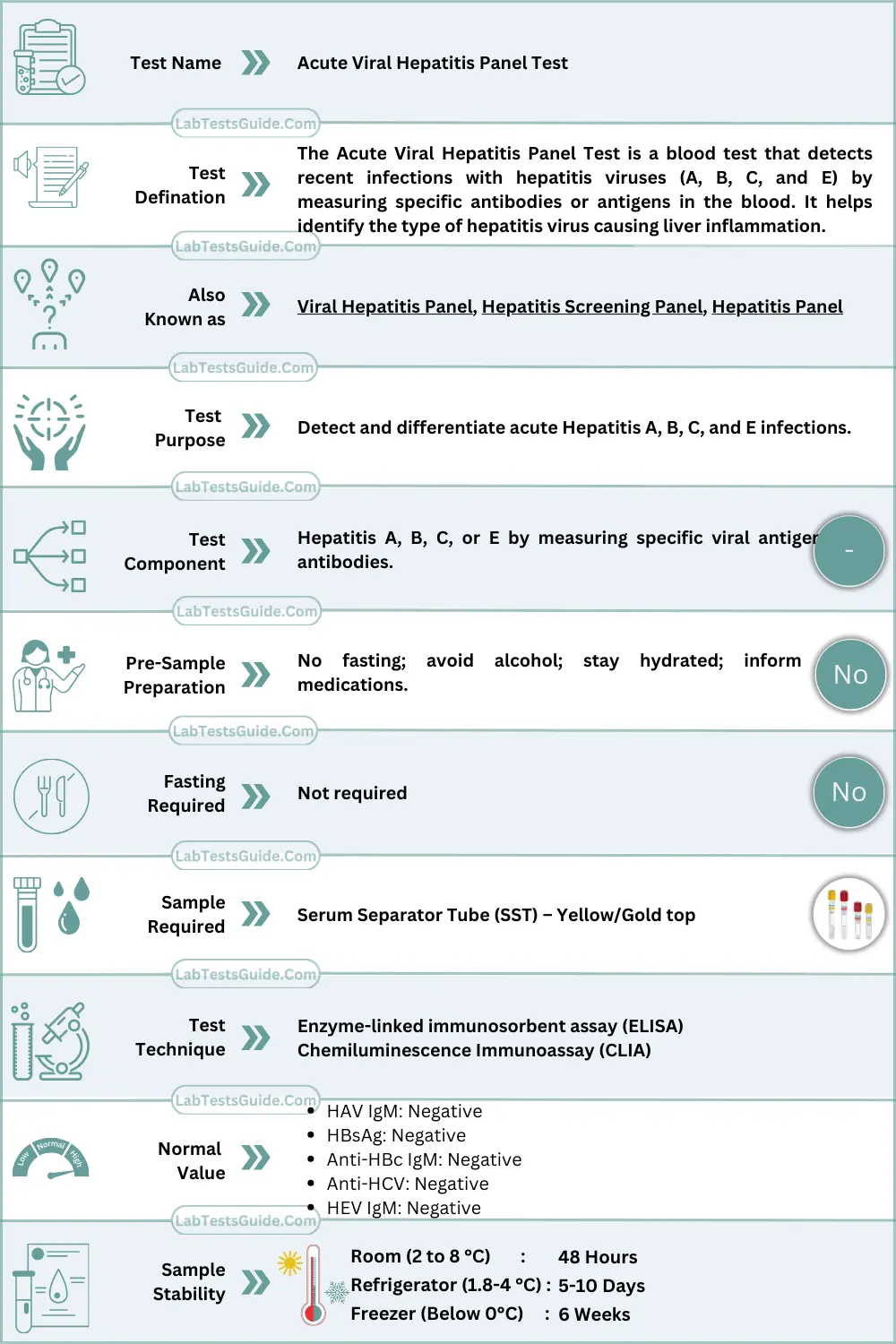
The Acute Viral Hepatitis Panel Test is a blood test that detects recent infections with hepatitis viruses (A, B, C, and E) by measuring specific antibodies or antigens in the blood. It helps identify the type of hepatitis virus causing liver inflammation.
Why is Acute Viral Hepatitis Panel Test Done? (Indications)
For Patients / General Use
- Sudden onset of fatigue, nausea, vomiting
- Jaundice (yellowing of skin or eyes)
- Dark urine, pale stools
- Abdominal pain (especially right upper quadrant)
- Fever, malaise, loss of appetite
For Doctors / Clinical Use
- Confirm acute viral hepatitis infection
- Differentiate between Hepatitis A, B, C, and E
- Guide antiviral therapy or supportive care
- Monitor epidemiological trends and outbreak management
- Pre-transplant or pre-procedure screening
How the Acute Viral Hepatitis Panel Test Works (Principle / Methodology):
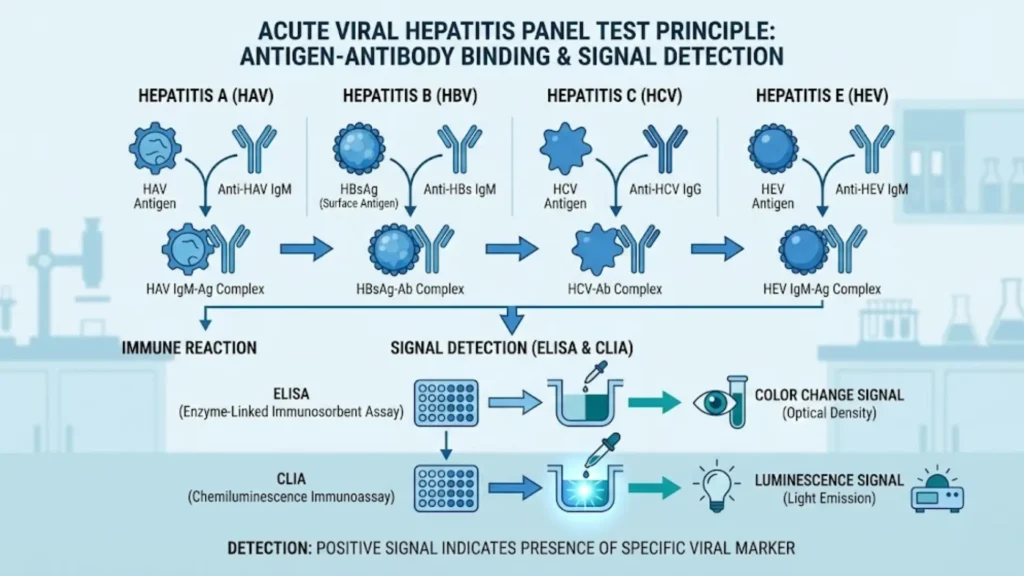
The test uses immunoassays such as ELISA or CLIA to detect viral antigens or antibodies in the patient’s serum:
- Hepatitis A: IgM anti-HAV indicates recent infection.
- Hepatitis B: HBsAg indicates infection; anti-HBc IgM confirms acute phase.
- Hepatitis C: Anti-HCV antibodies indicate exposure; HCV RNA may confirm active infection.
- Hepatitis E: IgM anti-HEV indicates acute infection.
These assays rely on antigen-antibody binding, producing a measurable signal (color change or luminescence) proportional to antibody or antigen concentration.
Acute Viral Hepatitis Panel Test Specimen Requirements & Collection:
| Parameter | Details |
|---|---|
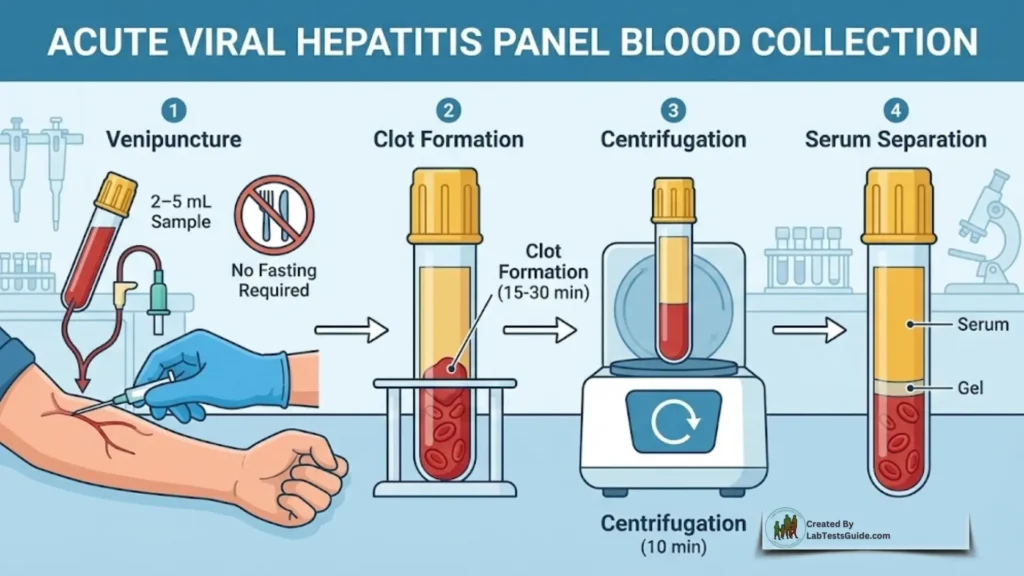
| Specimen type | Serum |
| Tube type | Serum Separator Tube (SST) – Yellow/Gold top |
| Volume | 2–5 mL |
| Patient preparation | No fasting required; avoid alcohol 24h before test |
| Collection steps | 1. Draw blood via venipuncture 2. Allow clotting 30–60 min 3. Centrifuge to separate serum |
| Transport & storage | Store at 2–8°C if testing within 48 hours; otherwise, freeze at -20°C. Avoid repeated freeze-thaw cycles. |
Acute Viral Hepatitis Panel Test Reference Ranges
| Population | Reference Range | Units |
|---|---|---|
| Adults | Negative | – |
| Pediatric | Negative | – |
| Pregnancy | Negative | – |
Note: Reference ranges may vary by laboratory and assay method.
Acute Viral Hepatitis Panel Test Interpretation of Results
High Levels (Causes & Clinical Significance)
- Causes: Positive IgM anti-HAV, HBsAg, anti-HBc IgM, anti-HCV, or anti-HEV
- Differential diagnoses: Acute viral hepatitis, co-infections, post-vaccination seroconversion
- Clinical relevance: Confirms recent infection; guides management and infection control
Low / Negative Levels (Causes & Clinical Significance)
- Causes: Absence of detectable viral markers
- Differential diagnoses: No infection, past resolved infection, window period
- Clinical relevance: Rules out acute hepatitis; repeat testing may be needed if early infection suspected
Acute Viral Hepatitis Panel Test Interfering Factors / Pre-Analytical Errors
- Hemolysis: May interfere with antibody detection
- Lipemia: Can cause assay signal interference
- Icterus: Rarely affects results
- Medications: Immunosuppressants may reduce antibody response
- Sample handling issues: Delayed processing, improper storage
- Biological variations: Age, immune status, recent vaccination
Acute Viral Hepatitis Panel Test Critical Values / PANIC Values
- Example: HBsAg strongly positive with high ALT/AST indicating acute liver injury
- Note: Follow institutional policy for urgent reporting and infection control
Sample Lab Report:
| Test | Result | Unit | Flag | Reference Range | Interpretation |
|---|---|---|---|---|---|
| HAV IgM | Negative | – | N | Negative | No acute Hepatitis A |
| HBsAg | Positive | – | H | Negative | Acute Hepatitis B infection |
| Anti-HBc IgM | Positive | – | H | Negative | Confirms acute Hepatitis B |
| Anti-HCV | Negative | – | N | Negative | No Hepatitis C infection |
| HEV IgM | Negative | – | N | Negative | No acute Hepatitis E |
Acute Viral Hepatitis Panel Test Nursing / Phlebotomy Notes
- Use Yellow/Gold SST tube
- Label clearly with patient info
- Transport at 2–8°C if testing <48h
- Avoid hemolysis and contamination
- Centrifuge and separate serum promptly
Acute Viral Hepatitis Panel Test Lab Student Key Points
- Detects viral antigens and antibodies
- Useful for acute hepatitis diagnosis
- ELISA/CLIA are standard methods
- Sample must be serum
- Timing is crucial for IgM detection
Understand Your Test Results:
Understand your Acute Viral Hepatitis Panel Test – Detect Hepatitis A, B, C & E Quickly Results
AI-powered Lab Test Results Meaning tool 🤖
Do I need to fast for this test? – No fasting required.
No fasting required.
How long for results?
Usually 24–72 hours.
Can it detect past infections?
IgM detects recent infection; IgG may indicate past exposure.
Is it painful?
Standard blood draw; minor discomfort possible.
Will medications affect results?
Immunosuppressants may alter antibody response.
Can I donate blood if positive?
No, hepatitis-positive individuals are deferred.
Do children need this test?
Yes, if symptoms or exposure occur.
