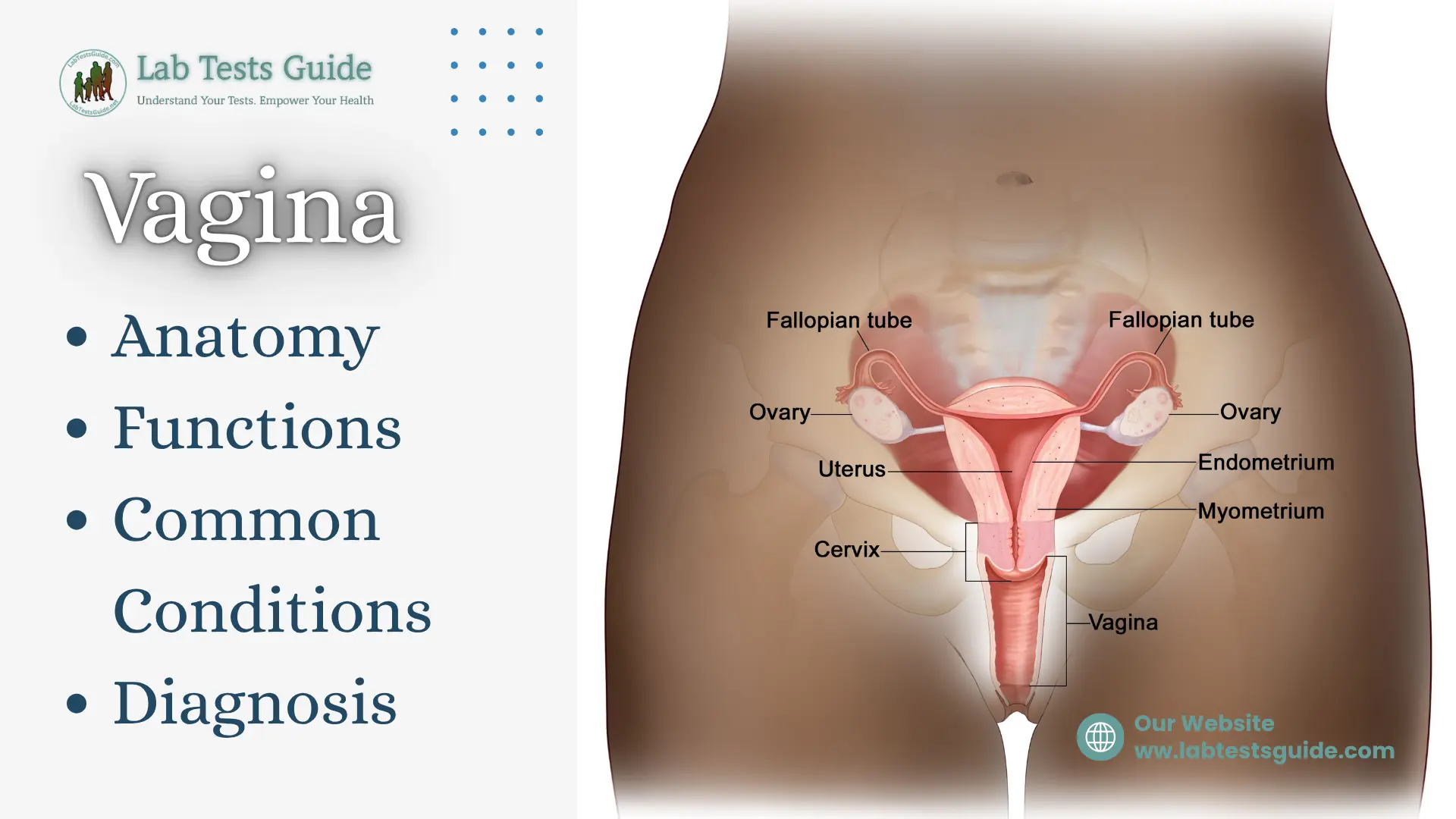
The vagina is a muscular, elastic canal that connects the cervix to the external genital area and plays important roles in menstruation, sexual activity, childbirth, and the reproductive system.
Vagina: Anatomy, Functions, Common Problems & Tests
ANATOMY & CLINICAL LABORATORY GUIDE
Vagina: Anatomy, Functions & Common Conditions
The vagina is a muscular, elastic canal that connects the cervix to the external genital area and plays important roles in menstruation, sexual activity, childbirth, and the reproductive system.
01
Vaginal CanalElastic muscular canal extending from the cervix to the external genital area.
02
Main RoleSupports menstrual flow, sexual function, childbirth, and reproductive health.
03
Clinical RelevanceVaginal infections, inflammation, abnormal discharge, and other conditions may require clinical assessment and laboratory testing.
Laboratory focus:
This guide provides a concise overview of vaginal anatomy, function, common problems, and the laboratory tests that may be relevant when infection, inflammation, or other abnormalities are suspected.
01
What Is the Vagina?
The vagina is a muscular, elastic canal that extends from the cervix to the external genital area. It forms part of the female reproductive system and has an important role in menstruation, sexual function, and childbirth.
The vaginal wall contains smooth muscle, connective tissue, blood vessels, nerves, and a mucosal lining. The vagina also has a naturally acidic environment that helps support the normal vaginal microbiota and provides protection against some harmful microorganisms.
LocationExtends from the cervix of the uterus to the external genital area.
Clinical importanceInfections, inflammation, abnormal discharge, irritation, and changes in the vaginal microbiota may require clinical assessment and laboratory testing.
Upper VaginaThe upper portion surrounds the cervix and connects the vagina with the reproductive tract.
Lower VaginaThe lower portion extends toward the vaginal opening and external genital area.
Vaginal MicrobiotaNormally contains beneficial microorganisms, including Lactobacillus species, that help maintain an acidic environment.
What does the vagina do?
The vagina provides a passage for menstrual blood to leave the body, serves as the birth canal during vaginal delivery, and forms part of the female reproductive tract. Its natural secretions and microbiota also help maintain the vaginal environment and provide protection against some infections.
03
Common Vaginal Problems
Bacterial Vaginosis
A common condition caused by an imbalance in the normal vaginal microbiota, which may lead to unusual discharge and odor.
Vaginal Candidiasis
A fungal infection, commonly caused by Candida species, that may cause itching, irritation, redness, and abnormal discharge.
Trichomoniasis
A sexually transmitted infection caused by the parasite Trichomonas vaginalis, which may cause vaginal irritation, discharge, or discomfort.
Vaginitis
Inflammation of the vagina that may result from infection, changes in the vaginal environment, irritation, or other causes.
Clinical note:
Symptoms such as abnormal discharge, itching, irritation, odor, pain, or discomfort do not by themselves identify the exact cause. Clinical assessment and appropriate laboratory testing may be needed when symptoms are persistent, recurrent, or concerning.
04
Laboratory Tests and Diagnosis
Many vaginal conditions are evaluated using the patient’s symptoms, medical history, and clinical examination. Laboratory testing may be used when an infection, inflammation, sexually transmitted infection, or another underlying condition is suspected.
Vaginal Swab / Microscopy
A vaginal sample may be examined microscopically to help identify yeast, bacterial vaginosis, Trichomonas, or other abnormalities.
Vaginal Culture
Culture may be used in selected cases to identify certain microorganisms, particularly when symptoms are recurrent or the diagnosis is uncertain.
NAAT / Molecular Testing
Nucleic acid amplification tests can detect infections such as chlamydia, gonorrhea, and Trichomonas with high sensitivity.
Important:
A Pap test and HPV testing are primarily used for cervical cancer screening and are not general tests for diagnosing common vaginal infections. The appropriate test depends on the symptoms, clinical findings, and suspected condition.
05
Vaginal Symptoms and When to Seek Care
Abnormal Vaginal DischargeChanges in the amount, color, consistency, or odor of vaginal discharge may indicate an infection or other condition.
Itching or IrritationVaginal itching, burning, redness, or irritation may occur with infections, inflammation, or exposure to irritants.
Vaginal Pain or DiscomfortPain or discomfort may occur with infection, inflammation, injury, hormonal changes, or other gynecological conditions.
Unusual BleedingBleeding between periods, after sexual activity, or after menopause should be evaluated by a healthcare professional.
When should medical advice be considered?
Seek medical evaluation for persistent or recurrent vaginal symptoms, unusual discharge or odor, significant itching or pain, unexplained bleeding, painful urination, pelvic pain, fever, sores or lesions, or symptoms following a possible sexually transmitted infection exposure. Prompt medical attention is particularly important when symptoms are severe, worsening, or associated with pregnancy. read expert medical advice.
06
How Are Vaginal Problems Diagnosed?
Vaginal problems are usually evaluated using the patient’s symptoms, medical history, and physical or pelvic examination when appropriate. Laboratory testing may be recommended when an infection, sexually transmitted infection, inflammation, or another condition is suspected.
Clinical Examination
A healthcare professional assesses symptoms such as abnormal discharge, odor, itching, irritation, pain, redness, or other clinical findings.
Laboratory Testing
Vaginal microscopy, vaginal swabs, culture, or molecular tests such as NAATs may be used to identify specific infections when clinically indicated.
Additional Evaluation
Further gynecological evaluation may be needed for persistent symptoms, unexplained bleeding, pelvic pain, recurrent problems, or suspected structural or hormonal conditions.
Laboratory perspective:
Laboratory results should be interpreted together with symptoms, medical history, and clinical findings. A positive test does not always explain every symptom, and the appropriate test depends on the suspected condition.
07
Treatment and Prevention
Common Management
Treatment depends on the underlying cause, such as bacterial vaginosis, candidiasis, or a sexually transmitted infection.
Appropriate antifungal, antibacterial, or antiparasitic treatment may be prescribed when a specific infection is diagnosed.
Avoid using vaginal douches or unnecessary fragranced products that may disrupt the normal vaginal environment.
Persistent or recurrent symptoms may require further clinical evaluation and laboratory testing.
Prevention & Self-Care
Maintain gentle external genital hygiene and avoid unnecessary vaginal douching.
Use appropriate barrier protection to reduce the risk of sexually transmitted infections.
Follow recommended testing and treatment guidance when an STI is suspected or diagnosed.
Wear breathable underwear and avoid products that cause irritation or discomfort.
Important:
Treatment should be based on the suspected or confirmed cause rather than symptoms alone. Avoid self-treating recurrent or unexplained vaginal symptoms without appropriate evaluation. Persistent, severe, or recurrent symptoms should be assessed by a healthcare professional. More Detail about Treatment and Prevention Click Here
08
Key Takeaways & Related Laboratory Tests
The vagina is an elastic muscular canal that forms part of the female reproductive system and plays important roles in menstruation, sexual function, and childbirth. Common vaginal problems may be diagnosed clinically, while laboratory testing can help identify infections and other causes when symptoms are persistent, recurrent, or unclear.
Important StructureThe vagina is a muscular, elastic canal extending from the cervix to the external genital area.
Common ProblemsBacterial vaginosis, vaginal candidiasis, trichomoniasis, and other forms of vaginitis are common vaginal conditions.
Laboratory RoleMicroscopy, vaginal swabs, culture, and selected molecular tests may help identify the cause when clinically indicated.
Medical Disclaimer:
This article is for general educational and laboratory information only. It does not replace professional medical advice, diagnosis, or treatment. Laboratory tests should be interpreted together with symptoms, medical history, and clinical findings by a qualified healthcare professional.
📚 This article may have been prepared using trusted medical literature, clinical guidelines, textbooks, and peer-reviewed sources.
The website covers a wide range of lab tests, including blood tests, urine tests, stool tests, and imaging tests such as X-rays and CT scans. It also provides information about different health conditions and diseases, as well as tips for maintaining good health.
It's important to note that while labtestsguide.com may provide valuable information about lab tests and their interpretation, it's always best to consult with a healthcare professional if you have any concerns or questions about your lab results. We can provide personalized guidance and advice based on your individual health status and medical history.