

Teeth: Anatomy, Functions, Common Problems & Laboratory Tests
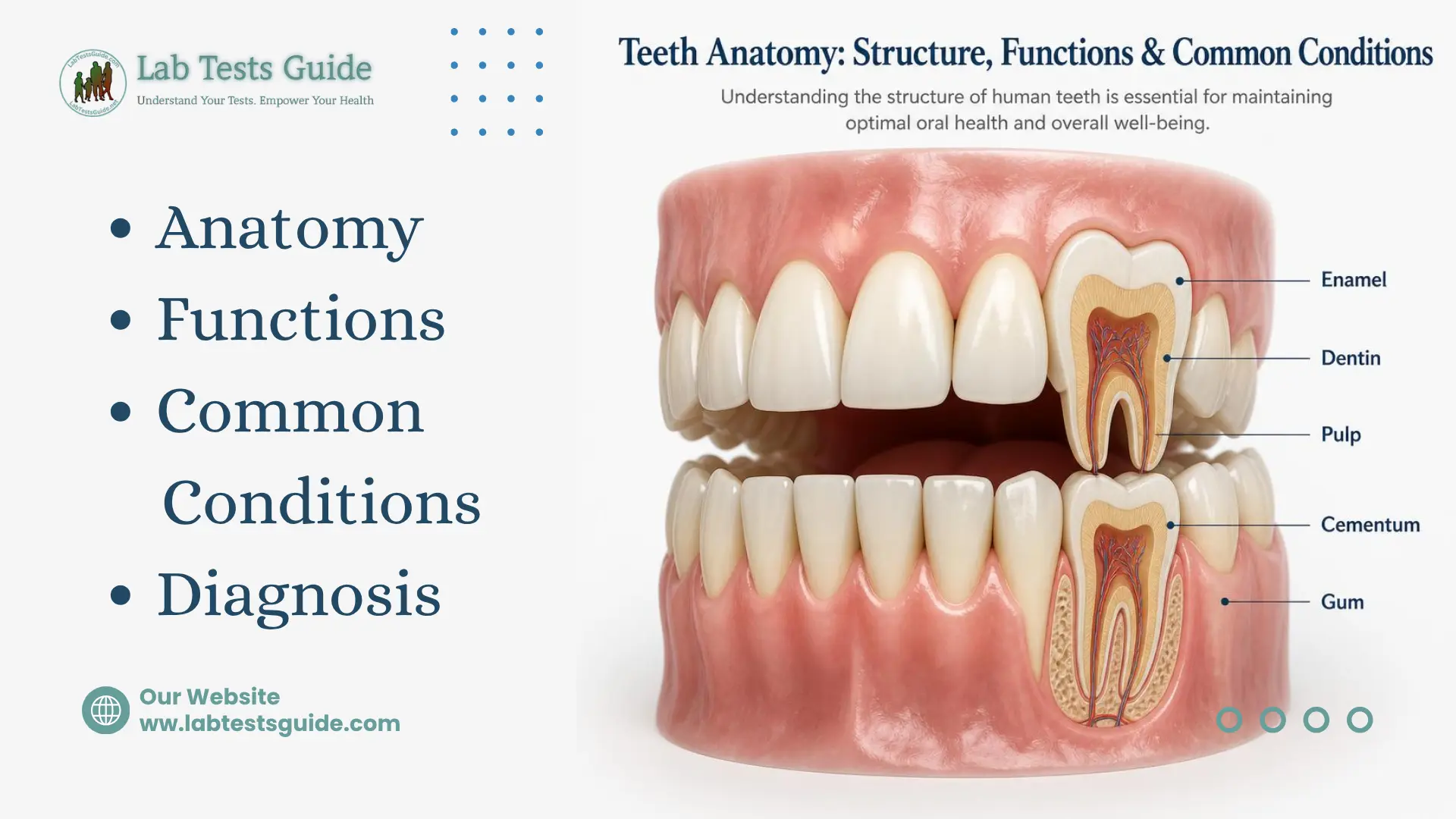
Teeth: Anatomy, Functions & Common Conditions
The teeth are hard structures in the mouth that help bite, tear, and grind food, support clear speech, and contribute to the overall structure and function of the oral cavity.
01 What Are the Teeth?
The teeth are hard, mineralized structures located within the upper and lower jaws. They are surrounded by supporting tissues and are primarily responsible for biting, tearing, crushing, and grinding food during digestion.
The four main types of permanent teeth are incisors, canines, premolars, and molars. Each type has a specialized shape and function, while the tooth is composed of structures including enamel, dentin, cementum, and pulp.
02 Types and Functions of the Teeth
The teeth help cut, tear, crush, and grind food during chewing. They also contribute to clear speech, support the lips and cheeks, and help maintain the normal structure of the mouth and lower face.
03 Common Tooth Problems
04 Laboratory Tests and Diagnosis
Most common tooth and gum problems are diagnosed through a dental history and oral examination. Laboratory testing is usually reserved for selected cases, particularly when a significant infection, systemic disease, recurrent problem, or another underlying condition is suspected.
05 Tooth Symptoms and When to Seek Care
Seek dental evaluation for severe or persistent tooth pain, repeated sensitivity, unexplained gum bleeding or swelling, a broken or damaged tooth, persistent bad breath, or symptoms that interfere with eating or sleeping. Urgent medical or dental care is important for facial swelling, difficulty swallowing or breathing, fever with significant dental pain, or rapidly worsening symptoms. Read more Medical Advice.
06 How Are Tooth Problems Diagnosed?
Tooth and gum problems are usually diagnosed from the patient’s symptoms, dental history, and examination of the teeth, gums, and surrounding oral tissues. Laboratory tests are not routinely required for uncomplicated dental problems.
07 Treatment and Prevention
- Professional dental cleaning may help remove plaque and tartar and support healthy gums.
- Fluoride treatments and appropriate dental care may help prevent or manage early tooth decay.
- Fillings, root canal treatment, or other dental procedures may be required depending on the underlying problem.
- Dental infections may require appropriate treatment, including drainage or antibiotics when clinically indicated.
- Brush teeth twice daily with fluoride toothpaste and clean between teeth regularly.
- Limit frequent consumption of sugary foods and drinks.
- Schedule regular dental examinations and professional cleanings when recommended.
- Avoid tobacco products and seek professional advice for persistent oral health problems.
08 Key Takeaways & Related Laboratory Tests
The teeth are hard, mineralized structures that help with biting, tearing, and grinding food while also supporting normal speech and oral function. Most common tooth and gum problems are diagnosed clinically, while laboratory testing may be useful in selected cases involving significant, persistent, recurrent, or complicated infection.
