

Sinuses: Anatomy, Functions & Common Conditions
The sinuses are air-filled spaces around the nose and eyes that help condition inhaled air, support mucus drainage, and contribute to normal nasal and respiratory function.
01 What Are the Sinuses?
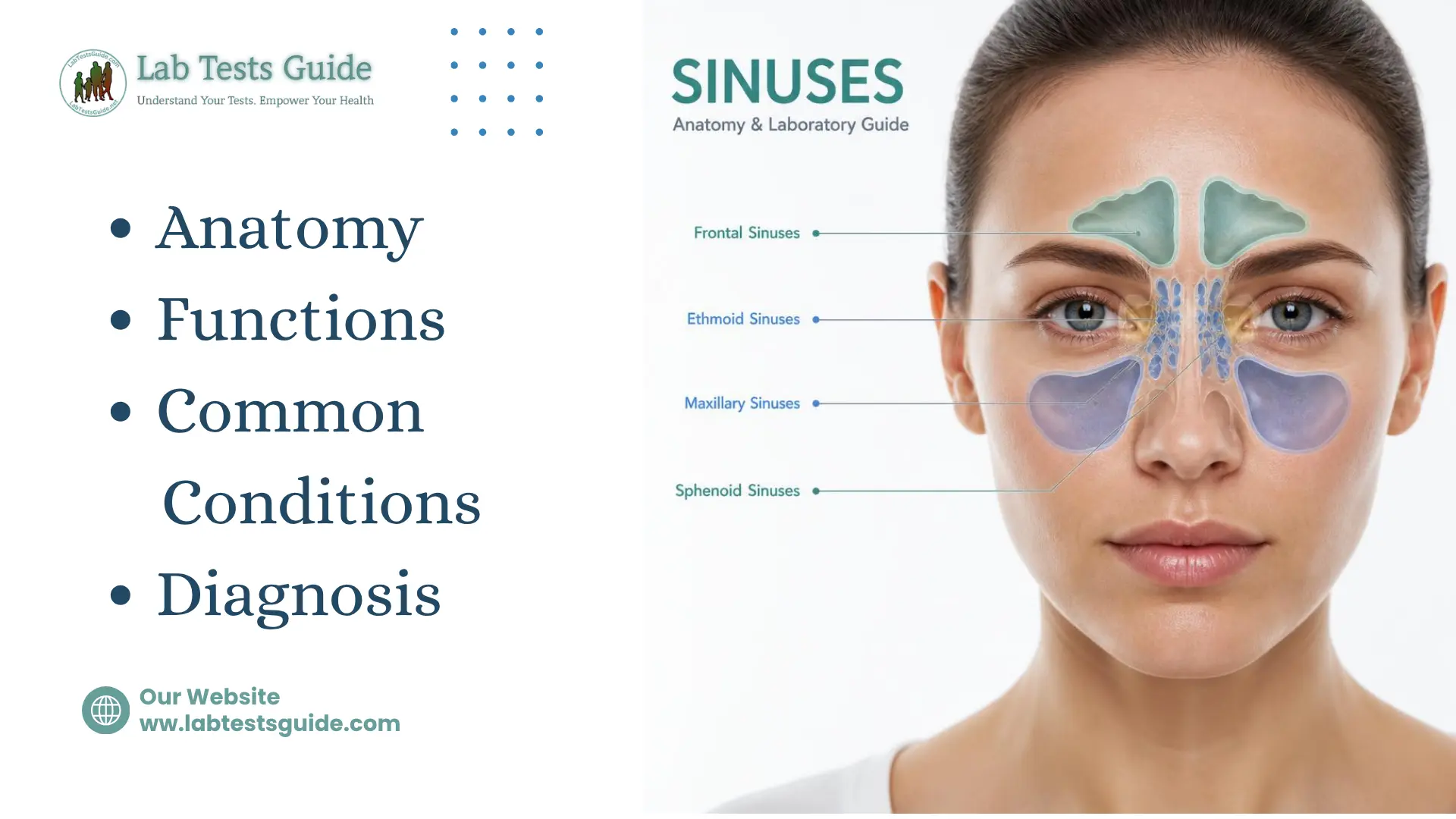
The sinuses, also called the paranasal sinuses, are air-filled spaces within the bones surrounding the nose. They are connected to the nasal passages through small openings that allow mucus to drain into the nose.
The four paired groups are the frontal, maxillary, ethmoid, and sphenoid sinuses. Their lining produces mucus that helps trap particles and microorganisms, while normal sinus drainage helps maintain healthy nasal and respiratory function.
02 Types and Functions of the Sinuses
The sinuses help humidify and warm inhaled air, produce mucus that traps particles, support normal mucus drainage, and may contribute to the resonance of the voice. Their exact physiological importance is still not completely understood.
03 Common Sinus Problems
04 Laboratory Tests and Diagnosis
Most uncomplicated sinus problems are diagnosed from the patient’s symptoms and clinical examination. Laboratory testing is usually reserved for selected cases, particularly when a significant infection, complication, recurrent disease, or another underlying condition is suspected.
05 Sinus Symptoms and When to Seek Care
Seek medical evaluation for severe or persistent symptoms, recurrent sinus problems, symptoms that worsen after initial improvement, high fever, swelling around the eyes, vision changes, severe headache, or other concerning symptoms. More medical advice
06 How Are Sinus Problems Diagnosed?
Sinus problems are usually diagnosed from the patient’s symptoms, medical history, and examination of the nose and surrounding areas. Laboratory tests are not routinely required for uncomplicated sinusitis.
07 Treatment and Prevention
- Saline nasal irrigation may help clear mucus and improve nasal drainage.
- Symptom-relieving medicines may be recommended when appropriate.
- Antibiotics are used only when a bacterial infection is suspected or confirmed and treatment is clinically indicated.
- Persistent or recurrent disease may require specialist evaluation.
- Maintain good hand hygiene to reduce respiratory infections.
- Avoid known allergy triggers when possible.
- Keep adequately hydrated and avoid exposure to cigarette smoke.
- Manage underlying allergies or nasal conditions as advised by a healthcare professional.
08 Key Takeaways & Related Laboratory Tests
The sinuses are air-filled spaces connected to the nasal passages that support normal mucus drainage and respiratory function. Most uncomplicated sinus problems are diagnosed clinically, while laboratory testing may be useful in selected cases involving significant, persistent, recurrent, or complicated infection.
